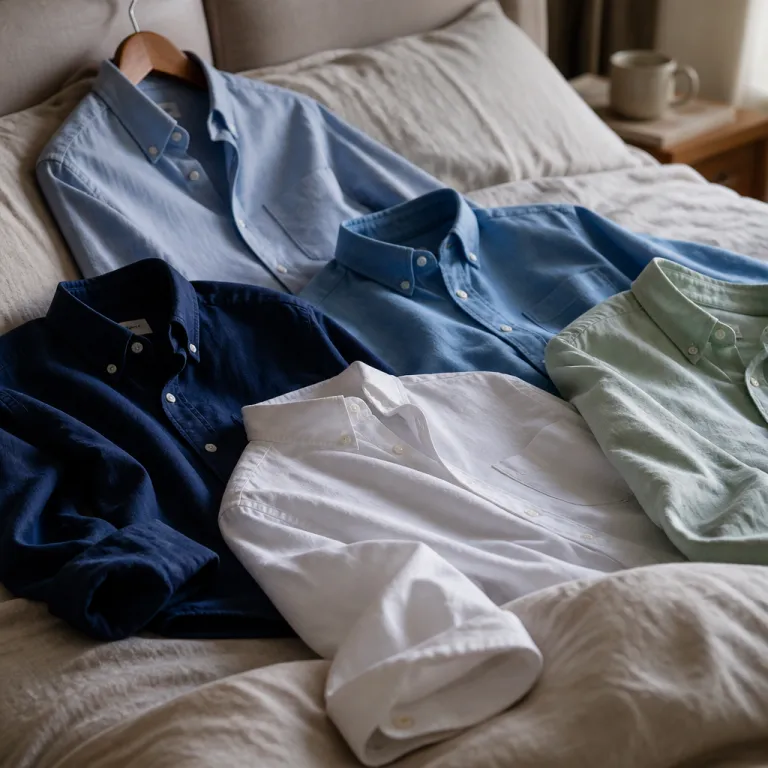
Why Oxford button downs are the casual backbone for men
The Oxford button down casual men rely on is built on texture and attitude. When you choose an Oxford shirt in proper Oxford cloth instead of smooth poplin, the basket weave fabric gives the surface a grain that instantly feels more relaxed yet still looks classic and sharp. That visible texture means the same shirt can sit under a navy blazer at a client lunch, then work open over a crew neck tee with the top two buttons undone for rooftop drinks.
Look closely at a good cotton Oxford and you will see thicker yarns, a slightly rough hand and a weight that drapes rather than clings, which is why these shirts age so well with repeated washing. A royal Oxford fabric is smoother and more refined, so it leans closer to a dress shirt, while traditional Oxford cloth is the best Oxford choice when you want a casual down shirt that still respects office dress codes. For most fashion men passionate about tailoring, the sweet spot is a slim fit Oxford shirt that skims the torso without pulling at any button or collapsing at the collar.
The collar is where the Oxford button down casual men aesthetic really lives, because a proper down collar is usually unlined and sometimes even unfused, which lets it roll softly instead of stabbing straight out. That collar roll, held in place by a small collar button on each point, gives the shirt a sprezzatura energy that a stiff spread collar or classic collar on many dress shirts cannot match in a relaxed setting. Wear that same oxford shirt with the sleeves rolled twice, hem ending around mid fly and the top two buttons open, and you have a uniform that feels intentional without looking like you tried too hard.
The five shirt rotation every young professional actually needs
For the Oxford button down casual men wardrobe, five shirts cover almost every weekend and hybrid work scenario. Start with a shirt white Oxford shirt in cotton Oxford cloth, because a white OCBD is the anchor that works with dark denim, grey wool trousers or even tailored shorts when the temperature climbs. Add a light blue Oxford shirt in a similar slim fit and you have the best Oxford pairing for navy tailoring, stone chinos and even a pleated dress pant when you want to echo the refined appeal of a pleated men’s dress shirt with a structured collar.
The third slot goes to a pale pink Oxford shirt, which reads softer on skin than stark white and plays well with tan, olive and charcoal, especially when the collar button details are subtle and the down collar is slightly longer for a better roll. Fourth, choose an ecru or cream cotton Oxford, because the warmer fabric tone looks more expensive at any price and pairs beautifully with brown suede loafers, off white denim and a navy cotton crew neck. The fifth shirt should be patterned Oxford shirts, ideally a university stripe or Bengal stripe, since those stripes bring energy under a solid knit and stop a rotation of dress shirts from feeling like a uniform.
Within that five shirt rotation, vary the fabric weight and any stretch content, but keep the overall fit consistent so every down shirt works with the same trousers and jackets. Some brands offer iron stretch Oxford cloth that blends cotton with a small amount of elastane, which can help the shirt move with you during long commutes or client meetings without losing its classic shape. Whether you choose proper cloth makers like Proper Cloth or more fashion driven labels such as Todd Snyder, focus on consistent collar shapes, reliable quality stitching and a length that hits mid fly when untucked so the Oxford button down casual men style stays coherent.
How to wear Oxford button downs off duty without looking dressed up
Off the clock, the Oxford button down casual men formula is simple but precise. Keep the shirt untucked, but make sure the hem ends roughly halfway down your trouser fly so the proportions feel intentional rather than sloppy. Roll the sleeves exactly twice so the cuff sits just below the elbow and shows the forearm, because three rolls push the fabric too high and make even the best Oxford shirts balloon around the biceps.
Leave the top two buttons open on your oxford shirt and let the down collar roll naturally, avoiding any attempt to press it flat like a formal spread collar. Underneath, a clean white crew neck tee or a ribbed tank gives depth to the outfit and subtly frames the collar button detail without turning the look into streetwear cosplay. For summer, this is the move that style editors keep highlighting, with Oxford shirts worn over a white tee or tank top with the sleeves lazily cuffed below the elbow becoming a key warm weather uniform for fashion men passionate about casual tailoring.
When temperatures drop, layer the same cotton Oxford cloth button down under a lightweight bomber, a chore jacket or even a casual blazer, and keep the shirt white or pale blue for maximum versatility. If you want more texture, a royal Oxford or heavier Oxford cloth in cream can sit under a navy knit without adding visual noise, while a Bengal stripe down shirt brings just enough pattern to keep dark outfits from feeling flat. For evenings, skip the tie entirely, because a tie fights the relaxed DNA of the Oxford button down casual men rely on, and instead let the collar frame your face while the fabric and fit do the quiet work, much like the understated elegance of a white pleated front short sleeve dress shirt for men in a more formal context.
Fabric, weight and why Oxford beats linen for real life
Fabric is where the Oxford button down casual men uniform pulls away from trend pieces. Traditional Oxford cloth uses a basket weave with thicker yarns, which gives the shirt a slightly rougher texture and a medium weight that softens beautifully after ten or fifteen washes. In contrast, a royal Oxford uses finer yarns and a tighter weave, so it feels closer to a dress shirt fabric and reads more polished under a blazer or suit.
For warm weather, look for Oxford shirts in lighter weights under roughly 180 grams per square metre, because that keeps the shirt breathable enough to wear on its own with the top two buttons open. When autumn arrives, heavier cotton Oxford around or above 200 grams per square metre becomes ideal for layering under a jacket, since the extra cloth helps the down collar stand up and the shirt drape cleanly over a tee. Some modern makers offer iron stretch Oxford fabric that blends cotton with a small percentage of elastane, which can be useful if you want a slim fit that still moves well on a bike commute or during a long day at a standing desk.
Linen shirts have their place, but they wrinkle aggressively within an hour and signal vacation more than everyday life, while Oxford cloth wrinkles look intentional and stylish, especially when the collar button and placket lines stay crisp. That is why the Oxford button down casual men rotation works so well for young professionals who move between office, bar and weekend errands without changing their entire outfit. You get the durability, forgiving texture and reliable quality of cotton Oxford, the classic collar roll of a proper cloth button down and a fabric that looks better beaten up than brand new.
Dialing in fit, collars and details that actually matter
Fit is the difference between the Oxford button down casual men admire and the one that looks like a hand me down. Aim for a slim fit that follows your torso without pulling at any button, with around 2 to 4 centimetres of room at the chest and a clean line through the waist. Sleeves should break at the wrist bone with just enough extra cloth to allow a comfortable bend in the elbow, while the shoulder seam should sit exactly at the edge of your shoulder, not drooping down the arm.
Collar shape is equally critical, because a classic collar on an Oxford shirt can feel too stiff if it is heavily fused, whereas a softer down collar with a medium point length gives that signature roll that frames the face. A spread collar belongs more on a formal dress shirt, so reserve it for actual dress shirts and keep your weekend rotation focused on button down collars that can handle being worn open with two buttons undone. Pay attention to the collar button placement as well, since buttons set slightly lower on the collar point encourage a more graceful roll, while higher buttons can make the collar stand up awkwardly.
Details like the thickness of the cloth button stitching, the density of the seams and the quality of the cotton fabric separate a budget Oxford from the best Oxford options from makers such as Proper Cloth or Todd Snyder. At a given price, prioritise fabric and fit over gimmicks like contrast stitching or unnecessary stretch panels, because those rarely age well. When you find an Oxford button down casual men cut that works on your frame, buy it in multiple colours from shirt white to pale pink and light blue, then rotate them hard until the fabric softens and the collar roll becomes uniquely yours.
Building a weekend uniform around five Oxford button downs
Once you own five well chosen Oxford button downs, weekends become almost automatic. On Friday, wear a light blue cotton Oxford shirt with dark denim, white sneakers and a navy cotton crew neck, leaving the top two buttons open and the sleeves rolled twice. Saturday morning, swap in a shirt white Oxford cloth button down with olive chinos and a leather weekender bag, ideally something like a high quality leather travel duffel for men that matches the casual but classic energy of your shirts.
For a rooftop drink or date night, reach for the pale pink or cream Oxford shirts, pair them with tailored trousers and loafers, and let the down collar and open buttons do the work instead of a loud logo or aggressive pattern. Sunday brunch is where a university stripe or Bengal stripe down shirt shines, especially when layered over a white tee with the hem hitting mid fly and the collar button undone for ease. If you need to head straight to a more formal setting, you can tuck the same oxford shirt into pressed trousers, button one more button and instantly approach the territory of a relaxed dress shirt without changing the core piece.
Over time, this Oxford button down casual men rotation saves mental energy and money, because you stop chasing micro trends and start refining the same classic pieces. You learn exactly which slim fit block works on your body, which fabric weight feels right in your climate and which colours complement your skin tone and existing wardrobe. The result is a set of Oxford shirts and dress shirts that you actually wear every weekend, not runway fantasy pieces, but clothes built for the Monday morning commute and everything that happens before it.
Key figures on men’s shirts, fabrics and casual wardrobes
- According to data from the NPD Group, men’s woven shirts, including Oxford shirts and dress shirts, represented roughly one fifth of total men’s apparel sales in the United States retail market, showing how central the shirt remains in modern wardrobes.
- A survey by Cotton Incorporated’s Lifestyle Monitor reported that more than 70 percent of male consumers in the United States prefer cotton rich fabrics for everyday shirts, which supports the dominance of cotton Oxford cloth in casual and business casual outfits.
- Market research from Euromonitor has indicated that casualisation trends have driven steady growth in smart casual categories, with button down shirts and down collar styles gaining share against more formal spread collar dress shirts in many urban markets.
- Consumer behaviour studies from McKinsey have shown that men increasingly buy fewer but better garments, with a focus on quality and versatility, which aligns with the strategy of owning a tight rotation of five high quality Oxford button downs instead of a crowded but underused closet.
FAQ: Oxford button downs for casual men
How many Oxford button downs does a young professional really need ?
For most young professionals, five Oxford button downs are enough to cover weekends and a large part of a hybrid work schedule. A rotation of white, light blue, pale pink, cream and one striped shirt gives you variety without decision fatigue. With this setup, each shirt rests between wears, which helps the fabric and collar maintain their shape longer.
What is the difference between Oxford cloth and royal Oxford fabric ?
Oxford cloth uses a basket weave with thicker yarns, giving it a textured, slightly rugged surface that suits casual and smart casual outfits. Royal Oxford uses finer yarns and a more intricate weave, so it feels smoother and looks closer to a traditional dress shirt fabric. In practice, Oxford cloth is better for the Oxford button down casual men uniform, while royal Oxford works well when you want a more polished shirt under tailoring.
Should an Oxford button down be worn tucked or untucked on weekends ?
On weekends, most men look better wearing an Oxford button down untucked, as long as the length is correct. The hem should end around the middle of your trouser fly, which keeps the proportions balanced and avoids the nightshirt effect. If the shirt covers most of your seat or falls far below mid fly, it is cut for tucking and will not sit cleanly when worn out.
Can you wear an Oxford button down with a tie in casual settings ?
You can technically wear a tie with an Oxford button down, but it usually pushes the look toward business casual rather than relaxed weekend style. For off duty outfits, it is better to leave the top two buttons open and let the down collar roll naturally. Reserve ties for days when you are wearing the shirt as a dress shirt under a blazer or suit.
How should an Oxford button down fit on the body and shoulders ?
A well fitting Oxford button down should follow your torso without pulling at the buttons or billowing at the waist. The shoulder seams must sit exactly at the edge of your shoulders, and the sleeves should end at the wrist bone with a slight break when your arms are relaxed. If you see horizontal stress lines across the chest or back, or if the fabric pools heavily around the waist, the fit is either too tight or too loose and should be adjusted.