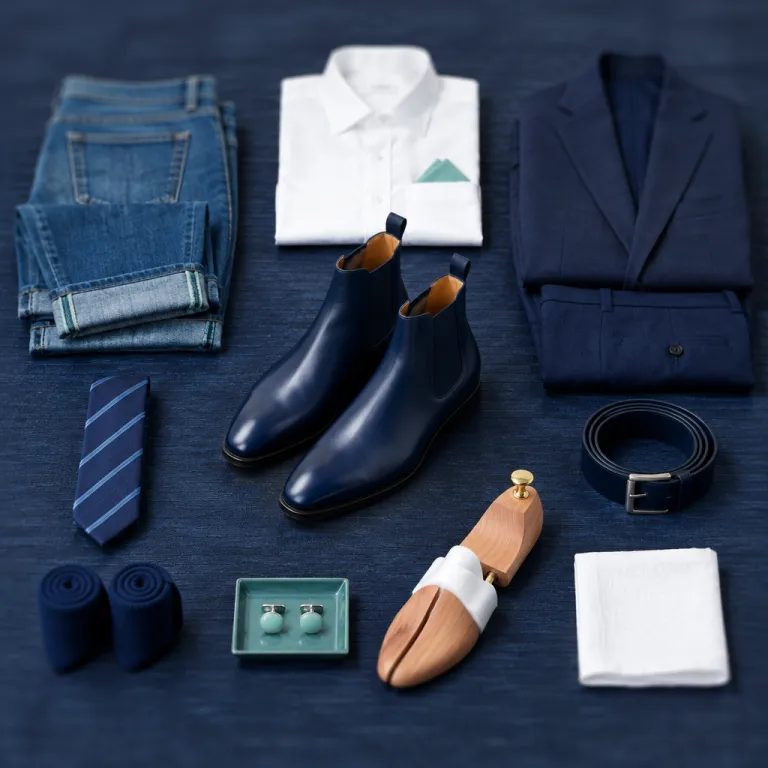
Why Chelsea boots work from boardroom to bar
The search phrase “chelsea boots men how to wear” hides a simple truth. A Chelsea boot is basically a sleek leather sock with a sole, and that clean shape lets the same pair swing between formal and casual without effort. When you understand why this classic boot works, you stop overthinking outfits and start actually wearing your boots.
Look at the silhouette first, because that is where the style power lives. Chelsea boots have no laces, just elastic gussets at the ankle, so the line from calf leather down to the toe stays uninterrupted and sharp, which means the boot can sit under tailored trousers or with jeans without visual noise. That is why one well chosen pair of men’s Chelsea boots will quietly replace three or four other pairs in a young professional wardrobe.
Context then decides whether your Chelsea boots read dressy or rugged. Put a black Chelsea boot in smooth leather under a navy wool suit and the boot becomes almost formal, while the same black Chelsea with a heavier rubber sole and dark jeans suddenly feels casual enough for a gig or a late bar. The best Chelsea boots will always sit in this formal–casual sweet spot, tightening up relaxed looks and relaxing strict ones.
Think of the Chelsea as the opposite of a sneaker that shouts. A classic pair in brown suede or burgundy leather whispers quality, and that restraint is what makes these boots friendly for offices that are not fully corporate but still expect polish. When you are wearing Chelsea boots that fit, the line of your trousers, the drape of your coat and the texture of your knitwear get to speak louder than the footwear.
There is also a psychological edge to this boot. Knowing that your one pair of men’s boots can handle a client lunch, a date and a Sunday coffee in jeans will calm the daily “what do I wear” panic, which is exactly why the Chelsea has become the default fall boot for so many professionals. In a season where outerwear and knitwear get bulkier, a clean ankle boot balances the proportions and keeps the whole outfit from feeling heavy.
Leather versus suede: choosing the right Chelsea for your week
Before you worry about chelsea boots men how to wear with specific outfits, decide what your life actually looks like from Monday to Sunday. If you spend most days in an office with tailoring or smart chinos, a leather Chelsea boot in black or dark brown will carry more weight, while a suede Chelsea boot shines for casual days and creative workplaces. The right mix of leather and suede boots will give you range without filling your hallway with redundant pairs.
Smooth calf leather is the workhorse choice for men’s Chelsea boots that need to handle rain, subway grime and the occasional spilled coffee. A black Chelsea in polished calf leather with a slim leather sole or a discreet Dainite style rubber sole can pass in many formal settings where lace up Oxfords used to be mandatory, yet that same leather Chelsea boot still looks sharp with dark jeans and a merino crewneck. If you only buy one pair for the next few seasons, make it a simple black leather Chelsea with minimal stitching and a slightly tapered round toe.
Suede Chelsea boots bring texture and depth that smooth leather cannot match. A pair in mid brown suede or a burgundy style in rich wine suede instantly softens a navy suit, and the nap of the suede plays beautifully against flannel trousers or washed denim, which makes these boots ideal for smart offices and weekend dinners. Just accept that suede boots will need more care, with regular brushing and spray protection, and that wearing suede on slushy days is a fast way to ruin the nap.
Colour then becomes your second big decision. Black works best for tailoring and monochrome outfits, while brown Chelsea boots and burgundy styles give more relaxed energy with olive chinos, grey wool trousers and mid wash jeans. If you are planning a full wardrobe reset for fall, it is worth reading a broader guide to what to revive and what to replace in your closet, and a September wardrobe reset checklist can help you decide whether you need leather, suede or both.
Texture also affects how the boot ages. A Chelsea in calf leather will crease and polish up over years, while suede boots develop a softer, more lived in patina that suits casual outfits better, and both versions can be resoled if the sole wears down before the upper. When you choose carefully at the start, your best Chelsea boots will feel like part of your personal uniform rather than a trend piece that you abandon after one season.
Sole, size and fit: the details that make Chelsea boots work
Many men ask about chelsea boots men how to wear, when the real issue is chelsea boots men how to fit. A Chelsea boot is unforgiving if the size is wrong, because there are no laces to cinch, so you must get the length, width and ankle opening right from the start. When the fit is dialled in, the boot disappears on your foot and you stop thinking about it all day.
Start with size, and ignore vanity. Most men’s boots in Chelsea form run slightly long, so you may need to go down half a size from your usual sneaker size, but the only reliable test is how your heel sits when you walk, because heel slip is the enemy of every Chelsea boot. If your heel lifts more than a few millimetres or the ankle gapes when you walk, that pair will never feel secure, and you will end up wearing those boots less than you planned.
The ankle fit is especially critical. A good Chelsea boot should hug the ankle without cutting off circulation, and the elastic gussets should feel supportive rather than loose, because that snugness is what keeps the line clean under slim wool trousers or tapered jeans. When the ankle is too wide, the boots will break the silhouette of your leg, and the whole style starts to look sloppy instead of classic.
Sole choice then decides how and where you can wear Chelsea boots. A thin leather sole looks elegant with formal suits but can feel slippery in wet cities, while a Dainite style studded rubber sole or a low profile rubber sole gives grip without turning the boot into a chunky hiking style, and a full lug sole pushes the boot firmly into casual territory with cargo trousers and heavy denim. For a young professional who wants one pair of Chelsea boots to handle both office days and weekend wear, a slim rubber sole hidden under the welt is usually the best compromise.
Comfort is not just about the sole though. The internal structure of a leather Chelsea boot, from the insole to the lining, will decide how the boot feels after a ten hour day, and higher quality calf leather linings tend to mould to your foot over time, while cheap synthetic linings stay stiff and trap heat. If you are also updating your grooming and skin care for colder months, it can be useful to think about footwear comfort in the same way, and a fall grooming switch playbook shows how small seasonal tweaks can dramatically improve daily comfort.
How to wear Chelsea boots with jeans, chinos and tailoring
The real value of this silhouette appears when you start testing chelsea boots men how to wear across your actual wardrobe. With jeans, the formula is simple but precise, because the wrong denim cut can swallow even the best Chelsea boots and ruin the line. Aim for straight or slim straight jeans that skim the ankle of the boot without stacking heavily or flaring out.
For a casual office or weekend look, try a mid wash pair of jeans with a fine gauge crewneck sweater and a brown Chelsea boot in suede, then add a wool overcoat for colder days, because the contrast between rugged denim and refined suede creates that Rolling Stones album cover energy without feeling like costume. If you prefer black denim, a black Chelsea in leather with a black or charcoal knit and a grey topcoat gives a sharp, almost monochrome style that works for drinks, dates and relaxed dinners. The key is keeping the jeans hem just long enough to kiss the top of the ankle without bunching.
Chinos and wool trousers open up more smart casual territory. A sand chino with a burgundy Chelsea boot and an olive overshirt feels relaxed but intentional, while grey flannel trousers with a black Chelsea boot and a navy blazer can handle many offices that have moved away from strict suits, and the Chelsea keeps the outfit from feeling stuffy. When you are wearing Chelsea boots with tailoring, make sure the trouser leg has a slight break at most, because too much fabric pooling over the boot kills the clean line.
Full suits are where many men hesitate. A Chelsea boot in black calf leather with a slim sole can absolutely sit under a navy or charcoal suit for client meetings, especially in industries where a touch of personality is welcome, while a brown Chelsea boot in dark chocolate leather works with mid grey or tobacco suits for less formal days. The trick is to keep the rest of the outfit disciplined, with a crisp shirt and restrained tie, so the boots will feel like a deliberate style choice rather than a lazy swap for proper dress shoes.
Once you have a few reliable outfit formulas, dressing becomes faster. You know that your best Chelsea boots in black leather handle every suit day, your suede pair in brown covers most jeans and chino outfits, and a single burgundy Chelsea adds interest when everything else feels flat, which means your boots will finally earn their space in your rotation. That is the real answer to chelsea boots men how to wear in daily life, not just on mood boards.
Building a small but hard working Chelsea boot rotation
For a young professional, the goal is not owning every boot, it is owning the right boot. A tight rotation of Chelsea boots built around your actual schedule will do more work than a scattered pile of impulse buys, and it will keep your style consistent from Monday to Sunday. Think in terms of roles rather than trends when you plan which pair to add next.
Start with the anchor pair. For most men, that is a black Chelsea boot in smooth calf leather with a slim rubber sole, because this boot can handle formal suits, smart office outfits and evening looks with dark jeans, and the leather upper will age gracefully if you care for it. Once that anchor is in place, your second pair should usually be a brown or burgundy Chelsea in suede, which covers casual days, creative workplaces and weekend wear with denim and chinos.
A third pair then becomes optional rather than urgent. Some men choose a lighter brown Chelsea boot with a chunkier sole for winter, while others go for a black Chelsea with a lug sole that leans more rugged for off duty style, and a few invest in a higher end pair of men’s Chelsea boots from makers like R.M. Williams or Crockett & Jones for long term wear. Whatever you choose, remember that boots will only justify their cost if you are wearing Chelsea boots regularly, not saving them for rare occasions.
Rotation also protects your investment. Letting each boot rest at least a day between wears allows the leather or suede to dry out fully, which extends the life of the upper and the sole, and using cedar shoe trees helps maintain the shape of the ankle and vamp. When you treat your boots like part of a system rather than isolated purchases, you avoid the trap where boots sit untouched because they do not quite fit any outfit.
This is also the moment to think about the future of your wardrobe. Regulations like the upcoming Digital Product Passport in the European Union are pushing brands to share more data about materials, repairability and supply chains, and guides such as what menswear buyers need to know about product passports show how this will affect leather and suede footwear. Choosing Chelsea boots from brands that already offer resoling, clear material information and transparent sourcing will make your rotation more sustainable and easier to maintain over many seasons.
Care, longevity and when to replace your Chelsea boots
Even the best Chelsea boots will only look as good as the care you give them. A simple routine keeps leather and suede healthy, preserves the shape of the ankle and ensures the sole wears evenly, which means your boots stay in rotation instead of becoming “backup” pairs. Think of maintenance as part of chelsea boots men how to wear, not an optional extra.
For leather Chelsea boots, the basics are non negotiable. Brush off dust after wearing, use cedar trees overnight, condition the calf leather every few months with a quality cream and polish black or brown Chelsea boots when the surface starts to look dull, because dry leather cracks faster and loses its clean line. Suede Chelsea boots need a different approach, with regular brushing using a suede brush, prompt treatment of stains with a dedicated cleaner and a protective spray applied before the wet season, and skipping these steps will age the boots prematurely.
Soles tell you when it is time to act. If the heel is wearing down on one side or the front of the sole is getting thin, a cobbler can usually resole a quality Chelsea boot before the upper is damaged, and this is where investing in better men’s boots pays off, because cheap glued soles often cannot be replaced. When boots will no longer hold a shine, the ankle has collapsed or the lining is torn beyond repair, it is time to retire that pair and let a new Chelsea take over daily duty.
Storage matters more than most men think. Keeping Chelsea boots in a cool, dry place away from direct heat prevents the leather or suede from drying out, and using shoe bags when travelling protects the uppers from scuffs that ruin the clean style of the boot, especially on black pairs that show every mark. If you rotate between two or three Chelsea boots, each pair will enjoy longer rest periods, which slows down wear on the sole and lining.
Care is also where personal style shows. Some men prefer their leather Chelsea boots mirror polished and almost formal, while others like a softer, lived in finish that suits casual jeans and chinos, and both approaches are valid as long as the boots remain structurally sound. The point is not perfection, it is making sure your Chelsea boots still feel like the best option in your wardrobe every time you reach for them.
Key statistics on Chelsea boots and men’s footwear habits
- According to data from the NPD Group’s U.S. Footwear Retail Tracking Service, men’s boot sales in the United States grew by around 10 percent between 2017 and 2019, and Chelsea boots were among the strongest performers within the casual and dress boot category.
- Market research from Euromonitor International’s “Footwear in the US” and global footwear reports indicates that leather footwear still represents more than half of the men’s dress shoe and boot market by value, which underlines why investing in quality calf leather Chelsea boots remains relevant despite the rise of sneakers.
- Surveys from several large online retailers, including 2022–2023 internal style reports from platforms such as ASOS and Zalando, show that black remains the top selling colour for men’s Chelsea boots, but brown and suede variants have gained share as offices adopt more relaxed business dress codes.
- Industry repair data from independent cobblers and organisations like the UK’s Society of Master Shoe Repairers suggests that a well made leather Chelsea boot with a replaceable sole can often be resoled two or three times, extending the practical life of the boot to well over five years of regular wear.
- Consumer behaviour studies in menswear, including McKinsey’s “State of Fashion” reports and surveys by Business of Fashion, report that many young professionals now prefer owning a smaller rotation of versatile boots and shoes, with Chelsea boots frequently cited as the single pair that can move from jeans to tailoring without a change.
FAQ: Chelsea boots for men
How should Chelsea boots fit around the ankle and heel ?
A Chelsea boot should feel snug around the ankle with the elastic panels providing gentle pressure, and your heel should sit securely with only minimal lift when you walk. If the ankle gapes or the heel slips noticeably, the size or last is wrong, and that pair will feel unstable and break the clean line under your trousers.
Are black or brown Chelsea boots more versatile for men ?
Black Chelsea boots in smooth leather are usually more versatile if you wear suits or dark tailoring regularly, because they can handle formal settings and still work with dark jeans. Brown Chelsea boots, especially in suede, offer more range with casual outfits, chinos and lighter denim, so many men eventually own one of each to cover all situations.
Can you wear Chelsea boots with a suit in a corporate office ?
You can wear a simple leather Chelsea boot with a suit in many modern corporate offices, provided the boot has a slim sole, a clean toe shape and is well polished. In very conservative environments that still expect traditional Oxfords, Chelsea boots may be better reserved for business casual days and less formal meetings.
What trouser length works best with Chelsea boots ?
The ideal trouser length for Chelsea boots is a slight break or no break, where the hem just touches the top of the boot without heavy stacking. This keeps the silhouette clean, shows enough of the ankle area to define the boot and avoids bunching that can make even high quality boots look sloppy.
How many pairs of Chelsea boots does a young professional really need ?
Most young professionals can cover almost every scenario with two pairs of Chelsea boots, one black leather pair for formal and office wear and one brown or burgundy suede pair for casual and smart casual outfits. A third pair with a chunkier sole or different colour becomes a style choice rather than a necessity, useful if you want more variety or live in a harsher climate.