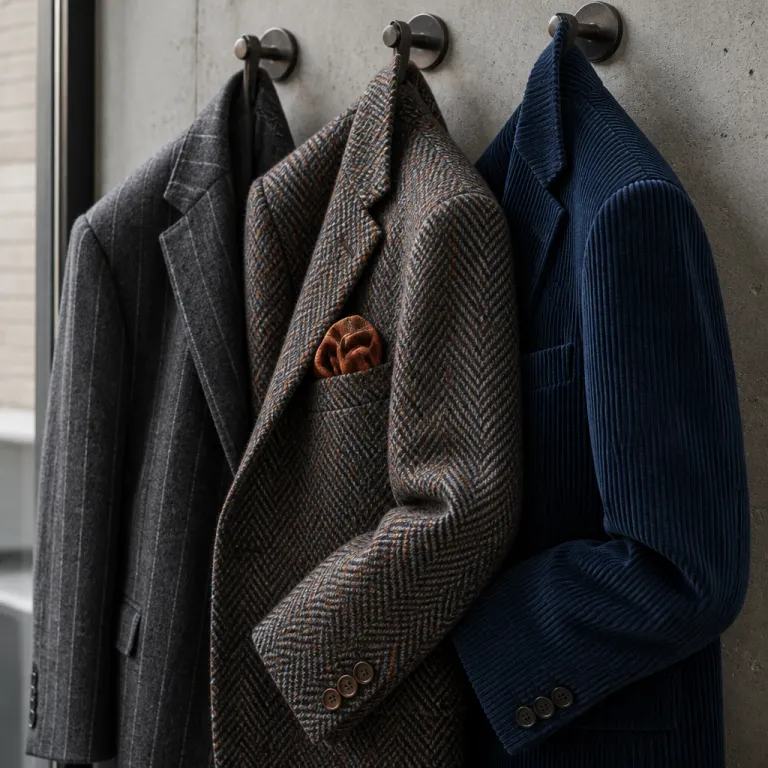
Why fall cloth matters more than the cut of your suit
A worsted navy suit looks competent in summer but feels flat once leaves hit the pavement. For fall suit fabrics men should think less about peak lapels and more about how the fabric handles cold air, artificial heating and long commutes. The right fall suiting fabric makes even a basic office suit feel intentional, tactile and quietly expensive.
Start with wool, because proper wool suiting is still the backbone of serious tailoring for men who actually work in their suits. A mid weight wool fabric around 260 to 320 g per square metre gives enough body for structure while staying light enough for overheated conference rooms. When mills label a cloth as super wool they refer to fibre fineness, not quality alone, so a Super 110 wool blend can outlast a fragile Super 150 suit wool in real office rotation.
Fall is where flannel, tweed and corduroy enter the picture and change how suits read in grey, navy or brown. A brushed flannel suit in navy blue or light grey softens the sharpness of a corporate uniform and adds depth that plain blue worsted never achieves. Tweed and corduroy fabrics bring texture and visual weight that make brown blue combinations, windowpane patterns and even color black details feel richer instead of harsh.
For fall suit fabrics men often underestimate how much color interacts with texture. A dark grey flannel fabric absorbs light and looks almost matte, while a similar dark grey worsted wool reflects more and feels dressier. Navy and brown in wool blend tweed or corduroy read relaxed but still professional, especially when the jacket and trousers can be split and worn as separates.
Think of fabric as the operating system of your suits, with cut and styling as the apps you run on top. The same single breasted two button suit pattern behaves completely differently in flannel, in crisp cotton or in a wool silk linen blend. Once you understand how each fabric ages, creases and drapes, you stop chasing trends and start building a rotation that works from Monday morning commute to late client drinks.
Flannel: the soft workhorse for real office weather
Flannel is simply wool that has been milled and brushed to raise a soft nap on the surface. That brushed texture traps air, which makes a flannel suit warmer than a smooth worsted wool suit of the same mid weight fabric. It also diffuses light, so navy blue flannel reads deeper and more luxurious than shiny navy worsted.
For fall suit fabrics men should treat flannel as the default choice when they want one suit that handles both chilly commutes and overheated open plan offices. A mid weight flannel around 300 g in light grey or dark grey gives enough structure to keep a sharp crease while still feeling comfortable when you sit for hours. Choose wool suiting from reputable italian mills such as Vitale Barberis Canonico or Loro Piana, because their content wool blends balance softness with durability better than anonymous budget fabrics.
Color does a lot of heavy lifting here, especially in grey, navy and brown. A light grey flannel suit with a subtle windowpane pattern in blue or brown blue can be split into a separate jacket and trouser without looking like you forgot the rest of your suit. A dark grey or navy blue flannel suit in a plain weave is more formal, but still pairs easily with cotton shirts, silk knit ties and even black calf shoes when the dress code leans conservative.
When you read a flannel fabric description, look for words like wool blend, wool silk or wool linen blend and check the exact content wool percentage. A pure wool flannel drapes more fluidly, while a small percentage of nylon or elastane can help the knees and seat resist bagging over time. If you want a slightly more refined surface, a wool silk blend flannel from Vitale Barberis or Loro Piana will feel smoother while still giving that soft fall suiting character.
Fit matters more with flannel than with a crisp cotton or linen suit, because the nap hides some lines but exaggerates pulling across the button. Go for a slightly fuller chest and a touch more room in the thigh so the fabric can drape instead of strain. If you are shopping separates, a tailored fit navy flannel trouser like the Haggar premium wool tailored pant in navy is a useful benchmark for how a modern office flannel should sit on the waist and break over the shoe, even if you later commission a custom flannel suit from an italian mill.
Tweed: texture, durability and the art of wearing your suit as separates
Tweed started as a rural performance fabric, built from robust wool yarns spun thick and woven loose for warmth and weather resistance. In a city context that same rugged wool suiting cloth gives your tailoring a textured surface that hides wear and softens formal lines. For fall suit fabrics men who want one outfit that can handle both a client lunch and a weekend bar should seriously consider tweed.
Most modern tweed suiting is a wool blend, often mixing wool with a little silk, linen or synthetic fibre to reduce weight and sharpen the drape. A mid weight tweed around 340 g in brown, blue or grey feels substantial without turning your office into a sauna. Italian mills such as Vitale Barberis Canonico and Loro Piana excel at tweed blends that keep the rugged look but refine the hand, especially in brown blue mixes and navy blue windowpane wool designs.
Pattern is where tweed really earns its place in a young professional wardrobe. A subtle windowpane tweed in light grey with a navy overcheck can be worn as a full suit for smart business casual, then split into a sport coat over cotton chinos or dark denim on Friday. A brown tweed suit with a faint blue windowpane or windowpane flannel effect works beautifully with black boots, navy knitwear and even a color black leather belt without feeling forced.
For fall suit fabrics men should also think about how tweed ages, because this is a fabric that rewards repetition. The elbows will soften, the lapels will roll more naturally and the overall surface will pick up a gentle fuzz that makes the jacket look lived in rather than tired. That patina is why a tweed suit wool jacket often outlives smoother fabrics in real wardrobes, especially when you rotate it with flannel and corduroy options.
When the invite says cocktail, creative black tie or confusing semi formal, a textured tweed suit in navy or dark grey can be a smarter choice than a shiny color black worsted. Pair it with a crisp cotton shirt, a dark silk tie and polished black oxfords and you look intentional, not overdressed. For more detailed guidance on reading dress codes and choosing the right fabric weight and color for weddings or evening events, a dedicated breakdown of modern wedding guest dress codes is worth studying before you invest in your next fall tweed suit.
Corduroy: casual richness that still works in a serious office
Corduroy is simply a cotton or cotton blend fabric woven with raised ribs, then sheared to create parallel wales that catch the light. In fall suit fabrics men often overlook corduroy because they associate it with professors or vintage photos, but modern tailoring cuts make a corduroy suit sharp rather than costume. The key is choosing the right wale width, weight and color for your office reality.
A mid weight corduroy around 300 to 350 g in a fine to medium wale gives enough structure for a suit while staying comfortable indoors. Cotton corduroy has less natural stretch than wool, so a slightly relaxed cut in the thigh and seat helps the fabric drape instead of pulling across the hips. Many italian mills now offer corduroy suiting blends that mix cotton with a little wool or silk, which improves recovery and makes navy, brown and dark grey shades look deeper.
Color is where corduroy shines for fall, especially when you already own a navy or grey wool suit. A rich brown corduroy suit with a soft blue shirt and black loafers feels modern, not retro, and the jacket works perfectly as a separate over wool flannel trousers. Navy blue corduroy in a fine wale can almost pass as a textured wool blend from a distance, which makes it a safe entry point for conservative offices.
For fall suit fabrics men should also consider how corduroy interacts with other textures in their wardrobe. A brown blue corduroy jacket over a light grey flannel trouser and a navy knit tie creates a layered, tonal look that feels deliberate. Add a black leather belt and a watch with a square case and you have a subtle nod to contemporary style without shouting about trends, especially if you understand how a square watch can redefine elegant style for men in a tailored context.
Corduroy does show wear at the knees and seat faster than tightly woven wool suiting, so rotation matters. If you plan to wear a corduroy suit twice a week, consider owning two different colors, such as navy and brown, and alternate them with a flannel suit or a tweed option. That way the fabric has time to recover between wears, and the suit wool or cotton blend retains its shape and rich surface for more seasons.
Reading fabric weight, weave and how your suit will age
Most product pages throw numbers at you, but for fall suit fabrics men need to translate those grams and weaves into real world performance. Fabric weight, usually given in grams per square metre, tells you how substantial the cloth will feel on the body. Weave and fibre content explain how that weight turns into drape, crease resistance and long term comfort.
For fall, a mid weight range between 260 and 340 g covers most office and social situations without forcing you into seasonal extremes. A 260 g wool suiting in navy blue from Vitale Barberis Canonico will feel light enough for a heated subway but still hold a clean crease, while a 320 g flannel suit in dark grey from Loro Piana will feel more cocooning on windy days. When you see content wool listed as 100 percent, expect more natural breathability, while a wool blend with a small percentage of silk or linen can add subtle sheen or dry hand feel.
Weave matters as much as weight, especially for how a suit ages over months of wear. A plain weave wool or wool silk blend tends to be more stable and matte, which suits conservative navy and grey business suits. A twill weave in flannel, windowpane wool or windowpane flannel gives more diagonal movement and softness, which works beautifully for brown, blue and light grey fall tailoring that you plan to wear as separates.
For fall suit fabrics men should also pay attention to how different fibres handle creasing and recovery. Linen and wool linen blends crease easily but relax into a soft, lived in look that works for more casual offices, especially in brown or light grey. Silk and wool silk blends resist creasing better and add a subtle lustre, which can make color black or navy blue suits feel more evening appropriate without going full tuxedo.
Finally, think about how your lifestyle interacts with fabric choice, not just how the suit looks on day one. If you commute by car and sit at a desk all day, a robust mid weight wool blend or flannel will outlast a fragile super fine worsted, even if the label says super wool. If you walk a lot and run warm, a lighter wool linen or linen suit in a darker shade like navy or dark grey might be smarter, because the fabric breathes better while still reading tailored and intentional.
Color logic, relaxed fits and building a modular fall wardrobe
Once you understand the main fall suit fabrics men should stop thinking in single outfits and start thinking in modules. The goal is to buy suits whose jackets and trousers can work separately without looking like orphans. That is where color, pattern and fit decisions either unlock versatility or trap you in one narrow look.
For fall, grey, navy and brown are your anchor colors, with black used sparingly. A light grey flannel suit with a subtle windowpane in blue or brown blue can be split into a sport coat over navy wool trousers or a separate trouser under a navy blazer. A dark grey tweed or windowpane wool suit gives you a serious office option that still pairs naturally with cotton shirts, silk ties and even color black shoes without feeling stiff.
Navy blue remains the most flexible base, but texture changes its personality dramatically. A navy flannel suit feels softer and more relaxed than a smooth worsted, while a navy corduroy or wool blend tweed leans casual and works better with knitwear and boots. Brown in mid weight tweed or corduroy is the quiet hero of fall, because it pairs effortlessly with blue, grey and black accessories and makes even a simple cotton shirt look considered.
Fit has shifted in recent seasons, and fall tailoring reflects that. Jackets are slightly longer, shoulders a bit more defined and trousers roomier through the thigh, which suits heavier fabrics like flannel, tweed and corduroy. For fall suit fabrics men should embrace this relaxed precision, because a fuller cut lets mid weight wool, wool linen and wool silk blends drape cleanly instead of clinging.
Build your wardrobe around three core suits in different fabrics and colors, then expand with targeted separates. For example, a navy blue flannel suit, a light grey tweed windowpane suit and a brown corduroy suit wool blend give you nine or more outfit combinations once you start mixing jackets and trousers. From there you can add a linen suit for warmer days, a pure black wool suiting option for strict events and a few high quality accessories in silk, cotton and leather to tie everything together.
Key figures on fall tailoring and fabric performance
- According to data from major italian mills, mid weight wool suiting between 260 and 320 g now represents more than half of their business suiting production, reflecting a shift toward year round fabrics that still handle fall temperatures comfortably.
- Industry reports from menswear retailers show that flannel suit sales typically rise by around 30 percent between late summer and early fall, as professionals look for warmer yet office appropriate alternatives to standard worsted wool suits.
- Surveys of young professionals in large US cities indicate that more than 60 percent now wear suit jackets or tailored blazers as separates at least once a week, which increases the value of versatile fabrics such as tweed, flannel and corduroy.
- Data from luxury mills like Vitale Barberis Canonico and Loro Piana suggest that wool blend fabrics containing small percentages of silk or linen have grown steadily in demand, as they offer better comfort and texture without sacrificing the durability of pure wool.
- Retail analytics from multi brand stores show that navy blue, grey and brown together account for over 80 percent of fall suiting sales, confirming that these colors remain the most practical base for modular wardrobes built around flannel, tweed and corduroy.
FAQ about fall suit fabrics for men
What is the best fabric weight for a fall suit I can wear to work?
For most offices, a mid weight wool or wool blend between 260 and 320 g per square metre is ideal. This range gives enough structure for a clean drape while staying comfortable in heated buildings. If you run cold or live in a cooler climate, moving up to around 320 g in flannel or tweed will add warmth without feeling bulky.
Should I choose flannel, tweed or corduroy for my first fall suit?
If you only buy one fall suit, flannel in navy or grey is usually the most versatile choice. It works in conservative offices, dresses up easily with a silk tie and can still be worn as separates on casual days. Tweed and corduroy are excellent second and third options when you want more texture and a slightly more relaxed look.
Can I wear a brown or olive suit in a corporate environment?
In many modern corporate settings, a well cut brown or olive suit in tweed, flannel or corduroy is acceptable, especially on business casual days. The key is keeping the cut classic, the pattern subtle and pairing it with crisp cotton shirts and polished shoes. If your office is very conservative, reserve brown and olive for days without major client meetings.
How do I care for flannel, tweed and corduroy suits so they last?
Rotate your suits and avoid wearing the same flannel, tweed or corduroy suit on consecutive days, because these fabrics benefit from rest. Use a clothes brush after each wear, hang the suit on a wide hanger and steam out light wrinkles instead of dry cleaning frequently. Dry clean only when visibly soiled or after several wears, as excessive cleaning can strip natural oils from wool fibres.
Is black still a good color for a fall suit?
Black suits in smooth worsted wool are best reserved for formal events, evening wear or specific professional contexts such as hospitality or security. For everyday fall tailoring, navy, grey and brown in textured fabrics like flannel, tweed and corduroy are more flattering and easier to mix with the rest of your wardrobe. If you like darker tones, a very dark grey or midnight navy often looks softer and more sophisticated than pure black in daylight.