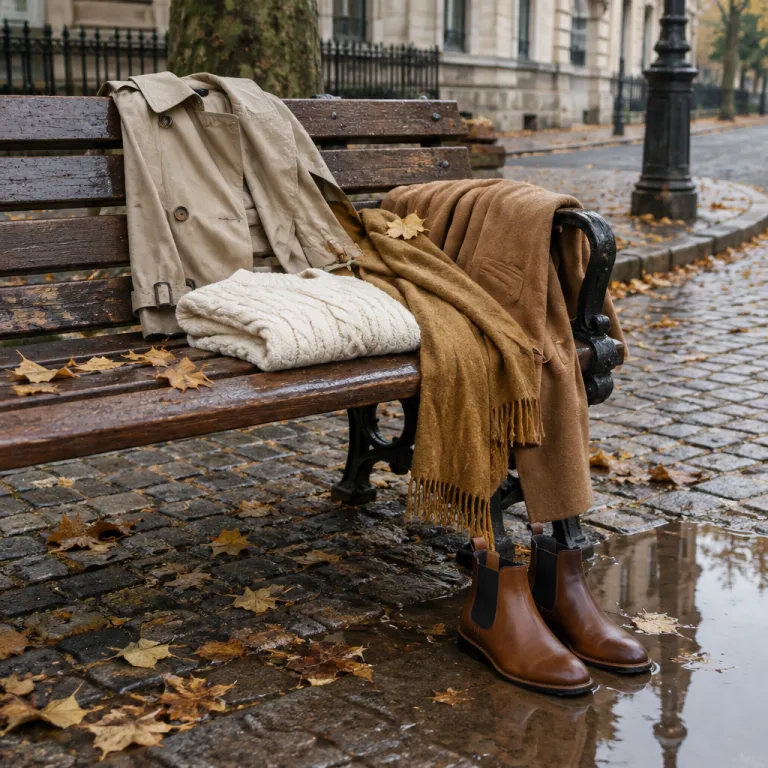
The five piece core that defines cold weather outfits for men in fall
The first cold snap exposes every gap in a man’s winter wardrobe. One day a lightweight jacket feels fine, the next morning you need a serious coat and an extra layer just to stay warm on the platform. Fall and early winter outfits work best when they start from five reliable layers you can combine, not a pile of random menswear bought in panic.
For a young professional, those five anchors are a warm coat, a chunky sweater, a reliable boot, a scarf, and one weatherproof jacket that can handle sideways rain. Each piece has to pull office duty, weekend duty, and late night bar duty, because cold-season dressing fails when items only work in one narrow context. Think of them as modular building blocks for bad weather, not statement pieces you baby and rarely wear.
The coat should be wool or a wool blend, cut to mid thigh for coverage without swallowing your frame. A tailored field jacket in dense cotton or technical fabric becomes the workhorse jacket for commutes, while a bomber jacket in a relaxed fit handles off duty nights. Your chunky knit sweater, ideally a textured Fair Isle or other patterned knit in soft but durable yarn around 350–450 GSM (a common weight range for warm mid layers), is the visual engine that makes autumn outfits feel intentional instead of just functional.
Boots matter as much as the coat because wet socks ruin even the most put-together look. Go for a leather lace up with a grippy rubber sole that can handle November frost and light snow, then rotate in sneakers only on dry days. Add a wool scarf and you have an extra layer you can peel off in overheated offices without wrecking the overall fit.
The fifth piece is a weatherproof shell or insulated jacket that can slide over a blazer or a button sweater without bunching. Look for a soft but structured fabric that keeps a clean line over your shirt and does not balloon at the hem. When these five pieces are chosen with care, getting dressed for cold mornings becomes almost automatic, even when the forecast swings between drizzle and near-freezing wind.
Autumn sweaters: the engine of warm stylish layering
If outerwear is the frame, the autumn sweater is the engine that powers most cool-weather looks. A good cozy sweater in wool or a wool cashmere blend gives you warmth without bulk and enough texture to sit under both coats and jackets. The goal is simple: you want to stay warm while keeping a sharp, office ready line.
Start with one heavyweight crew neck sweater in a relaxed fit that still respects your shoulders and torso. This can be a Fair Isle sweater with a subtle pattern, a ribbed button sweater, or a clean zip sweater that doubles as a light jacket on milder days. A quarter zip or full zip style in dense fleece or brushed cotton works especially well for business casual offices where a blazer feels too stiff but a hoodie looks underdressed.
Sweater GSM guide and fabric choices. Fabric is where most men go wrong, chasing the softest hand instead of the right GSM and fiber mix. Pure lambswool or merino can be incredibly warm and durable, but a touch of synthetic (5–15% nylon or polyester) adds abrasion resistance when you are wearing it solo under a rougher field jacket or bomber jacket. As a rough benchmark, lighter knits often sit around 250–320 GSM, while denser autumn sweaters land closer to 350–450 GSM for real cold-weather performance.
Rotation matters as much as selection, because sweaters need recovery time between wears. Two or three core sweaters, including at least one cozy knit in a neutral and one textured pattern, will cover most cool-season scenarios from Friday desk days to Sunday coffee runs. Keep one lightweight knit for early fall and one extra warm option for the edge of November frost, and your weekly outfits will never feel repetitive.
Pay attention to necklines and how they frame your shirt collars. A crew neck works best with an Oxford button down, while a quarter zip or zip sweater lets you adjust how much shirt you show depending on how formal the day feels. That small control over exposure and layering is what separates thrown together cold weather looks from intentional, warm stylish outfits.
Layering maths: from October rain to November frost
Layering for fall and early winter is less about piling on fabric and more about sequencing. You want thin to structured stacking: a soft base, a warm mid layer, then a protective shell that keeps wind and water out. Done right, you can walk from a wet sidewalk into a heated meeting room without feeling like you are wearing armor.
Think in three layers most days. Start with a breathable shirt or long sleeve tee, add a textured sweater or fleece mid layer, then finish with a coat, bomber jacket, or field jacket depending on the forecast. On milder days, that mid layer can be a lightweight zip sweater in a relaxed fit, while on harsher mornings you swap in a denser wool knit or insulated jacket as the extra layer.
Best waterproof shells and rain-ready outerwear. Rain complicates everything, because water resistant and waterproof are not the same promise. Water resistant jackets and coats will shrug off a quick dash between subway and office, but they eventually soak through in a long downpour, while truly waterproof shells use sealed seams and membranes like GORE-TEX or similar breathable laminates to keep you dry for hours. For the awkward shoulder season when temperatures swing wildly, apply the same logic you would use for late summer to early fall transitions: breathable base layers, a reliable mid layer, and a shell you can pack away when the sun appears.
Here is how the five piece core recombines into a week. Monday, you wear a shirt, cozy sweater, and wool coat for a client meeting, then peel the coat off indoors while the knit keeps you warm and polished but not stuffy. Tuesday, you swap the coat for a field jacket and add a scarf as an extra layer, which turns the same base into something more relaxed for a late drink.
By Thursday, the temperature drops and you bring in the bomber jacket over a quarter zip fleece, which gives you a sporty but still business casual profile. Saturday, you are wearing a chunky Fair Isle sweater with jeans and boots, keeping a lightweight jacket in your bag in case the wind picks up. Cool-weather outfits fall into place when you treat each piece as a variable in an equation, not a fixed uniform.
Warmth without bulk and the bridge into deep winter
Staying warm without looking like a walking duvet is the real test of cold weather style. The trick is to let fabric do the heavy lifting instead of sheer volume, choosing wool, fleece, and insulated weaves that trap air efficiently. When you pick the right materials, you stay warm while your silhouette stays clean enough for business casual offices and evening plans.
Look for coats and jackets with a soft but structured hand and a medium weight lining. A wool coat with a quilted interior panel, a field jacket with a removable fleece liner, or a bomber jacket with light synthetic insulation (around 60–80 g of fill is common for everyday city wear) all give you an extra layer of warmth without ballooning your frame. Underneath, a cozy sweater in a relaxed fit, a quarter zip fleece, or a button sweater in dense yarn will feel warm and stylish while still sliding easily under tailored outerwear.
The bridge from October rain to January ice is about choosing which pieces carry over. Your wool coat, textured sweaters, and waterproof jackets will all earn their place in deep winter, while a very lightweight jacket or shirt jacket may retire once real frost hits. The same principle applies across seasons: buy fewer, better pieces that match the real conditions you face instead of chasing trends you rarely wear.
Some items are late fall specialists. A mid weight zip sweater or quarter zip in cotton fleece, for example, shines when you are wearing it over a shirt in October but feels underpowered in true winter. By contrast, a dense Fair Isle sweater in lambswool moves effortlessly from cold commutes to deep winter weekends with only a change of coat.
Remember that your fall wardrobe should still feel like you, not like a catalog mannequin. Choose clothing that respects your proportions, from the break of your trousers over boots to how your relaxed fit knit drapes at the hip. The goal is simple: build a small set of warm, stylish tools that work hard from October rain to November frost, then keep working quietly through the Monday morning commute when winter finally bites.
FAQ: smart layering for the first cold snap
How many sweaters does a young professional really need for fall ?
Most men can cover fall with three core sweaters. Aim for one lightweight knit for early cold weather, one cozy sweater in a relaxed fit for everyday office wear, and one textured Fair Isle or button sweater for weekends and more visual outfits. Rotate them so the wool fibers can recover between wears, which keeps them soft and warm for longer.
What is the best coat length for commuting in October and November ?
A mid thigh wool coat is usually the sweet spot for cool-weather commuting. It covers your blazer or shirt and keeps your hips warm without restricting movement on stairs or subway platforms. Shorter jackets like a bomber jacket or field jacket still have a place, but they work best layered with a scarf and a thicker sweater.
Can a quarter zip sweater work in a business casual office ?
Yes, a clean quarter zip in wool or high quality fleece can look sharp in business casual settings. Pair it with a crisp shirt, dark trousers, and leather boots, then add a coat or field jacket for the commute. Avoid loud logos and overly sporty details so the piece reads as knitwear, not gym gear.
How do I choose between water resistant and waterproof outerwear ?
If your commute is short and mostly covered, a water resistant jacket or coat is usually enough for fall. Men who walk longer distances or live in cities with heavy October rain should invest in at least one truly waterproof shell with sealed seams and a breathable membrane. You can always layer that shell over a wool coat or cozy sweater when temperatures drop further.
Which of my fall pieces will still work in deep winter ?
Your wool coat, dense sweaters, and insulated jackets will all carry into winter with only minor adjustments. Lightweight jackets and very thin knits may become mid layers or stay in the closet once temperatures fall below freezing. Focus on building a core of warm, stylish pieces perfect for layering so your fall outfits do not need a full reset when winter arrives.