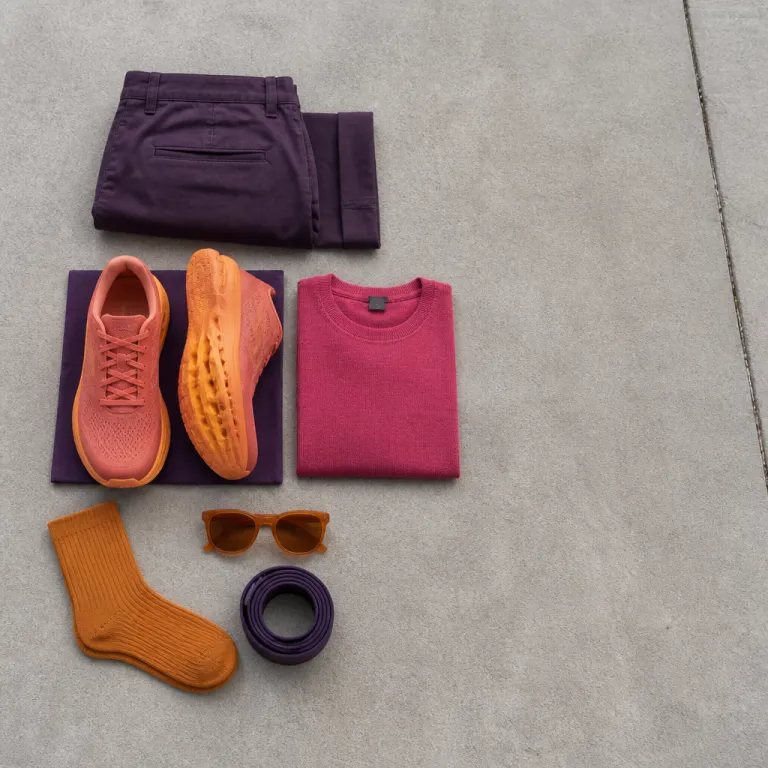
The shift to performance: how running shoes replaced classic sneakers
Modern running shoes for men have moved from the track to the sidewalk. The same performance trainer that once lived only with split shorts now sits under pleated trousers, because men finally realised that all-day comfort does not have to look bulky or orthopedic. When you scan what guys are wearing in tech offices or creative agencies, the default casual shoe is no longer a retro basketball high-top but a sleek pair of runners with a clean upper and a measured stack height.
The shift started when brands proved that a max-cushioned midsole with serious shock absorption did not require a cartoon-thick heel stack. Modern foam compounds like Nike ZoomX, Adidas Lightstrike Pro and New Balance FuelCell deliver high energy return in a relatively slim stack, so the shoe profile stays sharp while the ride stays soft. That balance between a cushioned landing and a low visual profile is exactly why streamlined running sneakers now work with wider trousers, because the lighter shoe visually anchors the leg instead of competing with it.
Look at a pair of shoes Nike designed for daily trainer duty, such as the Nike Pegasus or the Adidas Adizero Boston, and you see the template. The heel stack and forefoot stack are high enough for long men’s running sessions, yet the drop is moderate and the silhouette is tapered, which reads more like a refined sneaker than a pure performance tool. For a young professional who wants one pair that covers runs, commutes and a casual office, that hybrid identity is the best possible compromise.
Why the slim runner works with wider pants and modern tailoring
Menswear has swung toward relaxed fits, and lightweight running trainers quietly solved the proportion puzzle. Wide-leg chinos, straight-cut jeans and soft pleated wool trousers all need a slimmer shoe to keep the outfit from feeling heavy, so a low-profile runner with a sculpted heel and a clean upper gives that crucial contrast. When you pair a chunky lifestyle sneaker with the same trousers, the combined stack height and volume at the hem can make the whole look feel clumsy rather than intentional.
Performance models like the Nike Pegasus, Adidas Adizero SL or Nike Vaporfly use a curved forefoot stack and rocker geometry that visually thins the shoe from the side. That rocker shape, originally designed so the shoe rolls smoothly as it runs, also creates a sleek line under a break in the trouser, which is why these trainers now appear in street-style shots outside offices as often as outside stadiums. The pros are clear for men who walk a lot during the day, because the soft foam and tuned drop protect the heel while the upper stays breathable in overheated meeting rooms.
There are cons to manage if you want the best style outcome, and they mostly come from overly loud performance details. Very high-contrast colour blocking, exaggerated heel fins and aggressive trail-running lugs can fight against minimalist tailoring, so choose a daily trainer with a relatively simple upper and a mid-level stack height. For more visual guidance on how to elevate your style with the perfect pair of running shoes, you can study the looks broken down in this dedicated running shoe style guide.
Retro runners versus modern performance: knowing which shoe you are wearing
Not every running shoe on the sidewalk is built the same way, and men’s performance sneakers sit on a spectrum from heritage to hyper-modern. Retro runners from the eighties and nineties, like the original Nike Pegasus or early Adidas Adizero racing flats, used thin EVA foam, low-stack soles and simple mesh uppers that now read as classic casual shoes. Modern performance models such as Nike Vaporfly or the latest Pegasus Trail versions use tall heel stacks, carbon plates and complex uppers that signal cutting-edge running technology at a glance.
For style, the key is understanding what message each shoe sends before you build the outfit around it. A heritage running shoe with a flat ride and minimal drop behaves almost like a traditional sneaker, so it pairs easily with washed denim, Oxford shirts and unstructured blazers without drawing attention to the heel stack or forefoot stack. A max-cushioned daily trainer with a pronounced rocker and visible foam feels more futuristic, which works best with technical fabrics, tapered joggers and sharp overshirts that echo the performance story.
If you are unsure which last or shape will flatter your foot, especially in smaller sizes, it helps to study how different brands sculpt the shoe around the heel and forefoot. Resources that explain the importance of the men’s size 7 shoe last for perfect fit, such as this technical breakdown of lasts and fit, can guide you toward running shoes that look streamlined instead of bulbous. Once you know whether your foot suits a narrow Nike trail silhouette or a broader Adidas Adizero trainer, you can choose pairs that enhance your outfits rather than fighting them.
How to style running shoes with chinos, tailoring and shorts
Styling athletic running shoes with everyday outfits starts with treating the shoe as a deliberate choice, not an afterthought. With chinos, aim for a straight or slightly tapered leg that ends just on the top of the running shoe heel, because too much break will swallow the forefoot and hide the clean line that makes these shoes work. Neutral options for men, like white, grey or navy Nike Pegasus or Adidas Adizero trainers, slide under beige or olive chinos without shouting, while a brighter shoe can sit under darker trousers for a controlled pop.
With tailored trousers, fabric and drape matter as much as the shoe. A soft wool trouser with a medium rise and a gentle taper pairs well with a low-profile daily trainer that has a modest stack height and a refined upper, such as a Pegasus Trail in a muted colourway or a pared-back Nike trail runner with toned-down outdoor details. The pros here are comfort and a modern edge, but the cons appear if the running shoe is too chunky or the drop is so aggressive that the heel stack looks like a wedge under a formal crease.
Shorts demand a slightly different approach, because more of the running shoe is visible and the proportions shift. Keep shorts around mid-thigh to just above the knee, then choose a running shoe with a balanced heel stack and forefoot stack so the ride looks athletic but not cartoonish, and avoid overly tall max-cushioned models unless your frame is large. For accessories, a slim watch and discreet tech pieces such as the refined items highlighted in this selection of top charging accessories keep the outfit feeling intentional rather than like you just left the gym.
Reading the materials: which performance details look stylish on the street
Materials are where performance running shoes for men either succeed or fail in a city setting. Mesh uppers, reflective hits and sculpted foam can look sharp when the colour palette is restrained, but the same details can feel too sporty if the shoe is overloaded with neon and graphics. When you evaluate a running shoe for street wear, look first at the upper pattern, because a clean mesh with minimal overlays will always pair more easily with tailoring than a busy, logo-heavy design.
Technical foams and plates matter for performance, yet they also change the visual language of the shoe. A max-cushioned midsole with visible foam and a high stack height signals speed and distance, which can be a pro if you lean into a techwear aesthetic with nylon cargos and shell jackets, but a con if you want the shoe to disappear under classic denim. For most men moving between meetings and social events, a daily trainer with moderate shock absorption, a controlled heel stack and a smooth ride offers the best stability for both style and comfort.
Trail-running models such as Nike ACG designs or the Pegasus Trail introduce extra elements like lugs, toe bumpers and reinforced uppers, which can either complement rugged workwear or clash with minimalist outfits. Choose trail shoes Nike offers in darker, tonal colourways if you want them to function as urban hikers, and keep the drop and forefoot stack reasonable so the shoe does not overpower slim trousers. When you handle the shoe in person, flex the forefoot, press the foam and check how soft or firm the ride feels, because that tactile feedback often tells you more about long-term comfort than any marketing copy.
When running shoes undermine the outfit and what to buy instead
Incorporating running footwear into men’s style does not mean every performance model belongs in every outfit. There are clear situations where a technical trainer, no matter how sleek the upper or how balanced the stack, will undercut the formality you need, such as weddings, black-tie events or high-stakes client meetings. In those contexts, the cons of visible foam, pronounced heel stacks and sporty branding outweigh the pros of comfort and energy return.
For important presentations or conservative offices, swap the running shoe for a leather loafer, a slim Derby or a minimal leather sneaker with a flat sole and no visible drop. You can still keep a pair of shoes Nike designed for running under your desk for the commute, but once you step into the meeting room, the best stability for your image comes from footwear that matches the dress code. Think of your footwear rotation as a toolkit, where the running shoe handles daily trainer duties, the trail-running pair covers weekends and the formal shoe anchors your sharpest tailoring.
When you do buy performance models, be honest about how you will use them. If you mostly walk and rarely run, you probably do not need a Nike Vaporfly with an extreme forefoot stack and racing-tuned foam, and a more balanced Nike Pegasus or Adidas Adizero trainer will give a smoother ride for everyday wear. Pay attention to heel fit, upper structure and overall stack height, because those details decide whether the shoe feels like a natural extension of your style or a piece of gear that only makes sense on the track.
Key statistics on running shoes and menswear adoption
- Industry data from NPD Group has shown that performance running shoes represent a substantial share of athletic footwear sales in the United States, reflecting how many men now buy one shoe that covers both sport and casual wear. Recent NPD reports have indicated that running and performance categories together account for roughly one third of U.S. athletic footwear revenue.
- Recent Nike annual filings indicate that the running category has grown faster than the overall footwear segment, driven by models like Nike Pegasus and Nike Vaporfly that blend high-stack cushioning with street-friendly colourways. In several recent fiscal years, Nike has reported high single-digit to low double-digit percentage growth in running, outpacing more mature lifestyle lines.
- Market research from Statista reports that the global athletic footwear market is worth tens of billions of dollars, with a significant share attributed to men’s running and lifestyle crossover models. Statista estimates have placed the worldwide athletic shoe market above 80 billion U.S. dollars in recent years, with running and training shoes forming one of the largest subsegments.
- Surveys from major retailers such as Foot Locker and JD Sports highlight that a large percentage of young professional customers wear their running shoes several days per week, including to the office on casual days. Internal polling from these chains has suggested that many male shoppers now expect a single pair of performance trainers to cover commuting, gym sessions and weekend wear.
- Industry analyses from Euromonitor note a steady shift away from bulky lifestyle sneakers toward lighter, lower-profile trainers, aligning with the trend toward relaxed tailoring and wider trousers in menswear. Euromonitor commentary on sportswear has repeatedly pointed to performance running shoes as a growth driver within men’s casual footwear.
FAQ: running shoes on the sidewalk
Can I wear performance running shoes with a suit to the office ?
You can wear running shoes with a casual or softly structured suit, provided the shoe has a clean upper, moderate stack height and a restrained colourway. Avoid very bright racing models or aggressive trail-running designs, because they clash with formal fabrics. For conservative offices, keep running shoes for the commute and switch to leather once you arrive.
What heel stack and drop work best for everyday wear ?
For most men, a heel stack around 28 to 32 millimetres with a drop between 6 and 10 millimetres offers a comfortable ride without looking overly bulky. This range is common in daily trainer models like Nike Pegasus or Adidas Adizero, which balance cushioning and stability. Extremely tall max-cushioned shoes can feel unstable for all-day walking and may look too chunky under tailored trousers.
Are trail running shoes stylish enough for city outfits ?
Trail-running shoes can work in the city if you choose pairs with toned-down colours and moderate lugs. Nike ACG and Pegasus Trail models in black, olive or grey often pair well with cargo pants, denim and outdoor-inspired jackets. Very aggressive trail soles and bright colour blocking are better reserved for hikes and off-road runs.
How many pairs of running shoes should a young professional own ?
A practical rotation for most young professionals is two or three pairs. One daily trainer with a balanced stack height and soft foam handles commuting and casual office days, while a second shoe with more performance features can be reserved for serious runs. If you spend weekends outdoors, a third trail-running pair adds grip and durability without wearing down your main running shoe on rough surfaces.
Do max cushioned running shoes look too bulky with wide trousers ?
Max-cushioned running shoes can work with wide trousers if the upper is sleek and the colourway is subtle, but they do add visual weight at the hem. A slightly lower stack height often creates a cleaner line and better proportion with relaxed tailoring. Try your trousers on with both slim and max-cushioned shoes to see which ride and silhouette feel more balanced in the mirror.