
Summary
Editor's rating
Value: fair deal if you catch it at a reasonable price
Design: classic look, slightly boxy, watch the sizing
Comfort: good for commuting, but not a deep-winter beast
Materials: feels decent, not luxury cashmere level
Durability: feels solid enough for several seasons
Performance in real life: warmth, weather, and daily use
What you actually get with this coat
Pros
- Classic, versatile design that works for office, evenings, and casual wear
- Decent wool–cashmere blend fabric with solid construction and leather-bound buttonholes
- Comfortable for typical city winter temps around 35–45°F, with a smooth lining and straight fit
Cons
- Not very warm below freezing and no real water resistance
- Sizing can be tricky, especially for broader chests or if you want to layer
- Dry clean only, and fabric doesn’t feel like true high-end cashmere despite the blend

Specifications
View full product page →| Brand | Cole Haan |
A dress coat that’s good, but not magic
I’ve been using the Cole Haan Men’s Cashmere Blend Single Breasted Coat in black for a bit now, mainly for commuting and dinners out. This is not some luxury runway piece, it’s a pretty standard city coat that tries to balance work, nights out, and regular cold-weather use. If you’re expecting a super high-end cashmere experience, you’ll probably be a little underwhelmed. If you just want a decent-looking wool coat that doesn’t feel cheap, this sits right in that middle ground.
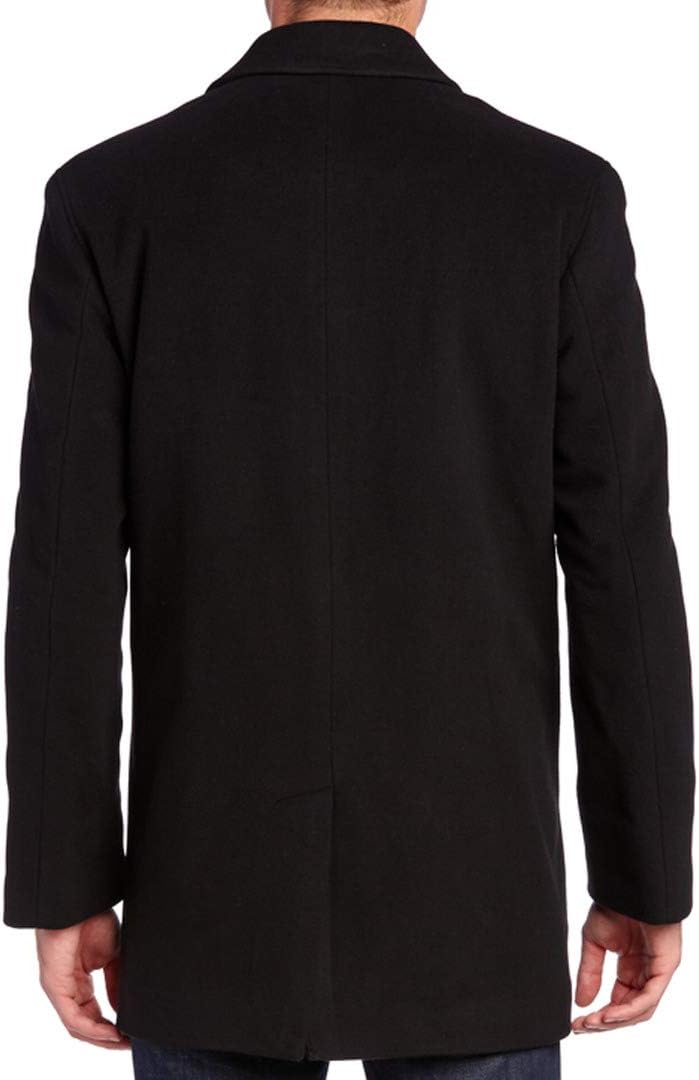
The first thing that stood out is that it looks more expensive than the price suggests, at least from a couple of meters away. The cut is fairly straight, the single-breasted front is simple, and the pointed collar looks clean over a shirt or a light sweater. No crazy fashion details, just a basic overcoat style that fits in at the office, a restaurant, or over a hoodie if you want to dress it down a bit. It’s the kind of coat that doesn’t draw attention, in a good way.
In day-to-day use, I wore it mostly between 30–45°F (around 0–7°C). That’s where it feels made for: short walks, car or subway commutes, and going in and out of buildings. It’s insulated, but it’s not a deep-winter tank. One Amazon review saying it’s good down to about 35°F lines up with my experience. Below freezing with wind, you start to feel the cold through the fabric unless you layer properly.
Overall, my first impression is: it’s a pretty solid city coat if you don’t ask it to do things it’s not built for. It looks sharp enough for work, it’s comfortable enough for daily wear, but it’s not ultra-warm, not water-resistant, and the sizing can be a bit tricky depending on your build. If you go in with realistic expectations, it gets the job done.
Value: fair deal if you catch it at a reasonable price
On value, this coat sits in that mid-range sweet spot: not cheap fast fashion, but also not high-end designer territory. For what you get—a wool–cashmere blend, insulated, lined, with a classic design and a known brand name—it feels fairly priced when it’s on sale or in the mid-price bracket I’ve seen it at. If you find it heavily discounted, it’s actually a pretty good deal. If it’s at full original MSRP, it starts to feel a bit expensive given the only 10% cashmere and the fact that it’s not especially warm or weatherproof.
Compared to cheaper wool-blend coats from random brands, the fit and finishing on this Cole Haan are better. The buttonholes, the weight of the fabric, and the overall cut feel more thought out than the really budget options. On the other hand, if you go a bit higher in price, you can start to find coats with better fabrics (higher wool percentage, sometimes better lining) or more technical features like water-resistant treatments or removable liners. So it sits right in between: nicer than budget coats, not as refined or technical as more premium ones.
The main thing that keeps the value from being outstanding is the warmth and weather limitations. For a coat marketed with insulation and a cashmere blend, some people will expect it to handle deeper cold than it really does. Since one user said it’s comfortable only down to about 35°F and I had similar results, you’re basically paying for looks, brand, and moderate warmth, not heavy-duty performance. If you live in a milder climate or mostly move between heated spaces, that’s fine. If you’re in a very cold place, you might feel you’re paying a fair amount and still need another heavier coat.
Overall, I’d say the value is good but not mind-blowing. It’s a solid, decent-quality coat that looks sharp and should last a few seasons. If you manage to grab it at a discount and your winters aren’t brutal, you’ll probably feel happy with the purchase. If you pay top dollar and expect hardcore warmth and weather protection, you might feel it’s just okay for the money.
Design: classic look, slightly boxy, watch the sizing
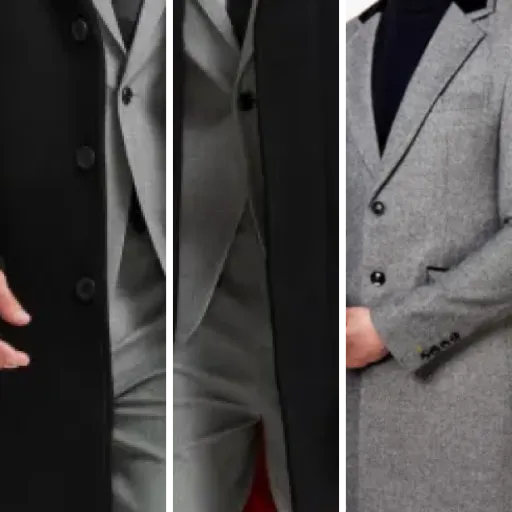
Design-wise, this coat leans heavily into the timeless, single-breasted overcoat look. The pointed shirt collar is the main visual detail. You can wear it flat for a cleaner look, or pop it up a bit when it’s windy. There’s no fancy lapel roll like a blazer; it’s more like a shirt collar scaled up. The front buttons are visible (not hidden under a placket), which gives it a slightly more casual and straightforward vibe. It doesn’t scream formal, but it still looks fine with dress pants and a shirt.
The overall cut is described as straight fit, and that’s accurate. It’s not super slim, but not huge either. The Amazon reviews are a bit mixed on sizing: one person said it runs large and had to size down from XL to L, while a couple of muscular guys around 5'10–5'11 and 180–195 lbs said a medium or large fit them like a slim fit, almost tailored. On me, it feels a bit more generous in the midsection than in the shoulders, which is pretty typical for off-the-rack coats meant to go over suits. If you have a big chest and shoulders and thinner waist, it may feel snug up top and looser around the stomach.
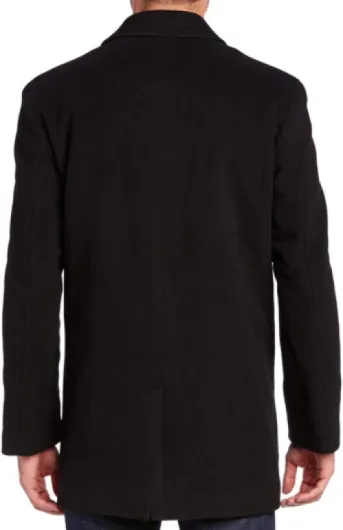
Length-wise, this coat is slightly longer than a classic car coat. It covers the blazer fully and hits mid-thigh, which is nice for a bit more warmth and a more dressed-up look. One reviewer mentioned it’s slightly longer than expected, and I’d agree. Not dramatically, but if you’re on the shorter side, it might feel a bit long and could use a hem if you’re picky about proportions.
Overall, I’d describe the design as: clean, slightly conservative, and office-friendly. It fits well in situations like: commuting in business casual, going to dinner in jeans and Chelsea boots, or throwing it over a suit. If you’re into more modern, cropped, or oversized fits, you might find it a bit boring. But if you just want something that “looks like a normal coat” and doesn’t go out of style in a year, the design is pretty solid.
Comfort: good for commuting, but not a deep-winter beast
From a comfort point of view, I’d split it into two parts: how it feels on the body and how warm it actually is. On the body, the coat is comfortable enough. The lining is smooth, the sleeves are long enough, and the fabric doesn’t itch through a normal shirt or sweater. You’re not getting that scratchy cheap-wool feeling. Weight-wise, it’s on the heavier side, but not so heavy that it’s annoying. You feel like you’re wearing a proper coat, but it doesn’t drag you down.
Warmth is where expectations matter. The product page talks about insulated warmth with down-alternative insulation. In practice, I’d say it’s fine for normal city winter days, not Arctic conditions. For me, it was comfortable walking around at about 35–45°F (2–7°C) with just a shirt or light sweater. The Amazon review that said “warm down to probably 35°F” matches what I felt. Below freezing, especially with wind, you start to feel the cold coming through, especially around the buttons and lower part of the coat. If you’re planning to stand outside for long periods in real winter, this is not enough on its own.
Mobility-wise, the straight fit and slightly structured shoulders give you enough room, but if you go too small trying to get a tailored look, it can get tight in the chest and shoulders. One reviewer said the medium fit him like a slim fit with not much room to layer in the chest, shoulders, and arms. I had a similar experience: over just a shirt, it feels great and looks sharp; over a chunky sweater or blazer, it can feel a bit cramped if you sized down. So you kind of have to choose between a cleaner look or more layering space.
Bottom line: comfortable for commuting and everyday use, but you need to be honest about your climate and how you dress. If your winters are mild to moderately cold and you mostly go from car or train to building, it’s fine. If you live somewhere with long, harsh winters or walk a lot outside, you’ll probably want something warmer or at least plan to layer properly underneath.
Materials: feels decent, not luxury cashmere level
The fabric mix here is 70% wool, 20% nylon, 10% cashmere, with a polyester lining. On the body, it feels reasonably soft for a wool coat, but let’s be honest: the 10% cashmere is more of a nice bonus than a complete game changer. You can feel a bit of smoothness compared to a rougher pure wool coat, but it’s not that super soft, buttery cashmere feel you get on high-end pieces. For the price range this usually sits in, I’d say the material feels fair and not cheap.
The nylon (polyamide) content is there to help with durability and shape. That’s not a bad thing at all. Pure wool can wear out faster at friction points (like around the pockets and cuffs). Here, the fabric feels like it can handle regular commuting, rubbing against bags, and being thrown on chairs without falling apart quickly. It’s a fairly heavyweight fabric, which gives it some structure, so it doesn’t collapse or look flimsy when you hang it up.
The lining is 100% polyester, which is standard. It’s smooth and helps the coat slide on over layers, but it’s not particularly breathable. On days when I was walking more or indoors for a long time, I did notice some heat build-up and that slightly clammy feeling if you keep it on. That’s common with polyester linings, so not a huge shock, just something to know if you tend to run hot.
Overall, I’d call the materials decent but not special. The wool–cashmere blend feels fine to the touch, the coat has some weight and presence, and nothing screams low quality. At the same time, if you’ve ever tried on a high-end 100% cashmere coat, you’ll notice the difference immediately. This is more like a practical, mid-range fabric that gets the job done and holds up, without giving you that luxury feel.
Durability: feels solid enough for several seasons
Durability is always tricky to judge long term, but based on the build and materials, I’d say this coat should handle several seasons of regular use if you treat it decently. The wool–nylon blend is a good sign: that 20% nylon usually helps reduce pilling and wear at high-friction spots. After wearing and handling it, I didn’t see any obvious weak points like super-thin fabric at the cuffs or flimsy stitching around the pockets. The seams feel tidy and secure, and the coat has enough weight that it doesn’t feel like it’s going to sag or deform quickly.
The buttons and buttonholes are another plus. The buttons themselves feel sturdy, and the leather-bound buttonholes are a smart choice. Regular fabric buttonholes can stretch out and fray over time, especially on heavy coats that you button and unbutton constantly. Here, that leather reinforcement should slow down that wear. I tugged on the buttons a bit and didn’t feel any looseness or wobble, which is a good sign out of the box.
Where you do need to be a bit careful is care and cleaning. The coat is dry clean only, and with a cashmere blend, I wouldn’t mess around with home washing anyway. So you’ll want to brush it off regularly, hang it on a proper wide hanger, and only dry clean when needed. If you just throw it on hooks, pile it on chairs, or keep it in a cramped closet, you’ll probably see the usual creasing and potential shoulder deformation over time, like any wool coat.
Given the price point and the build, I’d rate durability as pretty solid for normal use. It’s not a rugged work coat you’d wear for manual labor, but for office commutes, dinners, and regular city wear, I don’t see it falling apart quickly. The key is just not abusing it and giving it basic care—if you do that, you should get a good few winters out of it without major issues.
Performance in real life: warmth, weather, and daily use
In real-world use, this coat is clearly designed as a city commuter and office coat, not a technical winter jacket. The insulation and wool blend give you decent warmth for short to medium outdoor stints, but there are some clear limits. I’ve worn it on dry, cold days and also in light drizzle, and here’s how it behaved. In dry cold around 35–45°F, it’s comfortable for 20–30 minute walks without you freezing. If there’s a bit of wind, popping the collar helps, but it’s still not as windproof as a parka with a storm flap and tight cuffs.
When it comes to weather resistance, the specs are honest: not water resistant, no special coating. In practice, light drizzle or a quick dash through rain is okay; the wool blend shrugs it off if you hang it to dry afterward. But if you get caught in steady rain, the fabric starts to soak, get heavy, and lose warmth. So this is not the coat you pick for wet, slushy days unless you’re mostly indoors and just moving between buildings. Snow is similar: light snow is fine; wet heavy snow will eventually soak in.
Day to day, it holds up pretty well. The fabric doesn’t attract lint like crazy, and the black color hides minor marks. The slant pockets are comfortable for hands, but there are only two of them, and they’re not particularly deep. You can fit your phone and keys, but if you stuff too much in there, it ruins the line of the coat. The buttons feel secure, and the leather-bound buttonholes are a nice durability touch. I didn’t have any issues with loose threads or seams out of the box.
Overall performance: good for what it is—a dressed-up coat for cold, mostly dry days and indoor–outdoor commuting. It’s not a technical shell, not a ski jacket, and not meant for heavy rain or long exposure in sub-freezing temps. If you use it within those limits, it does its job pretty well and looks appropriate in most semi-formal or business settings.
What you actually get with this coat
On paper, this is a 34-inch, single-breasted wool–cashmere blend coat with a shirt-style pointed collar and button closure. No fancy belt, no hidden zips, no detachable lining. Just a straight, mid-length overcoat. The brand lists the fabric as 70% wool, 20% nylon (polyamide), 10% cashmere, with a polyester lining. That mix is pretty common for mid-range coats: wool for warmth, nylon for durability, and a bit of cashmere to soften the feel and marketing. It’s made in China, which is standard for this price range.
In reality, when you pull it out of the box, it looks like a classic peacoat/overcoat hybrid. It’s technically called a peacoat silhouette, but it’s longer than a traditional pea coat and sits more like a car coat. On me (around average height), it hits mid-thigh, which matches the 34-inch length they mention. You get two slant pockets on the outside and that’s basically it—no obvious chest pocket, no flashy branding on the front. It’s very plain in a good way: easy to wear with pretty much anything.
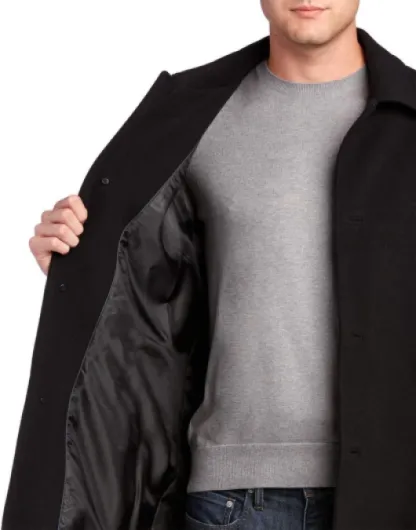
The closure is a simple line of exposed buttons with leather-bound buttonholes. That’s a small detail, but it does make the coat look a bit more finished and holds up better than raw fabric holes. Inside, the polyester lining is smooth and makes it easy to slide on over shirts or sweaters, but don’t expect any special inner pockets for gadgets. It’s more traditional than modern techy.
From a pure presentation point of view, this is a straightforward, no-nonsense coat. It’s not trying to be a fashion statement. If you want crazy lapels, an oversized fit, or lots of pockets and features, this isn’t it. If you want something that just looks like a normal, slightly dressy winter coat you’d wear over office clothes, that’s exactly what you’re getting here.
Pros
- Classic, versatile design that works for office, evenings, and casual wear
- Decent wool–cashmere blend fabric with solid construction and leather-bound buttonholes
- Comfortable for typical city winter temps around 35–45°F, with a smooth lining and straight fit
Cons
- Not very warm below freezing and no real water resistance
- Sizing can be tricky, especially for broader chests or if you want to layer
- Dry clean only, and fabric doesn’t feel like true high-end cashmere despite the blend
Conclusion
Editor's rating
In the end, the Cole Haan Men’s Cashmere Blend Single Breasted Coat is a solid, middle-of-the-road city overcoat. It looks clean and classic, the fabric feels decent, and the build quality seems good enough to last several winters if you take basic care of it. It’s the kind of coat that works over a shirt and chinos for work, over a sweater and jeans for a night out, and even over a suit if you size it right. Nothing flashy, nothing weird—just a standard, slightly dressy black coat that fits into most situations.
Where it falls short is in pure warmth and weather protection. Despite the insulation, it’s more of a 35–45°F commuting coat than something you’d rely on in real deep winter or wet conditions. It’s also not water resistant, so steady rain or wet snow will eventually soak in. Sizing can be a bit tricky too: some people find it runs large, others say it fits like a slim coat in the chest and shoulders. You really need to know your measurements and think about whether you’ll layer a lot underneath.
If you’re a guy who needs a decent-looking coat for the office, dinners, and general city life in a mild to moderately cold climate, this is a good option, especially if you grab it on sale. If you live somewhere very cold, want serious weather protection, or expect a true luxury cashmere feel, you should probably look elsewhere or be ready to layer heavily. Overall, I’d give it a 4/5: good coat, a few clear limits, worth it if your expectations match what it actually delivers.