
Summary
Editor's rating
Is it worth the money?
Bottle, dropper and that bright orange colour
How it feels on the skin and how to fit it into a routine
Smell: pleasant, but not neutral
Ingredient list: a mix of actives and nourishing oils
What this serum actually is (beyond the fancy name)
Does it actually help with wrinkles and blemishes?
Pros
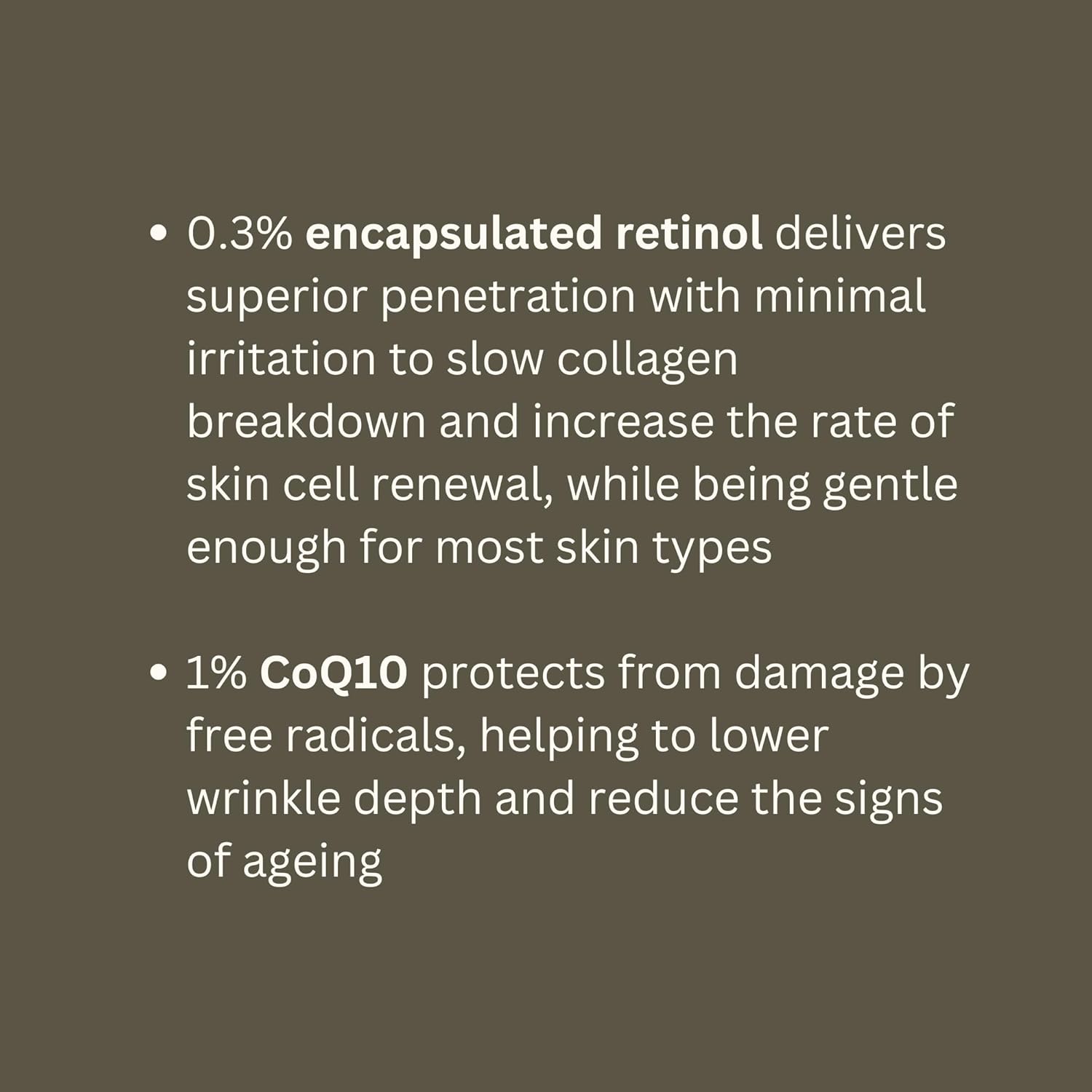
- Gentle but effective 0.3% encapsulated retinol with visible smoothing over a few weeks
- Oil-based formula with CoQ10 and plant oils keeps dryness and irritation fairly low
- Vegan, cruelty-free, and free from parabens, sulphates, mineral oils, PEGs, and alcohol
Cons
- Oily texture and bright orange colour can leave a yellow cast on skin and fabrics
- Contains orange essential oil and fragrance components, not ideal for very sensitive skin
- Not the cheapest option if you only care about basic retinol and don’t need the extra oils

Specifications
View full product page →| Brand | House of Serums |
A retinol oil that looks like juice but acts like skincare
I’ve been testing the House of Serums No.1 Retinol Serum (0.3% retinol + 1% CoQ10) for a bit over a month, using it 3–4 nights a week. I’m in my mid-30s, my skin is combination with a slightly oily T-zone and drier cheeks, and I’m already used to retinol, so my skin isn’t a total newbie. I went into this expecting a standard retinol in a cream or gel, and instead got a bright orange oil that looks more like sea buckthorn juice than a typical serum.
From day one, it was clear this isn’t one of those watery serums that disappears instantly. It’s an oil-based formula, so you feel it sitting on the skin for a while. That’s not necessarily bad, but if you hate any kind of oily finish at night, it’s something to keep in mind. I used it after cleansing and a light hydrating serum, then followed with a basic moisturiser on top on the nights when my skin felt a bit tight.
In terms of results, I was mostly looking for two things: a bit of help with fine lines on the forehead and around the eyes, plus some texture and old blemish marks on my cheeks. I already know what a decent 0.3% retinol can do, so I was basically comparing this to more mainstream retinols from brands like La Roche-Posay or The Ordinary that I’ve used before. The short version: it holds up pretty well, but it has a couple of quirks.
Overall, this serum feels like a pretty solid mid-strength retinol oil with some nice extras (CoQ10, plant oils), but it’s not perfect. It’s gentle enough if your skin is used to actives, it does give a more even and smoother look over a few weeks, but you need to accept two things: it’s oily, and it can leave a yellow cast on pillowcases and light fabrics if you’re not careful. If that doesn’t bother you, it’s worth a look. If you’re very picky about textures or have very sensitive skin, you might want to think twice or start very slowly.
Is it worth the money?
Price-wise, this sits in the mid-range for retinol serums. It’s not drugstore cheap like The Ordinary, but it’s also not at the level of the big pharmacy brands that charge a premium for smaller amounts. You get 30 ml, and since you only need a few drops per use and you’re not using it every single night (or at least you shouldn’t at first), the bottle should last a decent amount of time. For me, using it 3–4 nights per week, I’d guess one bottle could easily cover 3–4 months.
What you’re paying for here is a combination of things: encapsulated retinol, 1% CoQ10 (which is not super common in this concentration), the organic cold-pressed plant oils, and the vegan/cruelty-free angle. If those aspects matter to you, then the price makes sense. If you just want the cheapest way to get 0.3% retinol on your face, there are simpler, more basic formulas out there that will do the job without the extra antioxidants and oils.
Compared to something like a pharmacy retinol cream, this feels more skincare-nerd focused but less clinical. The trade-off is texture and the slight yellow cast versus a more neutral cream with fewer plant extras. Personally, I think the value is pretty good if you’re okay with an oil texture and you like the idea of combining retinol with nourishing oils in one step. It simplifies the routine a bit: one product gives you your retinol plus a face oil.
If I break it down: results are solid for a 0.3% retinol, comfort is good, the formula is thoughtful, but it’s not cheap enough to be an automatic buy for everyone. I’d say it’s good value for people who specifically want an oil-based, vegan, mid-strength retinol with extra antioxidants. If you just want maximum retinol strength per pound and don’t care about the rest, you can find better deals elsewhere.
Bottle, dropper and that bright orange colour
The serum comes in a 30 ml glass bottle with a dropper. The glass feels decent and not flimsy, and the dropper works properly – no weird dripping on the sides or random leaks. It gives you control over how many drops you use, which matters here because you really don’t need much. For my whole face and neck, 3–4 drops were enough. If you go heavier, you’ll just end up extra shiny and wasting product.
The first thing you notice when you open it is the colour. It’s a strong orange, almost like a diluted carrot or sea buckthorn oil. That colour is normal given the sea buckthorn and CoQ10, but it does have a side effect: if you use too much or don’t let it absorb for a bit before bed, it can leave a yellowish tint on your pillowcase or around your hairline. One of the Amazon reviews mentioned a yellow cast on the skin, and I agree: if you’re pale and apply a generous amount, your face can look slightly warmer or yellowish until it sinks in.
In terms of usability, the dropper is convenient, and the label is clear enough. Instructions are straightforward: night use, a few drops, avoid the eye area, patch test if you have sensitive skin. The packaging doesn’t feel luxury, but it doesn’t feel cheap either. It’s pretty standard mid-range skincare packaging. The bottle is opaque enough to protect the retinol from light, which is important – many cheaper brands still put retinol in clear bottles, so at least they got this part right.
One small practical point: because it’s an oil and quite pigmented, if you’re clumsy like me and get some on the sink or counter, wipe it straight away. It can leave small yellow marks if you just let it sit there. Same with clothes – I’d avoid putting this on while wearing a white T-shirt with a tight neckline. Not a deal-breaker, but something to know so you don’t swear at it later.
How it feels on the skin and how to fit it into a routine
Let’s be clear: this is an oil, not a watery serum. When you apply 3–4 drops to dry skin, you feel a light to medium oily layer sitting on your face. It doesn’t feel suffocating, but you are definitely shiny for a while. On my combination skin, it took about 20–30 minutes to sink in enough that I didn’t feel like an oil slick. That’s why I only used it at night. I wouldn’t even think of using this in the morning under makeup.
Comfort-wise, once it’s on, it actually feels pretty nice. My skin felt nourished and cushioned, not tight or stripped. On nights when my skin felt a bit drier (after a clay mask or a windy day), this was actually quite soothing. If you have dry or normal skin, I think you’ll like that feeling. If you’re very oily, especially in summer, you might find it too much and prefer a lighter retinol lotion or gel.
I usually applied it like this: cleanse, hydrating toner or serum (something with glycerin or hyaluronic acid), then 2–4 drops of this retinol oil, then a simple moisturiser on top if needed. On nights when my skin felt fine, I skipped the extra moisturiser because the oil itself was enough. I didn’t get pilling or weird interactions with my other products, but I kept the routine pretty basic on retinol nights – no other strong acids or exfoliants.
As for side effects, apart from the small bit of dryness early on, I didn’t get any discomfort. No eye stinging as long as I kept it away from the eye contour, no burning on application. People with very sensitive skin might still react, especially because of the citrus oil, but for someone with average tolerance, it’s relatively easy to live with. Just accept that your face will look a bit shiny and slightly yellowish for a while after you put it on, and don’t wear your nicest white pyjamas right away.

Smell: pleasant, but not neutral
This serum is not fragrance-free. There’s orange essential oil in the formula (Citrus Aurantium Dulcis Oil), plus naturally occurring fragrance components like limonene, linalool, and citral. When you open the bottle, you get a clear citrusy smell, like a light orange oil. It’s not overpowering, but it’s noticeable. If you’re used to completely unscented skincare, you’ll definitely notice it the first few times.
On my skin, the smell hangs around for maybe 10–15 minutes after application, then fades. It doesn’t clash with my moisturiser or feel too heavy. Personally, I don’t mind it – it smells clean and a bit "spa-like", nothing weird or chemical. But if you’re sensitive to fragrance or prone to allergies from essential oils, this is something to think about. The brand does say it has no artificial fragrances, but essential oils can still be irritating for some people.
Compared to other retinols I’ve used, this is more scented than the clinical brands (like La Roche-Posay or Paula’s Choice, which are either very lightly scented or fragrance-free). It’s closer to the kind of smell you’d get from plant-oil-based face oils. I didn’t get any redness or itching linked specifically to the fragrance, but I also don’t have fragrance-sensitive skin, so that’s my bias.
So overall: if you like a bit of scent in your night routine, this will probably be fine and maybe even nice. If you’re someone who avoids essential oils on the face, this is not the product for you. It’s not a “barely there” smell – it’s present, even if it doesn’t last the whole night.
Ingredient list: a mix of actives and nourishing oils
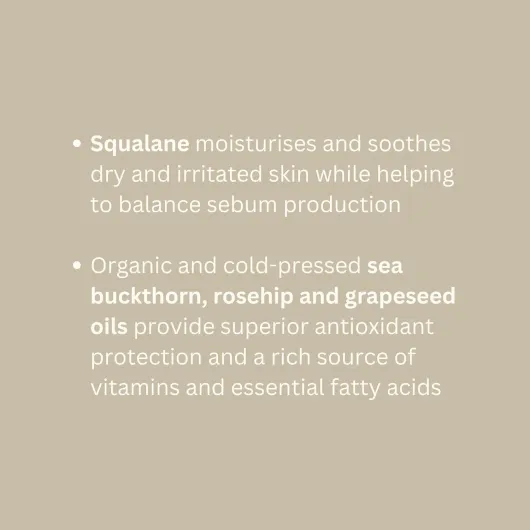
The formula is pretty straightforward once you break it down. The main base is a blend of oils: grape seed, rosehip, sea buckthorn, cranberry, plus squalane and caprylic/capric triglyceride (a common, stable emollient). On top of that, you have 1% Coenzyme Q10 (ubiquinone), 0.3% retinol, and vitamin E (tocopherol) as an antioxidant. Everything is oil-based, there’s no water phase here, so it behaves more like a face oil with actives than a classic serum.
The plant oils they chose are not random: rosehip and sea buckthorn are both often used for skin regeneration, support with pigmentation, and to bring in omega fatty acids. Grapeseed is lighter and helps the texture feel less heavy. Cranberry oil is another antioxidant-rich oil. So the idea is clear: pair retinol with barrier-supporting, antioxidant-rich oils to balance out dryness and potential irritation. In practice, that worked for me – I didn’t get any aggressive peeling or dry patches while using it regularly.
On the "free from" side, it avoids parabens, sulphates, silicones, mineral oils, PEGs, alcohol, and artificial dyes and fragrances. That will please people who care about that kind of thing. Personally, I care more about whether the formula is stable and effective, and in this case the ingredient list looks sensible. Encapsulated retinol + oils that protect the skin barrier is a logical combo. The vegan and PETA certifications are a nice bonus if that matters to you.
The only downside ingredient-wise is the presence of citrus essential oil and fragrance compounds. They’re not evil, but they can be a problem if you have rosacea, very reactive skin, or if you’re doing a super simple, irritation-minimising routine. Also, because it’s an oil-only formula, very oily or acne-prone skin types might find it a bit too rich, even if the oils themselves are relatively lightweight. For my combination skin, used a few times a week, it was fine, but I wouldn’t use it nightly in the middle of a humid summer.
What this serum actually is (beyond the fancy name)
On paper, this product is pretty clear: 0.3% retinol, 1% Coenzyme Q10, and a base of plant oils like grape seed, rosehip, sea buckthorn, cranberry, plus squalane and vitamin E. It’s also vegan and PETA-certified cruelty free, and free from the usual stuff people like to avoid: parabens, sulphates, mineral oil, PEGs, silicones, alcohol, added dyes and synthetic fragrance. So if you’re into shorter, more “skincare nerd” style ingredient lists, this ticks that box.
The retinol is encapsulated, which basically means it’s wrapped in a delivery system that’s supposed to make it more stable and a bit gentler, while getting deeper into the skin. In practice, that usually means fewer sudden irritation spikes compared to cheap, unstable retinol dumped into a random base. I didn’t feel any burning or strong tingling from this, even the first night, which lines up with that claim. But encapsulated or not, it’s still retinol, so you still need to be sensible with frequency and SPF in the morning.
The serum is marketed as a night product for both men and women and for most skin types: normal, dry, combination, even oily. I’d say that’s mostly true, with one big condition: you need to be okay with an oil texture. If you’re someone who only likes gel or water-based serums that vanish in seconds, you might not enjoy how this feels. On my combination skin, it was fine, but I’d never use it in the daytime. At night, it’s acceptable, especially in colder or drier weather.
Positioning-wise, it sits in that middle zone: stronger than beginner retinol (0.1–0.2%), but not as aggressive as 0.5–1% formulas. It’s kind of that step-up product when you’re done playing around with very mild retinols and want something that still respects your skin barrier. It’s not cheap, but it’s also not in the luxury price range. So I’d put it in the “mid-range with a more skincare-nerd ingredient list” category. Nothing revolutionary, but the formula choices make sense if you care about both anti-ageing and barrier support.
Does it actually help with wrinkles and blemishes?
I used this serum for just over 4 weeks, 3–4 nights per week, always at night, always followed by SPF the next morning. My skin was already used to retinol, so I didn’t have to build up too slowly. If you’re new to retinol, I’d say start at 1–2 nights per week and see how your skin reacts. Even though it feels gentle, it’s still 0.3% retinol, which is not nothing.
In terms of results, here’s what I noticed:
- After about 10 days, my skin texture on the cheeks felt smoother to the touch, especially where I had some small clogged pores.
- By week 3, my forehead fine lines looked a bit softer, not gone, but less sharp when I frowned.
- Some old post-acne marks on my cheeks started to fade slightly faster than they would on their own, but nothing dramatic.
- I didn’t get any major new breakouts that I could blame on this serum. A couple of small pimples here and there, but that’s normal for me.
On the irritation side, I had very minimal dryness. A tiny bit of flakiness around the corners of my nose in week 2, which calmed down once I added a thicker moisturiser on top on retinol nights. No burning, no stinging, no obvious retinol rash. So for me, the encapsulated retinol + oils approach did its job in terms of keeping things comfortable. If you have very sensitive skin though, I’d still be careful and patch test as the brand suggests.
Compared to other 0.3% retinols I’ve tried, I’d say this is on par for results, but a bit more comfortable because of the oil base. The trade-off is that it feels heavier on the skin. If your main goals are to soften fine lines, even out texture, and give a slow but steady nudge to old marks, this serum does that. If you’re expecting a dramatic overnight difference or a full-on resurfacing effect, you’re expecting too much from 0.3% retinol in general, not just from this product.
Pros
- Gentle but effective 0.3% encapsulated retinol with visible smoothing over a few weeks
- Oil-based formula with CoQ10 and plant oils keeps dryness and irritation fairly low
- Vegan, cruelty-free, and free from parabens, sulphates, mineral oils, PEGs, and alcohol
Cons
- Oily texture and bright orange colour can leave a yellow cast on skin and fabrics
- Contains orange essential oil and fragrance components, not ideal for very sensitive skin
- Not the cheapest option if you only care about basic retinol and don’t need the extra oils
Conclusion
Editor's rating
After using the House of Serums No.1 Retinol + CoQ10 serum for over a month, my take is pretty simple: it’s a solid mid-strength retinol oil that does what it says, with a few quirks you need to accept. My skin looked a bit smoother, slightly brighter, and fine lines on the forehead softened a bit. It didn’t irritate my skin much, which I credit to the encapsulated retinol and the mix of nourishing oils. If you already have some tolerance to retinol and you like the feel of face oils at night, this fits nicely into a routine.
It’s not perfect though. The texture is clearly oily, so if you hate any kind of shine, you’ll probably find it annoying. The strong orange colour can leave a slight yellow cast on the skin and even on pillowcases if you don’t let it sink in properly. The fragrance from the orange oil is pleasant but not neutral, and it might be a problem for very sensitive or fragrance-averse users. It’s also not the cheapest option if all you care about is retinol strength.
I’d recommend this to people who: want a 0.3% retinol that’s on the gentler side, like oil-based products, care about vegan/cruelty-free formulas, and don’t mind a bit of citrus scent. I’d say skip it if you have very oily or very sensitive skin, if you only like gel/cream textures, or if you want a completely fragrance-free, clinical-style retinol. For me, it’s a good, reliable product, not mind-blowing, but it gets the job done and feels nice to use once you accept the oil and the colour.