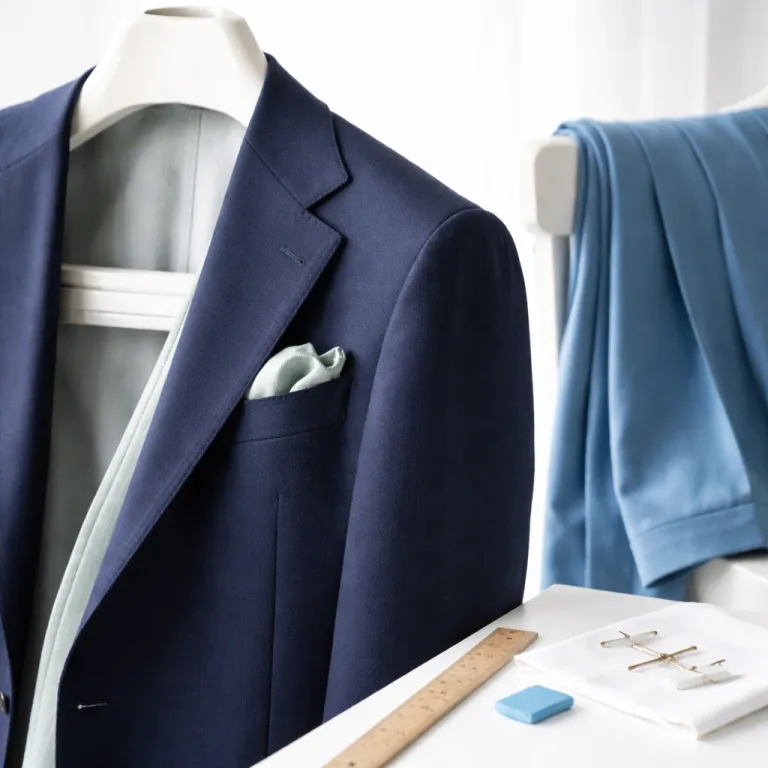
Why the tailored relaxed suit 2026 silhouette is a correction, not a fad
The tailored relaxed suit 2026 silhouette did not appear from nowhere. It arrived because men finally admitted that a suit that photographs sharply but feels brutal after a nine hour day is a bad tool, not the best expression of style. Once you accept that tailoring is equipment for real life, not a costume for a mirror selfie, the case for a more relaxed and well proportioned cut becomes obvious.
Look at the numbers on ready to wear suits from the late skinny era. A typical size 48 European wool suit from a high street brand gave maybe 4 to 5 centimetres of chest ease, a razor slim fit through the waist, and trousers with a 17 centimetre leg opening on a 32 waist, while the updated relaxed tailoring block from the same label quietly moved to 8 to 10 centimetres of chest ease, a gentler classic fit at the waist, and pants opening closer to 19 to 20 centimetres. That extra ease in the jacket and the more relaxed fit in the trousers is not about looking baggy; it is about letting the fabric drape instead of cling, so the suit moves with men instead of against them.
Beige Brown, Hidalgo Brothers and Capitol Hill Clothiers have all described this shift in tailoring as a structural correction rather than a seasonal trend. They point to dropped shoulders by 0.5 to 1 centimetre, deeper armholes by roughly the same amount, and mid rise trousers that sit on the hip bones instead of under them, which together turn a stiff slim fit suit into something you can actually wear on a train commute without feeling trussed. When you put on a tailored relaxed suit 2026 cut from high twist wool and walk, you feel the jacket float slightly off the body, the flat front or single pleat trousers swing cleanly, and you realise how punishing the old skinny suits were for anyone with real thighs.
Skinny tailoring still has one narrow win. Very tall and very lean men, especially those with narrow hips and minimal seat, can make a very slim fit suit jacket and tight trousers look sharp because there is less muscle mass to fight the fabric, and the breasted suit lines stay clean even with minimal ease. For everyone else, especially men suits buyers with athletic legs or desk built midsections, the more generous 2026 proportions simply work better, because the suit jacket and pants are cut to respect the body rather than deny it. As one London alterations tailor put it in a recent in store consultation, “when the cloth can skim instead of squeeze, most clients suddenly look more confident and less self conscious.”
Brands that live in the classic menswear space saw this earlier than the mall. Drake's shifted its house suit towards a more relaxed fit with soft shoulders and fuller trousers years before the big chains, while Suitsupply pushed its Lazio Wide and other classic fit blocks as an antidote to painted on tailoring. Spier & Mackay quietly expanded their range of high twist wool suit options with mid rise, flat front or single pleat trousers that give thighs room, and Husbands Paris doubled down on double breasted silhouettes with generous lapels and a straight leg, all of which now read perfectly in the tailored relaxed suit 2026 context.
American labels followed with their own interpretations of this relaxed but tailored idea. Todd Snyder leaned into Italian inspired soft tailoring, offering wool and twist wool blends with a relaxed fit through the seat and a slightly wider leg opening, while Buck Mason built suit separates with a workwear edge that still respect classic proportions. Sid Mashburn, long a defender of the suit as daily uniform, refined his classic fit and slim fit blocks so that even the slimmer option now feels like a suit cut for movement, not a costume for a cocktail hour.
How the measurements changed: from skinny discomfort to tailored relaxed suit 2026 ease
To understand why the tailored relaxed suit 2026 cut survives a real day, you need to look at hard measurements. In the late skinny era, a size 50 suit jacket often had a half chest around 54 centimetres on a man whose actual chest measured 100 centimetres, which meant barely 4 centimetres of total ease, while the updated relaxed tailoring blocks now sit closer to 56 or 57 centimetres, giving 8 to 10 centimetres of breathing room. That difference sounds small on paper but feels huge when you reach for a laptop, hail a cab or sit through a client lunch with a coat over the chair.
Shoulders tell the same story. Old slim fit suit jackets were cut almost exactly to shoulder bone width, sometimes even slightly inside, which created that sharp but unforgiving line, whereas the contemporary relaxed shoulder often drops 0.5 to 1 centimetre beyond the bone, softening the silhouette and letting the wool fabric roll naturally. A deeper armhole by even 1 centimetre means the jacket lifts less when you raise your arms, so the suit looks well composed instead of bunching around the button stance every time you move.
Trousers changed even more dramatically. In many 2018 ready to wear suits, a 32 waist slim fit trouser might have a 17 centimetre hem opening and a low rise that sat well below the navel, which forced the fabric to fight the thighs and seat all day, while the tailored relaxed suit 2026 blocks moved to a mid rise or even slightly higher, with 19 to 20 centimetre leg openings and a straighter line from knee to cuff. That extra room, especially in high twist wool or other breathable wool suit fabrics, lets the leg drape cleanly over the shoe instead of grabbing the calf.
Brands like Spier & Mackay and Sid Mashburn have been explicit about these numbers in their product descriptions and size charts, which show thigh and knee measurements that are several centimetres fuller than their old slim blocks. Sid Mashburn offers both a classic fit and a trimmer option, but even his slimmer pants now feel like a relaxed fit compared with the spray on trends of the past. When you compare these to a tailored relaxed suit 2026 from Suitsupply's Lazio Wide line, you see a shared philosophy: more room where men actually move, less obsession with vacuum sealed silhouettes.
Jacket length and button stance also evolved. The shortest skinny era suit jacket often barely covered the seat, which made the torso look chopped and pushed the visual weight to the hips, while the modern approach quietly lengthened the jacket by 1 to 2 centimetres and lowered the button stance a touch, restoring a more classic balance between chest, waist and hips. That change flatters more body types, especially men with broader chests or those who carry weight around the midsection.
Even double breasted and single breasted suit designs followed this logic. Husbands Paris and Drake's cut their double breasted jackets with generous lapels and enough wrap to close comfortably without pulling, while Suitsupply and Todd Snyder offer breasted suit options where the overlap and button placement respect the natural ribcage rather than squeezing it. If you want to see how these suit trends translate from runway to office, the analysis in spring summer tailoring for off the rack buyers breaks down which modern cuts actually work for daily wear.
Why the fuller cut works harder from commute to client dinner
The real test for any tailored relaxed suit 2026 is not a fitting room pose. It is a full working day: train commute, nine hours of sitting, a rushed lunch, maybe a drink after work, and then the walk home with a coat or suit jacket slung over your arm. Skinny tailoring failed that test for most men because the fabric and the fit were always fighting your body instead of cooperating with it.
Start with the commute. In a very slim fit wool suit with low rise trousers, every step up the station stairs pulls the pants tight across the thighs and seat, and the jacket collar often lifts off the neck because the armholes are too high and the chest too tight, while a relaxed cut in high twist wool or a similar breathable fabric lets you climb, sit and stand without feeling seams strain. The extra ease through the chest and the slightly dropped shoulder mean the jacket stays anchored at the collar even when you reach for a handrail.
At the desk, the difference becomes even clearer. A classic fit or relaxed fit trouser with a mid rise sits on the hip bones and allows the waistband to stay level when you lean forward, whereas a low rise slim fit cut tends to slide down and dig into the stomach, which is why so many men quietly unbuttoned their pants under the desk during the skinny era. With a tailored relaxed suit 2026, especially one cut with a flat front and a clean single pleat, the fabric falls straight from the waistband, and the knees do not feel trapped after hours of typing.
Lunch is where you really feel whether your tailoring respects your body. In a painted on fit suit, one extra course can make the jacket button strain and the trousers bite into the waist, while a well balanced relaxed silhouette gives you enough room to breathe and move without looking sloppy. This is where Italian influenced tailoring from labels like Sid Mashburn, Todd Snyder and Buck Mason shines, because they cut their wool suit and cotton suit separates with a little extra forgiveness through the waist and seat.
Even the way the fabric ages is different. High twist wool and other twist wool blends used in many tailored relaxed suit 2026 designs resist wrinkles better because the yarns are tightly spun, so the jacket and pants bounce back after hours on a chair, while cheaper, overly slim suits in low twist fabric tend to bag at the knees and shine at stress points. When you choose a suit great enough to wear weekly, that resilience matters more than a fleetingly sharp mirror image.
Footwear and accessories complete the equation. A fuller leg opening of around 19 to 20 centimetres works well with classic shoes, from cap toe oxfords to loafers, and even with chunkier soles that have become common in modern office dress codes, whereas the old 16 to 17 centimetre hems often got caught on the top of the shoe and created awkward breaks. If you are unsure about how your pants should fall, the guide on mastering the perfect suit pants length is worth reading before you take your tailored relaxed suit 2026 to the alterations tailor.
How to buy and adapt: a practical playbook for the tailored relaxed suit 2026 era
Building a wardrobe around the tailored relaxed suit 2026 silhouette does not mean throwing out every slim suit you own. It means understanding where your current tailoring can be nudged towards a more relaxed fit and where the cut is so extreme that only replacement makes sense. The goal is a small rotation of suits and suit jackets that feel as good at 17.00 as they looked at 8.30.
Start with your existing closet. Put on each suit and ask three questions: can you slide a flat hand comfortably between your chest and the buttoned jacket, do the shoulders extend slightly beyond the bone without collapsing, and can you pinch at least 2 to 3 centimetres of fabric at the thigh of the trousers, because if the answer is no on all three, that suit is probably too tight to convert into a more relaxed shape. A competent alterations tailor can usually let out the seat and thighs by 2 to 3 centimetres and sometimes drop the hem to create a cleaner line, but they cannot add fabric where none exists.
The single most effective adjustment for many 2019 era suits is letting out the trouser seat and thigh. Many slim fit blocks were cut with almost no extra seam allowance, but if your tailor finds 2 centimetres to release on each side, you can transform a painted on leg into something closer to a classic fit or relaxed fit without changing the overall style, while a small tweak to the waist suppression on the jacket can also soften an aggressively nipped silhouette. This combination often brings an older suit into the tailored relaxed suit 2026 conversation without a full recut.
Some pieces, however, cannot be saved. If the jacket length barely covers your seat, the gorge is extremely high and the lapels are razor thin, the visual language screams a past era of suit trends, and no amount of letting out will make it feel like modern tailoring. In that case, you are better off investing in a new wool suit or cotton blend suit from a brand that understands the current relaxed but tailored balance.
For off the rack options, look at labels that have proved their cuts in real wardrobes. Spier & Mackay offers high twist wool and four season wool suit fabrics with mid rise, flat front or single pleat trousers that already embody the tailored relaxed suit 2026 idea, while Drake's and Husbands Paris provide more directional but still classic tailoring with double breasted and single breasted options that drape beautifully. American names like Todd Snyder, Buck Mason and Sid Mashburn give you Italian influenced softness with enough structure to handle a corporate office, and their suit jackets pair well with jeans or chinos on weekends.
Think about the rest of your wardrobe too. A tailored relaxed suit 2026 in navy high twist wool works with knit polos, fine gauge merino crewnecks and even clean sneakers, which means it earns its place in your rotation far beyond formal meetings, and pairing it with a serious timepiece from a curated list of top luxury watches can quietly elevate the whole look. When you stop chasing runway tightness and start chasing a fit that respects how you live, you realise that real style is not about the narrowest lapel or the slimmest leg; it is about a suit that still feels like your ally when the day runs long and the last train is late.
Key figures behind the shift to the tailored relaxed suit 2026 silhouette
- Average chest ease on mainstream European ready to wear suits increased from roughly 4 to 5 centimetres in the late skinny era to around 8 to 10 centimetres in current relaxed tailoring blocks, according to product measurements published by brands like Suitsupply and Spier & Mackay on their official size charts.
- Trouser hem openings for a typical size 32 waist moved from about 17 centimetres on many slim fit models to approximately 19 to 20 centimetres on newer classic fit and relaxed fit cuts, based on publicly available measurement charts from Drake's, Sid Mashburn and similar labels.
- Consumer surveys from major menswear retailers, summarised in their annual reports and fit feedback dashboards, report that returns due to "too tight" fits on suits and tailored pants dropped significantly after they introduced fuller cuts, indicating that the tailored relaxed suit 2026 style aligns better with real body shapes.
- High twist wool and other twist wool fabrics, often used in modern relaxed tailoring, show improved wrinkle resistance and recovery compared with lower twist wool in independent textile testing and mill specifications, which helps suits maintain a clean drape after long periods of sitting during workdays.