
Summary
Editor's rating
Value for money: depends heavily on the price you pay
Design: clean, low-key, and easy to wear
Comfort: the strong point of this boot
Materials: decent leather, light build, not built like a tank
Durability: good for casual use, questionable for heavy wear
Performance in real life: city-friendly, not a hardcore workhorse
What this CAT boot actually is (and isn’t)
Pros
- Very comfortable out of the box with light, cushioned feel
- Simple, versatile design that works well with jeans and casual office wear
- Good grip on wet pavements and everyday surfaces
Cons
- Not water resistant despite some user confusion, so not ideal for wet climates
- Heel area of the sole shows wear relatively quickly with regular use
- Feels more like a casual boot than a true heavy-duty work boot for the price

Specifications
View full product page →| Brand | CAT |
A CAT boot that’s more office than building site
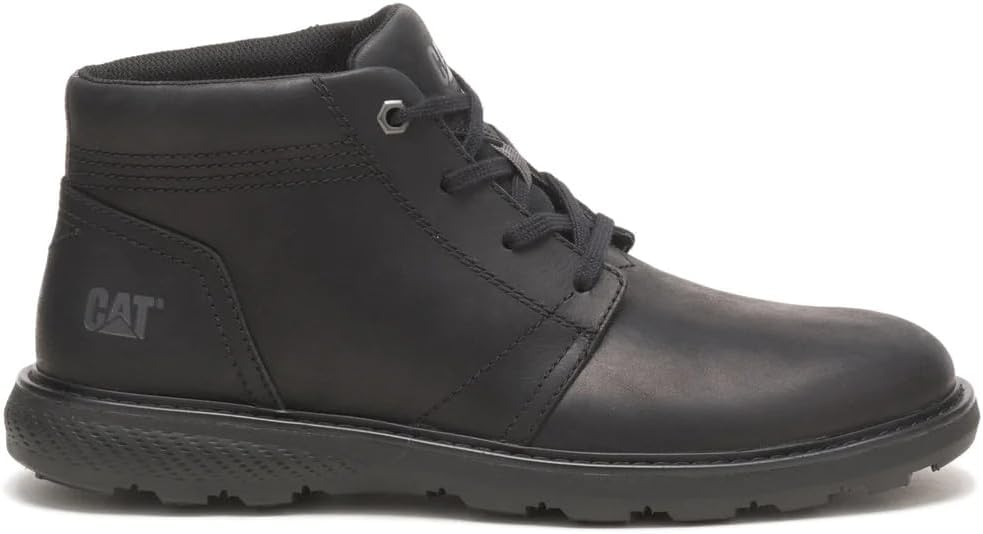
I’ve been wearing the CAT Footwear Men’s Trey 2.0 Chukka Boot in black (size 11 UK) as my main everyday boot for a few weeks. I bought it thinking “it’s CAT, so it’ll probably be bombproof and a bit heavy”. In reality, it’s kind of the opposite: lighter than I expected, decent comfort, but not really a hardcore work boot. It feels more like a casual city boot with a work-boot look.
In day-to-day use, I’ve mostly worn them for commuting, walking to the shops, and a couple of longer walks around town (roughly 8–10k steps a day). No building sites, no mud baths – just normal urban abuse: pavements, curbs, a bit of rain, and lots of standing. That’s the context of my review. If you’re looking for something to drag through cement and oil every day, that’s not how I used them.
The general feeling: they’re comfortable straight out of the box, they look clean and simple, and they’re not too heavy on the feet. On the other hand, I’m not fully convinced by the long-term durability, especially at the heel, and the water resistance is basically non-existent despite at least one review calling them waterproof. So expectations matter a lot here.
If you want a boot that looks like a work boot but behaves more like a comfy casual shoe for autumn/winter in the city, this fits. If you want a real tank for rough jobs and wet conditions, I’d be careful and maybe look at other CAT models or more serious safety/work boots. That’s the mindset I’d go in with before buying.
Value for money: depends heavily on the price you pay
On value, my opinion is pretty straightforward: at a good discount, it’s a solid deal; at full price, it’s just okay. Some Amazon buyers mention getting these at roughly half price, and at that level they make a lot of sense. You get a comfortable, decent-looking leather boot from a known brand, with good everyday comfort and acceptable materials. For a daily commuter boot, that’s fair.
At or near full retail, I’m a bit less enthusiastic. The comfort is good, no question, but the combination of “not water resistant” and the doubts on long-term sole durability make the boot feel a bit expensive for what it is. When you’re paying more, you usually expect either clear waterproofing, thicker leather, or a sole that you know will last several seasons of heavy use. Here, you’re mainly paying for comfort and brand, not tank-level robustness.
Compared to other options, you can often find:
- Cheaper synthetic/leather mix boots that are less comfy but similar in durability.
- Heavier work boots that cost about the same but are more robust (though less comfortable and stylish for office use).
- Casual leather sneakers that are as comfortable but don’t give you the boot look.
My take: if you see it at a strong discount, it’s worth grabbing as a comfy everyday boot. At full price, I’d think twice and maybe compare with other CAT models or rival brands that offer better weather protection or more proven durability. It’s not a rip-off, but it’s also not some crazy good bargain. Just decent value, especially if you prioritise comfort and style over hardcore toughness.
Design: clean, low-key, and easy to wear
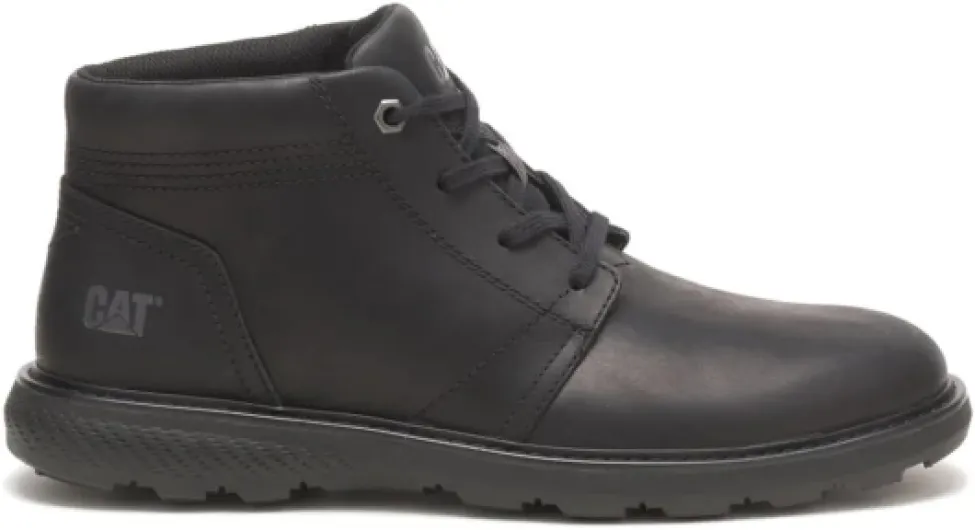
Visually, the Trey 2.0 is pretty simple and clean. All black leather, round toe, no crazy stitching, and a mid-top profile that hits right at the ankle. The branding is discreet, so you don’t feel like a walking advert. I wore them with dark jeans, light jeans, and even chinos, and they blended in fine. It’s more “office and pub” than “festival fashion statement”, which I personally like.
The shape is fairly normal: not too narrow, not too bulky. If you’ve tried classic desert boots or chukka boots, it’s in the same family but a bit chunkier because of the rubber sole. The round toe gives enough room for the toes without looking clumsy. From the side, the boot looks balanced, not like some big safety boot block on your foot. If you want something that looks tough but doesn’t scream builder, this hits that middle ground.
One thing I appreciated is how unfussy the design is. The lacing is standard, the tongue sits well, and there are no weird seams that rub. I didn’t have any pressure points from eyelets or stitching. You put them on, lace them, and that’s it. No need for a break‑in ritual with plasters on the heels. The ankle height is enough to give some support and keep out drafts, but it’s not so high that it digs into your leg.
If I had to nitpick, I’d say the design is maybe a bit too plain for those who like a more distinctive look. It’s solid, but not really exciting. Also, because it’s all black, it can look a bit “blocky” if you wear it with very slim trousers. But that’s detail. Overall, for daily use, the design is practical and easy to match with most casual outfits. No one commented on them, in good or bad, which to me means they just do their job visually without drawing attention.
Comfort: the strong point of this boot
This is where the Trey 2.0 does well. Out of the box, they were comfortable, no real break-in needed. I wore them for a full day of walking and standing (commute + office + errands, around 9k steps) and didn’t get any hotspots, blisters, or sore spots on the heel. The ankle collar is soft enough, and the leather bends without digging into the top of the foot.
The foam cushioning inside is clearly doing its job. You don’t get that dead, hard feeling some cheaper boots have. It’s not like walking on pillows, but there is a noticeable bit of bounce under the heel and forefoot. For someone who walks a fair bit every day, that makes a difference. I could feel less fatigue in my feet compared to older, stiffer leather boots I used before. The boot is also quite light for its size, so your legs don’t feel dragged down.
In terms of fit, I’d say it’s fairly true to size in length. Width is moderate: not super wide, not narrow. I have average-width feet and had no issues. If you have very wide feet, you might find it a bit snug at first, but the leather does give a little after a few days. With normal cotton socks, they felt balanced. With thicker winter socks, it was snug but still okay. For very cold days, you might want to size up if you plan to wear big socks all the time.
Temperature-wise, they’re warm enough for autumn and mild winter, especially if you’re moving. They’re not insulated like snow boots, so don’t expect miracles in freezing conditions if you stand still a lot. Also, because they’re not water resistant, once they get wet, comfort drops fast. But in dry to slightly damp conditions, for everyday use, I’d say comfort is the main selling point of this model. That matches several Amazon reviewers saying they barely feel them on and even bought a second pair.
Materials: decent leather, light build, not built like a tank
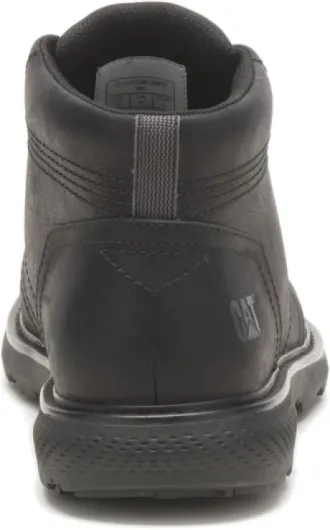
The upper is leather, and you can feel that it’s relatively lightweight compared to classic heavy work boots. It’s not cardboard-thin, but it’s clearly not thick, stiff work-boot leather either. Out of the box, it was already flexible, which is nice for comfort but also means you’re not getting that super rugged, multi-year armour feeling. The finish is smooth and uniform, no obvious defects on my pair.
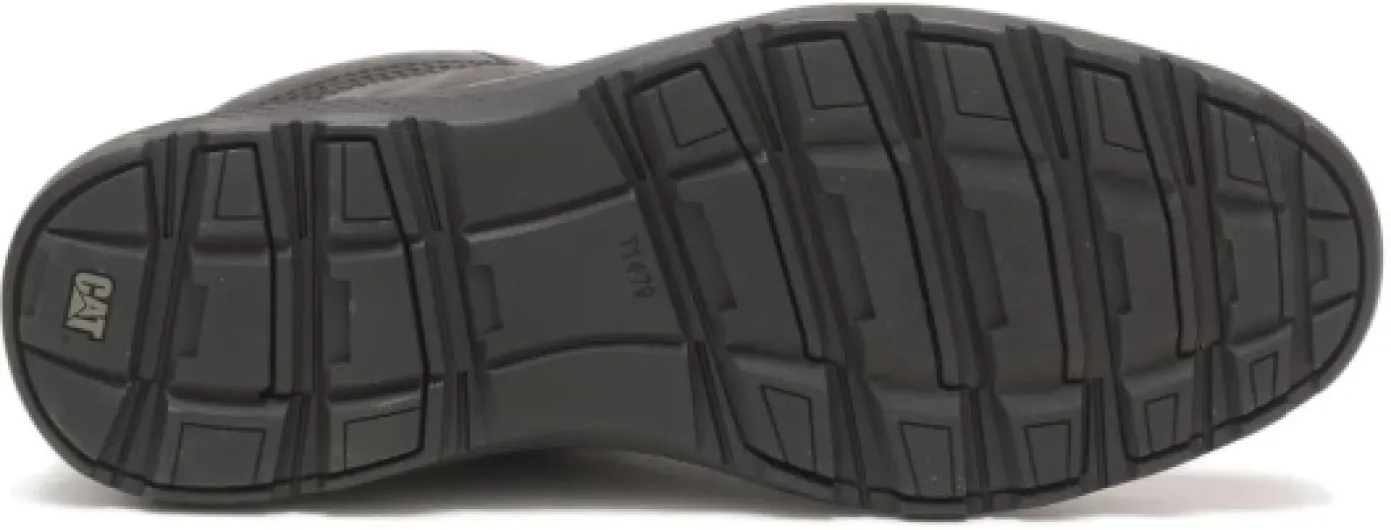
The sole is rubber, with a tread that grips well on wet pavements and tiles. I didn’t feel like I was skating on shiny indoor floors, which happens with some cheaper boots. The insole is polyurethane foam, which gives a bit of bounce and cushioning underfoot. Inside, the lining is a mix of rubber-like and textile feel, not luxury, but it doesn’t feel scratchy or cheap either. It’s more “practical sneaker” than “heritage leather boot”.
Where I’m a bit cautious is the overall build weight and density. Strobel construction tends to keep things light and flexible, which is comfortable, but you do feel that this is more of a hybrid between a sneaker and a boot. One Amazon reviewer mentioned heel wear after just a couple of walks, and I can see how that could happen if you’re heavy on your heels or walk a lot on rough surfaces. On my pair, after a few weeks of regular use, there was some early smoothing on the heel edge, nothing dramatic yet, but it’s not the toughest sole I’ve seen on a boot.
To sum up the materials side: the leather is decent, the rubber sole is grippy, and the foam insole is comfortable. But if you’re expecting thick, rugged leather and a sole that laughs at years of abuse, that’s not what this boot is about. It’s more of a comfort-focused, lighter construction with a work-boot look. For city use, that’s fine. For long-term rough use, I’d be more sceptical.
Durability: good for casual use, questionable for heavy wear
Durability is where I’m a bit on the fence with the Trey 2.0. After a few weeks of almost daily use (mostly pavement and indoor floors), the boots are still structurally fine: no loose stitching, no peeling leather, no separation between sole and upper. So in the short term, build quality seems okay. But I did start to notice some early signs of wear that match some of the more critical Amazon reviews.
The main thing is heel wear. Like the 3-star reviewer mentioned, the heel area of the sole seems to wear faster than I’d like. On my pair, the outer heel edge is already smoothing out and flattening a bit. If you’re light and don’t drag your feet, maybe it’s not a big deal. But if you walk a lot on rough surfaces or tend to land hard on your heels, I can see this becoming a problem within a year of heavy use. This is more in line with a casual sneaker lifespan than a tough work boot.
The leather itself is holding up reasonably well. It creases where it should (across the toe bend) but hasn’t cracked or flaked. I’ve given it a quick wipe and a bit of leather cream once, and it responded fine. I haven’t babied them either; they’ve seen a bit of rain and some scuffs. The black colour hides minor scratches nicely. I don’t see the upper falling apart quickly, so the weak point is more likely the sole than the leather.
Overall, I’d say: durable enough for normal city life, not ideal if you want a boot you can beat up for years. For the price (especially if you get it on discount like some reviewers did), it’s acceptable. At full price, I’d expect a bit more toughness from a brand like CAT. If durability is your top priority, I’d look at their heavier models or even proper safety boots instead. For mixed office and weekend use, it should be fine, but I wouldn’t buy it as my only all-year, all-purpose boot.
Performance in real life: city-friendly, not a hardcore workhorse
In real use, I’d describe the Trey 2.0 as very decent for city walking and commuting, but not something I’d abuse on rough terrain or on a worksite. For daily walks on pavements, stairs, and the odd park path, the traction is good. The rubber outsole grips well on wet concrete and standard indoor floors. I didn’t experience slipping, even on slightly wet tiles at the train station, which is always my test area.
For longer walks (over an hour), the comfort stays stable. The cushioning doesn’t collapse right away, and the light weight really helps. Compared to a heavier work boot I own, I felt less tired in the legs after a long day. For office days with a commute, they’re basically ideal: you get a boot that looks more serious than a sneaker but feels pretty close in terms of fatigue on the feet.
Where performance dips is durability and weather handling. Officially, the boot is not water resistant, and that shows. In light drizzle for 20–30 minutes, you’re mostly fine if the leather is new and you’ve maybe added a bit of waterproof spray. But step into proper puddles or get caught in heavy rain, and you’ll feel the moisture coming in. If you live somewhere wet, you’ll want to treat them or simply accept they’re more for dry or mildly wet days. Also, as one Amazon review mentioned, the heel area of the sole seems to wear relatively quickly. On my pair, after a few weeks, there was visible wear on the outer heel edge. Not catastrophic yet, but enough to make me think this is more of a 1–2 season daily boot than a long-term work warrior.
So in practice: great for walking, commuting, and casual days, okay for light trails or parks, and not ideal for heavy-duty jobs, constant rain, or people who really grind their heels down. If you treat it as a comfortable urban boot with a work style, it performs well. If you try to use it like a safety boot, you’ll probably be disappointed over time.
What this CAT boot actually is (and isn’t)
On paper, the Trey 2.0 is sold as a fashion/work-style boot. The specs: leather upper, rubber sole, flat heel, ankle height, lace-up, and a Strobel construction with foam cushioning inside. It’s listed as a “fashion boot” and “winter boot”, with an official note saying it is not water resistant. That’s important, because some Amazon reviews casually call them waterproof, which is misleading. The label and the product page say the opposite.
In hand, the boot looks pretty straightforward: solid black leather, round toe, mid-top ankle height. Nothing flashy, no big yellow CAT branding screaming for attention. It’s more low-key than some other CAT boots. I’d call the style “smart casual with a work vibe”. You can wear it with jeans without thinking too hard. It doesn’t clash with office clothes either if your dress code is relaxed.
The boot is lighter than it looks, which matches what some buyers said. When you first pick it up, you don’t get that heavy industrial boot feeling. If you’re used to proper safety boots with steel toes and thick soles, this will feel like a sneaker in comparison. That’s nice for everyday walking, but it also tells you it’s not built like a tank.
Function-wise, I’d classify it as: a comfortable everyday boot for walking, commuting, and casual use in autumn/winter, with a rubber sole that grips decently on wet pavements. It’s not a hiking boot, not a safety boot, and not a heavy-duty work boot. If you buy it with that in mind, you’ll probably be more satisfied. If you expect Caterpillar-level indestructibility, you might be a bit disappointed after some months.
Pros
- Very comfortable out of the box with light, cushioned feel
- Simple, versatile design that works well with jeans and casual office wear
- Good grip on wet pavements and everyday surfaces
Cons
- Not water resistant despite some user confusion, so not ideal for wet climates
- Heel area of the sole shows wear relatively quickly with regular use
- Feels more like a casual boot than a true heavy-duty work boot for the price
Conclusion
Editor's rating
The CAT Trey 2.0 Chukka is basically a comfortable, light, city-friendly boot that borrows the look of a work boot without fully behaving like one. The main strengths are clear: it’s comfy straight away, reasonably light for a leather boot, grips well on everyday surfaces, and looks simple enough to work with jeans and casual office outfits. For commuting, walking around town, and general autumn/winter use in mostly dry conditions, it does the job nicely.
Where it falls short is in water resistance and long-term toughness. Officially it’s not water resistant, and you can tell. It will survive light drizzle, but if you live in a place with a lot of rain or want something for proper outdoor abuse, this isn’t the right tool. The heel wear mentioned by some users is also something I’ve started to notice, so I wouldn’t buy this as my only heavy-duty boot for years of punishment. It’s more of a comfortable daily driver than a workhorse.
So who is it for? People who want a comfortable, work-style boot for city life, commuting, and casual wear, and who are okay with average durability and basic weather protection. Who should skip it? Anyone needing a real work boot for rough conditions, or those who expect a fully waterproof, long-lasting tank. If you find it at a good discount, it’s a pretty solid pick. At full price, it’s decent, but I’d compare a few alternatives before hitting buy.