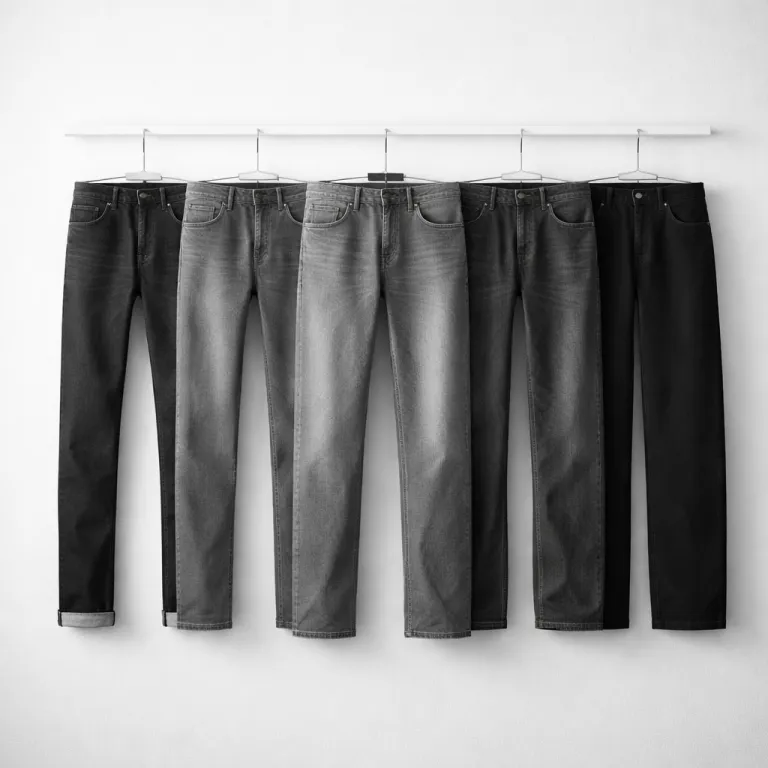

Why most men buy the wrong jeans
Most men chase logos and hype then wonder why their jeans feel off. When you focus on brand before fit, even the so called best jeans for men end up sagging at the seat or strangling your leg. The right jean starts with your body, not with a levi billboard or a random stretch denim trend.
Think of denim like a tool, not a trophy piece. A high quality pair of men jeans should skim your leg, match your rise to your torso, and let you move well without ballooning at the ankle. Once you understand how fit, rise and cut work together, you can judge every pair of jeans in the shop in under thirty seconds.
There are five cuts that matter for modern wardrobes. Slim straight, classic straight fit, relaxed straight, tapered and wide leg jeans cover almost every body type when you choose the right size and rise. Everything else is just marketing language slapped on standard jeans silhouettes.
For a style beginner, slim straight is usually the safest starting point. This cut follows the natural line of the leg without hugging the calf, so it works with trainers, boots and even a sharp blazer when the denim wash is clean. A straight leg in a mid rise gives you that regular fit look that feels grown up but not stiff.
Relaxed straight and tapered cuts solve two opposite problems. If you lift and have big thighs, a relaxed straight leg jean gives room in the thigh with a straight fit from knee to hem so the whole leg looks balanced. If you are slimmer, a tapered cut jeans shape narrows from knee to ankle, keeping the jean from puddling over your shoes while still feeling good around the thigh.
Wide leg jeans are having a moment, but treat them with caution. On a beginner, a wide cut can swallow the leg and make even the best jeans look like borrowed workwear unless the rise, length and shoe choice are dialed in. Start with one standard jeans pair in a straight leg before you experiment with more dramatic cut jeans shapes.
Match your body shape to the right cut
Start with a mirror, not with a shopping cart. Your build decides which fit jeans will look like the best jeans for men on you, even if the label says something else. Once you map your shape to a cut, every rail of denim becomes easier to edit.
If you have an athletic build with strong thighs and glutes, go for straight or tapered cuts. A relaxed straight leg jean or a straight fit with a mid rise lets the fabric fall clean from hip to hem without pulling across the seat, while a tapered leg keeps the ankle neat so the whole leg looks intentional. Look for men jeans labeled regular fit or original fit from brands like levi original or levi premium, then size so you can pinch about 2 centimetres of denim at the thigh.
For a slimmer frame, a slim fit or slim straight cut is your friend. You want the jean to follow the leg without turning into spray on denim, so avoid anything with more than 2 percent stretch and choose a mid rise that sits just below the natural waist. A slim straight leg in a high quality selvedge denim will soften with wear and give you that tailored look without a tailor.
Heavier builds benefit from relaxed straight or gently tapered cuts. A higher rise, sometimes even a subtle high rise, stops the waistband from cutting into the stomach and keeps the profile clean under knitwear or a jacket. When you choose a relaxed straight fit jeans style, make sure the leg opening is not so wide that it hides your shoes, or the whole pair will look a size too big.
Whatever your shape, get ruthless about size. The waistband should sit flat without a belt, the rise should not pull when you sit, and the leg should break once on the shoe, not stack in heavy folds. If you are unsure about measurements, use a detailed guide on how to find the perfect men’s pants size so you can translate your body into the right jean every time.
Remember that different fabrics change how a cut behaves. A raw selvedge pair in a straight leg will feel stiff on day one but mold to your body over months, while a stretch denim tapered jean will feel easy from the first wear but can bag out if the elastane content is too high. Always test how the leg moves when you sit, squat and walk, because the best jeans are the ones you forget about once you leave the house.
The three denim fabrics that actually matter
Most shelves are full of marketing names, but only three denim types really count. Japanese raw selvedge, mid weight comfort denim and controlled stretch blends cover almost every situation where men want the best jeans for men that age well. Each fabric changes how the jean drapes on your leg and how the rise and cut feel after months of wear.
Japanese raw selvedge denim is the investment option. Woven slowly on shuttle looms, selvedge denim has a clean self finished edge that you see when you cuff the leg, and raw selvedge means the fabric is unwashed so it starts stiff and dark. A high quality selvedge jeans pair in a straight fit or slim straight cut will feel unforgiving at first, but after six months of regular wear the jean will hold creases at the knee and thigh that are unique to your body.
Mid weight comfort denim sits in the sweet spot for daily wear. Think 12 to 13 ounce denim with a mostly cotton composition and maybe 1 percent stretch, which gives enough ease without turning the jean into leggings. This is where many levi premium and levi original lines live, offering standard jeans that feel broken in on day one but still keep their shape through a full work week.
Stretch denim has its place, but you need to control it. Look for blends with no more than 2 percent elastane, because anything higher tends to sag at the seat and knee, especially in slim fit or tapered leg jeans. A mid rise stretch jean in a straight leg can be a good travel pair, since the fabric moves well on long days while still looking sharp at dinner.
Whatever fabric you choose, pay attention to the details. A button fly on a raw selvedge pair feels traditional and is easier to repair, while a zip fly on a standard jeans model is faster for everyday wear but can fail sooner. If you want to go deeper into cloth and construction, study a guide on how to elevate your wardrobe with premium denim so you can read a fabric label like a tailor.
Wash also interacts with fabric weight. Dark indigo raw selvedge will fade with high contrast over time, while a mid blue comfort denim wash hides scuffs and looks good with almost every shoe you own. For a beginner building a small rotation, one dark pair and one mid blue pair in complementary cuts will cover most casual wear without feeling repetitive.
Rise, length and the details that make or break a pair
Get the rise wrong and even the best jeans for men will feel off. Rise is the distance from the crotch seam to the top of the waistband, and it decides where the jean sits on your body. Low rise had its moment, but for modern men it shortens the leg, exposes your underwear when you sit and rarely flatters anyone past a runway sample size.
Mid rise is the sweet spot for almost every build. A mid rise jean sits just below your natural waist, which balances your torso and leg proportions and keeps shirts tucked without constant adjustment, whether you choose a straight fit or a slim fit. High rise can work well on taller men or those with longer legs, especially in straight leg or relaxed straight cuts, because it anchors the waistband higher and lets the leg line run clean from hip to shoe.
Length is just as critical as rise. Aim for a hem that hits the top of your shoe with a single break, which means one soft fold in the fabric rather than a stack of denim at the ankle. If you like to cuff your selvedge jeans to show the selvedge denim edge, buy a slightly longer inseam and ask a tailor to keep the original hem so the leg still looks intentional.
Details separate a good pair from a great one. Check the stitching along the outseam and around the back pockets, because this is where cheaper standard jeans often fail first under daily wear. On a button fly, test each button for wobble, and on a zip fly, run the zip several times to make sure it does not catch the denim or your shirt.
Hardware and pocket placement also affect how the jean looks on your body. Back pockets that sit too low make the seat look saggy, while pockets that are too small can make a larger build look wider than it is, especially in lighter denim washes. A clean yoke, balanced pocket size and a straight leg opening that matches your shoe width will make even a regular fit pair feel tailored.
Finally, think about how the jean works with the rest of your wardrobe. A dark indigo slim straight with a mid rise pairs well with a premium knit or even a light grey cashmere beanie when the weather drops, while a mid blue relaxed straight leg jeans style looks right with simple trainers and a T shirt. The best jeans are the ones that slip into your routine so easily that you stop thinking about them and start thinking about your day.
Wash, color and how many pairs you actually need
Most men overcomplicate washes and underthink how they will wear them. For a tight wardrobe, you need fewer pairs of jeans than you think, but each jean has to earn its place. Focus on versatility first, then add personality once you know your daily uniform.
Start with one dark indigo pair in a slim straight or straight fit. Dark denim reads almost like tailored trousers when the wash is clean, with no fake whiskers or heavy distressing, so you can wear that pair with a blazer, a shirt or a simple knit and still look put together. A dark mid rise jean with a straight leg and minimal contrast stitching is often the single best jeans purchase a beginner can make.
Your second workhorse should be a mid blue pair. This is your off duty jean, the one you reach for on weekends, dates and casual office days when you want to look relaxed but not sloppy, and it works especially well in a regular fit or tapered cut. Choose a wash that looks like it could have faded naturally, avoid heavy rips and sandblasting, and let your own wear patterns create character over time.
Skip distressed and heavily ripped styles for now. Those jeans lock you into a narrow aesthetic, age badly and often use weaker denim around the tears, which shortens the life of the pair. If you want texture, look for subtle wash variation on selvedge jeans or a raw selvedge pair that will develop high contrast fades with honest wear.
Color wise, keep it simple. Dark indigo, mid blue and maybe a single black denim pair cover almost every situation, from casual Fridays to late night bars, without shouting for attention. Once you have those three in cuts that match your body, you can experiment with ecru, grey or even a wide leg jeans silhouette in a lighter wash.
Two to four pairs are enough for most men. One dark, one mid blue, one black and an optional fourth in selvedge denim or a more relaxed straight leg cut give you rotation so each jean can rest between wears, which extends the life of the fabric. That is how you build a small, high quality line up instead of a drawer full of almost right standard jeans that never leave the shelf.
Price brackets, brands and when to pay more
Price in denim is not random, but it is not a straight quality ladder either. You pay for fabric, construction and sometimes just for marketing, so you need to know when a pair of jeans is genuinely high quality and when it is just expensive. Think in brackets and decide what each bracket should deliver before you tap your card.
In the entry bracket, roughly 50 to 90 euros, you are looking at mass market denim. Here, focus on getting the right fit, rise and leg shape, because the fabric will rarely be premium, and expect a mix of cotton and stretch with standard jeans construction. Brands like levi original often sit near the top of this range, offering original fit and regular fit cuts that, when sized well, can be some of the best jeans for men who are just starting to care.
The mid bracket, around 90 to 180 euros, is where value peaks. You start to see better denim, more consistent stitching and sometimes entry level selvedge jeans, especially from Japanese inspired labels and smaller European makers. This is also where levi premium lives, with straight fit, slim fit and tapered cuts in heavier fabrics that hold their shape and age with more grace than cheaper men jeans.
Above that, in the 180 to 300 euro range and beyond, you are mostly paying for fabric and niche production. Japanese raw selvedge denim from mills like Kaihara or Kuroki, cut into straight leg or slim straight silhouettes, can last for years if you rotate your pairs and wash them carefully. At this level, a button fly, chain stitched hems and tight, even stitching along the leg are non negotiable signs that the jean is worth the price.
Spending more only makes sense if the cut and size are perfect. A 250 euro raw selvedge pair that never leaves your wardrobe because the rise feels wrong is a worse buy than a 70 euro mid rise straight leg jean that you wear three times a week. Always start by locking in your preferred fit jeans profile, then upgrade the fabric and construction once you know exactly what works on your body.
Finally, remember that accessories and styling can elevate even modest denim. A clean sneaker, a sharp overshirt and a well chosen winter accessory like a soft cashmere beanie can make a regular fit mid blue pair look intentional and refined. The runway might chase trends, but your commute needs jeans that fit, feel good and quietly do their job every single day.
Key statistics on men’s jeans and denim
- According to data from the market research firm Statista, global denim sales reached over 64 billion US dollars recently, showing that jeans remain one of the most purchased garments for men worldwide.
- Consumer surveys from Levi Strauss & Co. report that more than 70 percent of men prefer mid rise or regular rise jeans, confirming that mid rise has become the standard rise for everyday wear.
- Fabric analysis from several European retailers indicates that stretch denim with 1 to 2 percent elastane now represents a majority of men’s jeans sales, reflecting a shift toward comfort blends rather than rigid 100 percent cotton.
- Industry reports from Japanese mills suggest that selvedge denim still accounts for a small but growing niche, with raw selvedge production increasing by single digit percentages each year as more men invest in high quality long lasting jeans.
- Retail fit data from major chains shows that straight fit and slim straight cuts together make up more than half of men’s jean purchases, while extreme skinny and very wide leg jeans remain minority styles.
FAQ about choosing the best jeans for men
What is the most versatile cut of jeans for beginners ?
For most beginners, a slim straight or classic straight fit in a mid rise is the most versatile option, because it balances the leg, works with many shoe types and can be dressed up or down easily.
How tight should jeans feel at the waist and thighs ?
Jeans should sit snug at the waist without needing a belt, and at the thighs you should be able to pinch about 2 centimetres of fabric, which means the jean follows your leg without restricting movement.
Is raw selvedge denim worth the higher price ?
Raw selvedge denim is worth the investment if you want high quality fabric that molds to your body and you are willing to break it in over months, but if you prefer instant comfort, a mid weight comfort denim with minimal stretch is usually a better choice.
How many pairs of jeans does a man really need ?
Most men can cover almost every casual situation with two to four pairs of jeans, typically one dark indigo, one mid blue, one black and an optional fourth in selvedge or a more relaxed cut for variety.
How much elastane is too much in stretch denim ?
For men’s jeans, it is best to keep elastane content at 1 to 2 percent, because higher levels tend to cause the fabric to bag out at the knees and seat, especially in slim fit or tapered cuts.