
Summary
Editor's rating
Value for money: good everyday shell if you catch a fair price
Design: low-key look, functional layout
Comfort and fit: decent, but watch the sizing
Materials and build: light, synthetic, and fairly tough
Durability: feels solid for regular use
Real-world performance: rain, wind, and breathability
What you actually get with the Dubliner
Pros
- Reliable waterproofing and good wind protection for everyday use
- Lightweight and packable with a hood that actually works and can be stowed
- Clean, low-key design that works for commuting, city use, and casual hikes
Cons
- Runs small, especially if you want to wear thicker layers underneath
- No insulation at all, so you must layer in colder weather
- Breathability and zippers are decent but not great for intense activities

Specifications
View full product page →| Brand | Helly Hansen |
A simple rain jacket that actually keeps you dry
I’ve been using the Helly Hansen Dubliner (men’s, size L in black) as my main rain jacket for a while now. I bought it because I wanted something lightweight and packable that I could throw on for commuting, dog walks, and the odd hike, without paying crazy money for a full-on mountaineering shell. On paper it’s a basic waterproof shell with Helly Tech, no insulation, and a simple design. In practice, that’s exactly how it feels: not flashy, just a straightforward tool for bad weather.
The first thing I noticed is that it really is more of a shell than a warm jacket. The description is honest on that point. If you’re expecting something cozy, you’re going to be disappointed. It blocks wind pretty well and keeps water out, but warmth depends entirely on what you wear underneath. For me, that’s fine. I’d rather choose my own layers instead of being stuck with a heavy all-in-one coat that’s too hot half the year.
I’ve worn it in a couple of proper downpours and a bunch of light showers, plus some windy, chilly days where it didn’t actually rain. The jacket handled the rain without any drama: water beads up and rolls off, the seams don’t leak, and the hood and collar give good coverage. It doesn’t feel like a plastic bin bag either, which I appreciate on longer walks or when I’m rushing around town. Breathability is not perfect, but for an everyday rain jacket, it’s decent.
Overall, my first impression was: this is a practical, no-frills waterproof that feels better made than cheap supermarket raincoats, but it’s also not some high-end technical piece. It sits in that middle ground: pretty solid for everyday use, as long as you understand it’s a shell and you size it right. If you get the sizing wrong or expect it to be warm on its own, you’ll probably be annoyed.
Value for money: good everyday shell if you catch a fair price
On the value side, the Dubliner sits in that mid-range spot: not bargain-basement cheap, not premium technical gear either. For what you get—a reliable waterproof shell from a known brand, with taped seams, a decent hood, and a clean look—I think the price is reasonable, especially if you catch it on discount, which often happens with older collections. It’s clearly a step up from generic no-name raincoats in terms of fit, finish, and long-term use.
What you’re paying for here is mainly functional waterproofing, brand experience, and versatility. It works for commuting, city use, travel, and light hiking, and it doesn’t look out of place in any of those contexts. You can wear it spring through autumn, and in winter if you layer properly underneath. So even if it’s not the cheapest option, you’re likely to get a lot of use out of it across different situations, which helps justify the cost.
On the downside, you’re not getting certain features that some people might expect at this price level: no pit zips, no fancy adjustment system, no insulation. Also, the fact that it runs small means some people may end up returning and swapping sizes, which is a bit of a hassle. If you specifically need a warm winter coat, you’ll have to spend more on the insulated version or add your own mid-layers, which is an extra cost if you don’t already own them.
Compared to cheaper jackets I’ve tried, the Dubliner feels more reliable in real rain and more comfortable to wear all day. Compared to high-end shells, it obviously lacks some technical features and toughness, but it also costs less. So in my opinion, it’s good value for money as an everyday waterproof shell, especially if you size up smartly and know you’re buying a shell, not a full-on winter coat.
Design: low-key look, functional layout
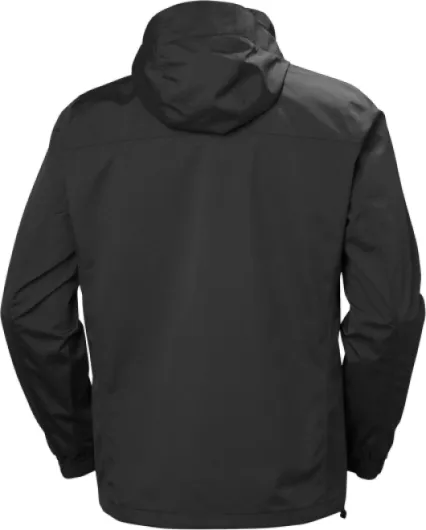
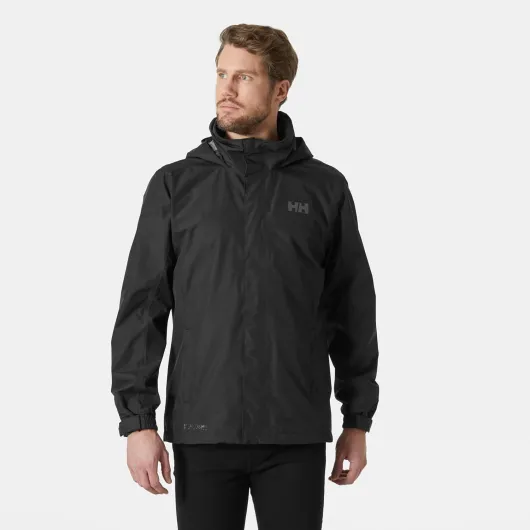
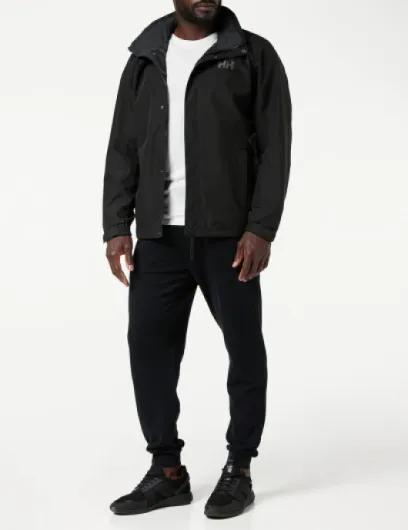
Design-wise, the Dubliner is very much on the practical and discreet side. The cut is a standard length that hits around the hips, so it covers your lower back when you sit down or lean forward, but it’s not a long coat. For commuting or casual wear, that’s fine. For sitting in wet stadium seats or kneeling in mud, you might wish it was a bit longer. I’d call the overall fit “regular” but with the catch that it runs slightly small, especially if you want to layer underneath.
The hood design is one of the better points. It’s not huge and floppy, and when you zip the jacket all the way up, the collar comes high enough to protect your neck and part of your face. The hood has basic adjustments so it doesn’t blow off in the wind, and when you don’t need it, you can roll it and stuff it into the collar. It takes a bit of practice to fold it neatly so the collar doesn’t look bulky, but once you get the hang of it, it’s handy. I like having the option to hide the hood for a cleaner look.
The pockets are well placed: two hand pockets at a comfortable angle, big enough for keys, gloves, and a phone, and one internal zip pocket that’s actually crucial when it’s pouring. I’ve used the inner pocket for my phone and it stayed dry even in heavy rain. The zippers feel decent, though they can be a little sticky sometimes, especially if you’re trying to do them one-handed. It’s not terrible, but you notice it when you’re rushing.
Style-wise, in black, it’s pretty neutral. You can wear it over jeans and a hoodie, or over a shirt and chinos without looking out of place. There’s no flashy color blocking or giant logos. If you want a jacket that just blends in and doesn’t scream “technical gear,” this does that well. Personally, I like that it doesn’t draw attention; it just looks like a normal, clean rain jacket that happens to be decently built.
Comfort and fit: decent, but watch the sizing
Comfort-wise, the Dubliner is good but not luxurious. The jacket is light enough that it doesn’t feel like a burden, even when you wear it all day. The fabric is flexible enough for normal movement—walking, cycling, reaching up—without feeling stiff or crunchy. The lining helps a lot here; it keeps the jacket from clinging to your arms when you get a bit warm. I’ve worn it over just a T-shirt in mild weather and it felt fine, not sweaty or plasticky right away.
The big thing to flag is sizing and layering. The general feedback, and my experience, is that it runs slightly small, especially in the chest and shoulders. If you plan to wear only a thin jumper under it, your usual size might work. If you want to put a thick fleece or sweatshirt underneath, I’d strongly suggest going one size up. In my normal size, I could zip it up, but it felt snug with a mid-layer, especially when I moved my arms forward (like on a bike or at a desk). Going up a size gave me room to move and breathe.
In terms of temperature comfort, remember this is just a shell. It blocks wind well, which helps a lot in cooler weather, but it does not provide real insulation. On a chilly, windy day, with only a T-shirt underneath, I was cold after a while. Add a fleece and it’s a different story. The upside is that you can use it in warmer months over a thin shirt without overheating instantly, as long as you’re not running or doing intense activity. Breathability is okay for walking and commuting, but if you’re hiking uphill or cycling hard, you’ll still feel clammy—there are no pit zips or advanced vents.
Overall, I’d rate comfort as good for daily use, with the key advice: size up if you want versatility. Once you get the sizing right, it’s a jacket you can forget you’re wearing most of the time, which is really what you want from something like this. Not ultra-soft or super ventilated, but it gets the job done without annoying pressure points or weird rubbing.
Materials and build: light, synthetic, and fairly tough
The Dubliner is 100% polyester, inside and out, with Helly Tech as the waterproof/breathable layer and a DWR coating on the surface. In the hand, the fabric feels lightweight but not flimsy. It’s definitely not as thick as heavy-duty hiking shells, but it also doesn’t feel like those cheap shiny plastic raincoats that tear if you look at them wrong. The outer fabric has a fine weave that gives it a slightly more “city-friendly” look, which I actually like for daily use.
On the inside, there’s a quick-dry lining that keeps the fabric from sticking to your skin when you sweat or when you’re wearing a T-shirt. It doesn’t add warmth, but it does make it more comfortable than a bare, rubbery-feeling shell. After a few wet outings, the DWR still beads water nicely, so rain mostly rolls off instead of soaking into the outer layer. Over time, like all DWR coatings, it will probably need a refresh with a spray or wash-in product, but that’s standard for this type of jacket.
Stitching and seams seem well finished. The seams are taped on the inside to keep water from sneaking in, and I haven’t seen any loose threads or weird defects. The zippers are plastic with metal pulls and feel sturdy enough. They’re not super smooth like on high-end gear, but they haven’t failed or split. The snaps on the storm flap are firm and haven’t popped open on their own, even in wind.
After regular use—stuffing it in a backpack, hanging it by the hood, wearing it with a backpack on top—there’s no visible damage, no peeling, and no obvious wear spots yet. I wouldn’t abuse it with heavy bushwhacking or dragging it over rocks, but for normal urban and light outdoor use, the materials feel up to the job. Overall, the build quality is pretty solid for the price range, especially compared to random no-name rain jackets.
Durability: feels solid for regular use
In terms of durability, the Dubliner has held up well so far. I’ve been using it as my go-to rain layer: stuffed into a backpack, thrown on car seats, hung up by the hood, and used under a backpack with some weight in it. The fabric doesn’t show much in the way of scuffs or wear marks yet. The outer material is on the lighter side, but it doesn’t feel fragile. I wouldn’t drag it over rocks or use it for serious bushcraft, but for normal city and trail use, it feels strong enough.
The stitching and seams look tidy and haven’t started to fray. The taped seams inside are still firmly attached, with no peeling. That’s important for long-term waterproofing, because once those start to lift, water finds its way in. So far, after multiple wet outings and some rough stuffing into bags, everything is still intact. The cuffs, which often take a beating from Velcro and constant adjusting, also look fine with no pilling or tearing.
The zippers are probably the weakest point, not in the sense that they’re breaking, but they’re not the smoothest. Sometimes they catch slightly if you’re not careful lining them up, especially the main front zip. That said, they haven’t failed or split open, and the pulls feel sturdy. As long as you don’t yank them around aggressively, they should last. The snaps on the storm flap still close firmly and haven’t gone loose.
Long-term, I expect the main maintenance job will be refreshing the DWR once it starts to lose its beading. That’s normal and not unique to this jacket. Overall, for the price and the type of product, I’d say durability is pretty solid. There are tougher, heavier jackets out there, but for an everyday waterproof shell that stays relatively light and packable, this strikes a decent balance between durability and comfort.
Real-world performance: rain, wind, and breathability
Performance is where the Dubliner earns its keep. In heavy rain, it has kept me properly dry. I’ve done around 1–2 hours outside in solid downpours—walking and waiting around at bus stops—and the inside stayed dry, including the shoulders and seams where cheaper jackets often start to seep. The water beads off nicely thanks to the DWR, and the Helly Tech membrane keeps rain from pushing through the fabric. The hood and high collar combo also works well; water doesn’t immediately run down your neck, which is always a plus.
In windy conditions, the jacket does a good job of cutting the wind. I’ve worn it on some gusty days by the coast and on open fields, and the difference when you zip it up is instant: the wind chill drops off a lot. Of course, because it has no insulation, your overall warmth still depends on your base and mid-layers, but at least the wind isn’t ripping through you. The cuffs and hem adjustments help seal things up so drafts don’t blow up your sleeves or under the jacket.
Breathability is okay but not outstanding. For normal walking, commuting, and light hiking, it’s fine. I didn’t feel like I was in a sauna. But if you start moving faster—cycling hard, hiking up steep hills—you will get some condensation inside. That’s pretty typical for this kind of jacket in this price range. There are no pit zips to dump heat quickly, so you manage temperature mostly by unzipping the front a bit or adjusting your layers.
Overall, in terms of pure function, I’d say the Dubliner is reliable for rain and wind for everyday and weekend use. It’s not a high-end alpine shell, but it does what most people need: keeps you dry in downpours, blocks wind, and doesn’t feel like a plastic bag. If your main use is commuting, walking the dog, or weekend walks, it’s more than enough. If you’re doing long, sweaty hikes in the mountains, you might want something with better venting.
What you actually get with the Dubliner
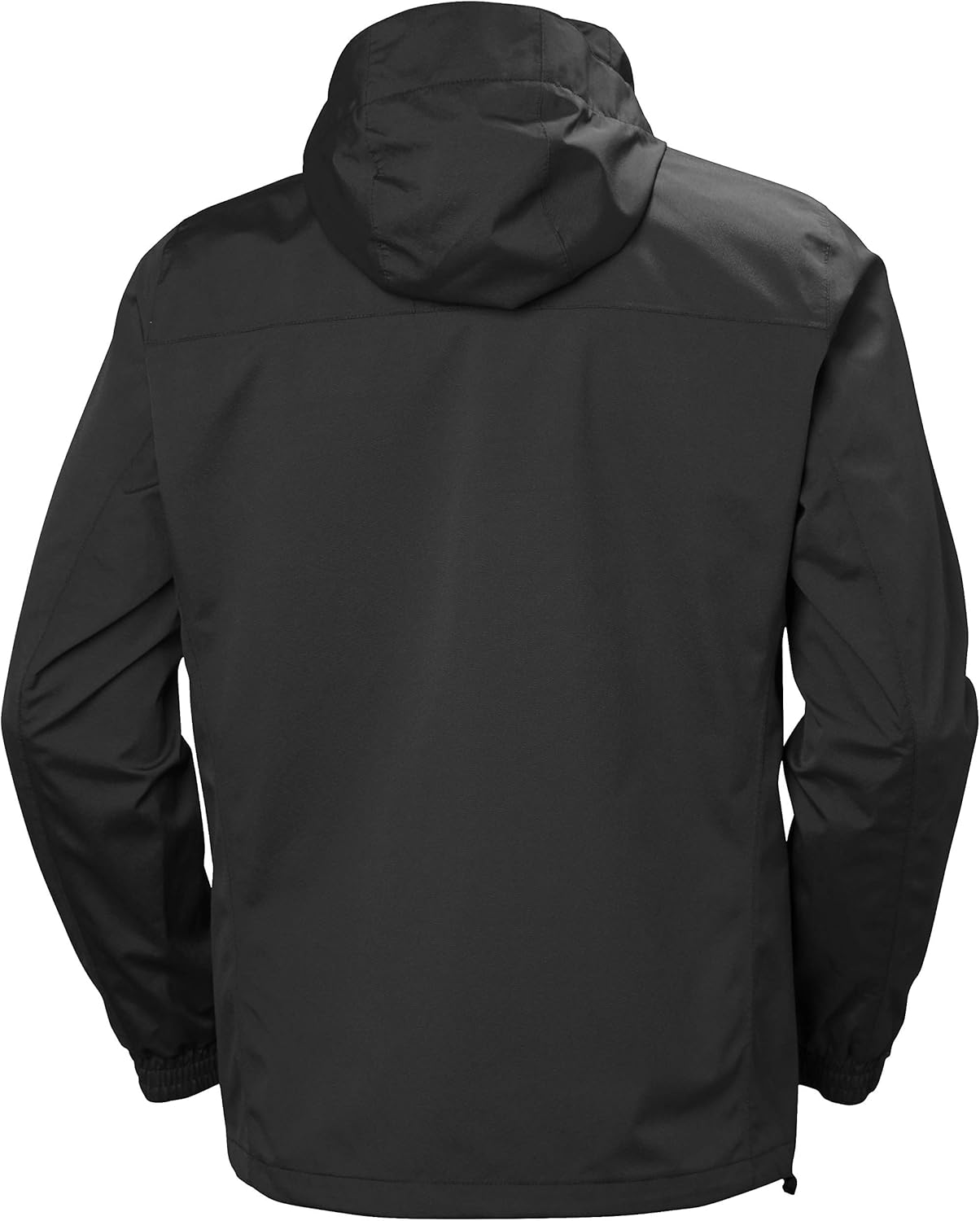
On the surface, the Dubliner looks like a very standard men’s rain jacket: black, hip-length, long sleeves, three pockets, and a hood that tucks away. There’s nothing flashy about it. The branding is low-key, just a small Helly Hansen logo on the chest and a bit on the sleeve. If you want something you can wear to the office, on a walk, or into town without looking like you’re off to climb a mountain, this fits the bill. It’s more urban/outdoor mix than hardcore hiking gear.
The jacket is 100% polyester, with Helly Tech waterproofing and a DWR (durable water repellent) coating on the outside. The inside has a lightweight lining that feels a bit smoother than bare shell fabric, so it’s not sticky against bare arms, but it’s not padded or insulated at all. The Amazon listing saying “unlined” is a bit confusing; in reality it feels like a thin mesh/taffeta style lining, just enough to make it comfortable, not enough to add warmth.
In terms of features, it’s pretty straightforward: you get two slanted hand pockets with zips and one internal zip pocket that’s actually useful for a phone or wallet. The cuffs are adjustable with Velcro, the hem has a simple drawcord, and the hood is packable into the collar. The main zipper is covered by a storm flap with snaps to keep wind and water out. Nothing fancy, but all the basics are there and they mostly work as expected.
Overall, the presentation is: basic but thought-through. You’re not getting a ton of technical adjustments, pit zips, or fancy toggles, but for commuting, walking the dog, or light hiking, you don’t really need all that. It looks clean, doesn’t scream “outdoor nerd,” and feels like something you can keep by the door and throw on without thinking about it too much.
Pros
- Reliable waterproofing and good wind protection for everyday use
- Lightweight and packable with a hood that actually works and can be stowed
- Clean, low-key design that works for commuting, city use, and casual hikes
Cons
- Runs small, especially if you want to wear thicker layers underneath
- No insulation at all, so you must layer in colder weather
- Breathability and zippers are decent but not great for intense activities
Conclusion
Editor's rating
The Helly Hansen Dubliner is a straightforward, reliable waterproof shell that does what most people actually need: it keeps rain and wind out, it’s light enough to carry around, and it doesn’t look like technical overkill when you’re just going to work or walking the dog. It’s not warm on its own, and it doesn’t pretend to be. Think of it as a rain barrier you build your outfit around with layers, not a big cozy winter coat. If you accept that, it’s a pretty solid piece of kit.
Where it shines is in everyday use: commuting, errands, casual walks, and light hikes. The hood works, the seams don’t leak, and the cut is neutral enough to go with most outfits. Build quality is good for the price, and durability seems fine for regular use. The main things to watch out for are sizing—it runs slightly small, so consider one size up—and the fact that breathability is decent but not super high. If you’re doing intense activities, you might get clammy.
I’d recommend this jacket to anyone who wants a no-nonsense rain jacket for daily life and weekend outings, and who prefers layering instead of a bulky insulated coat. If you’re looking for a very warm jacket, or you want top-tier technical features for serious mountain use, this isn’t it and you should look higher up the range. But as a practical, fairly priced shell from a reputable brand, it gets the job done and feels like money reasonably well spent.