
Summary
Editor's rating
Value: good comfort and features, with a known trade-off
Design: low-key look, hiking-focused build
Comfort: the main reason to buy these
Materials: good leather and Gore‑Tex, with a few trade-offs
Durability: good upper, average outsole life
Performance on the trail: grip and waterproofing are strong, sole life less so
What you actually get with these Mammut boots
Pros
- Very comfortable from day one thanks to 3D Memo Foam and soft but supportive fit
- Reliable Gore‑Tex waterproofing and decent breathability for a leather boot
- Good grip from the Vibram sole on wet rock, mud, and mixed terrain
Cons
- Outsole and heel can wear relatively fast with heavy daily use
- Fit can feel a bit narrow for wide feet, may need careful sizing or thinner socks

Specifications
View full product page →| Brand | Mammut |
Solid mid boot that feels broken-in on day one
I’ve been using the Mammut Mercury IV Mid GTX as my main hiking boots for a mix of UK-style conditions: wet woodland trails, rocky paths, and a lot of boring tarmac walking to actually reach the nice bits. I’m not sponsored, I paid for them, and I mainly wanted something lighter than full-on mountain boots but tougher than trail runners. These sit right in that middle zone.
Out of the box, the first thing that stood out was how light they felt for a leather mid boot. They don’t have that brick-on-your-feet vibe some traditional leather boots have. I wore them straight out on a 10 km walk with a daypack, no break-in at home, and I didn’t get any hot spots or blisters. That already put them ahead of a few older Meindl and Scarpa pairs I’ve owned that needed a week of suffering.
Over a few weeks, I’ve used them in rain, mud, wet grass, and some rocky tracks. I’ve also worn them just knocking about in town because they’re comfy enough to not feel like overkill. The Gore‑Tex liner has kept my feet dry in shallow streams and long wet grass, and the Vibram sole has felt secure on wet rock and mud. So on the basics – grip, waterproofing, comfort – they do the job well.
They’re not perfect though. The main weak point seems to be the sole durability based on my use and what other buyers say. If you’re doing big mileage every day, you might wear the heel and forefoot down faster than you’d like. So overall: very comfortable, very usable boot, but not a long-term tank for heavy daily abuse.
Value: good comfort and features, with a known trade-off
In terms of value, these sit in that mid-to-upper price bracket for hiking boots. You’re paying for a known brand, Terracare leather, Gore‑Tex, and a Vibram sole. Compared to cheaper boots, you do feel where the money goes: comfort is better straight out of the box, waterproofing is reliable, and the boot doesn’t feel like it’s going to fall apart after a couple of wet weekends. The Amazon rating around 4.4/5 with over a thousand reviews lines up with my experience: mostly positive, with a few recurring complaints.
Where the value question comes in is durability versus price. If you use them like a normal person – weekend hikes, some holidays, occasional town wear – they’re good value because you get a comfortable, light, waterproof boot that makes walking more pleasant. If you hammer them every single day for long distances, you’re likely to hit the limits of the sole faster than you’d want at this price point. So it depends how you plan to use them.
Compared to Merrell or Salomon mid boots, I’d say these feel a bit more solid in the upper than some fabric-heavy models, and a bit more “boot-like” while still being light. Comfort is on par or better. Against heavier leather boots from Meindl or Scarpa, they’re lighter and more comfortable early on, but probably won’t last as many years of abuse. So it’s a trade-off: you’re buying comfort and lighter weight, and giving up some lifespan on the outsole.
Overall, I’d call the value pretty solid if you know what you’re buying. If you want a comfy, waterproof, mid-weight hiking boot for day hikes and typical outdoor use, the price is justified. If you want a boot you can thrash daily for years, there are tougher options, but they’ll be heavier and less comfortable out of the box. So for most casual to regular hikers, the cost-to-benefit ratio is reasonable.
Design: low-key look, hiking-focused build
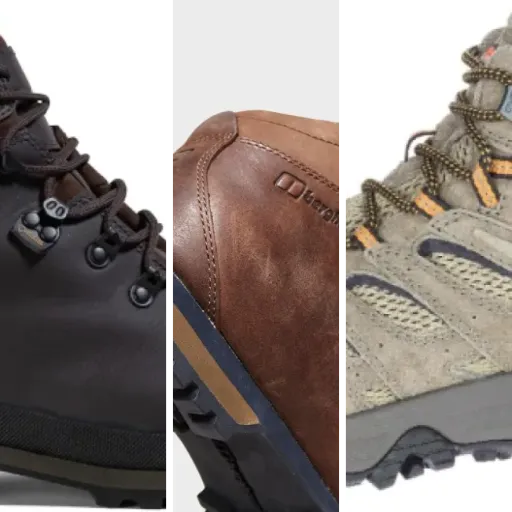
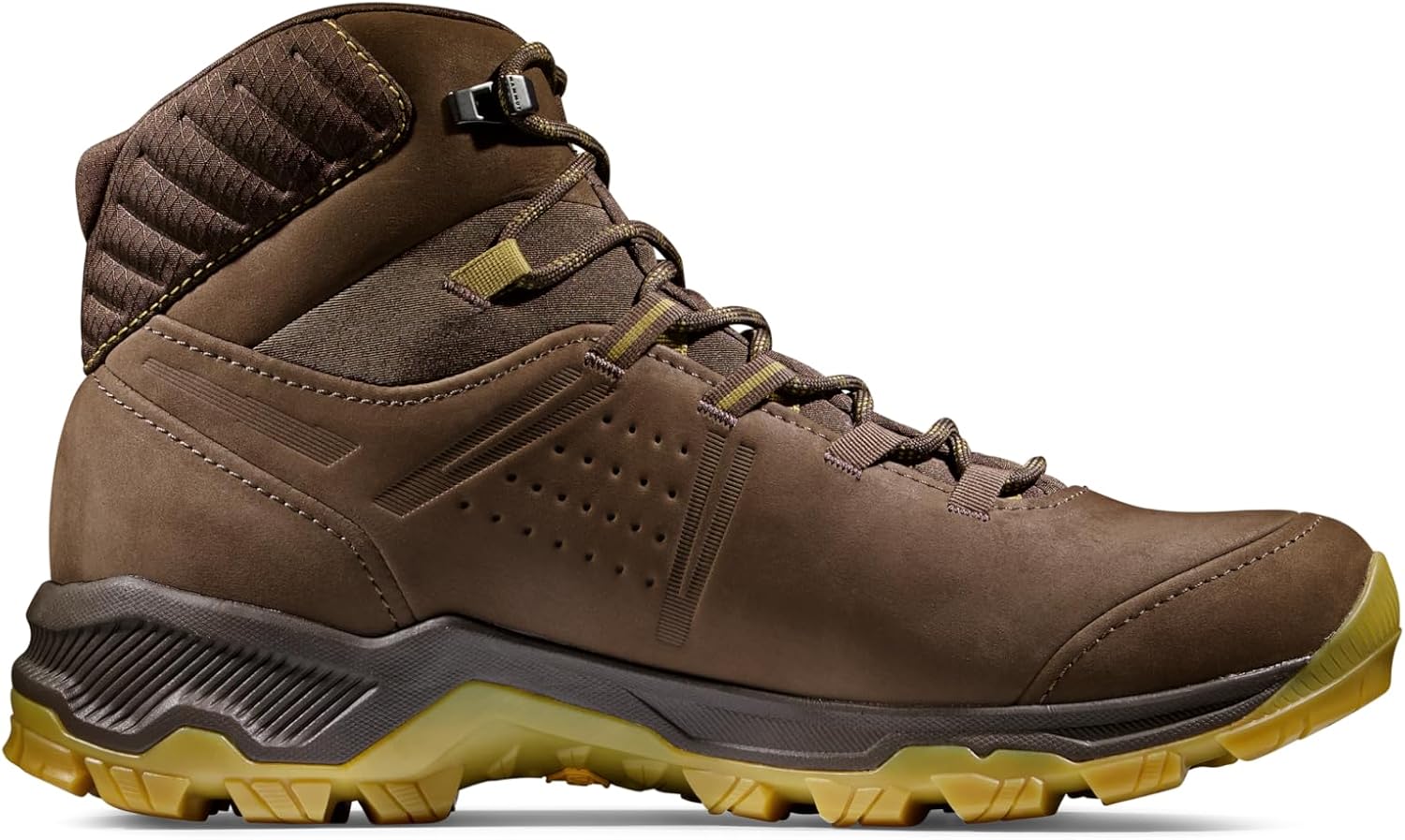
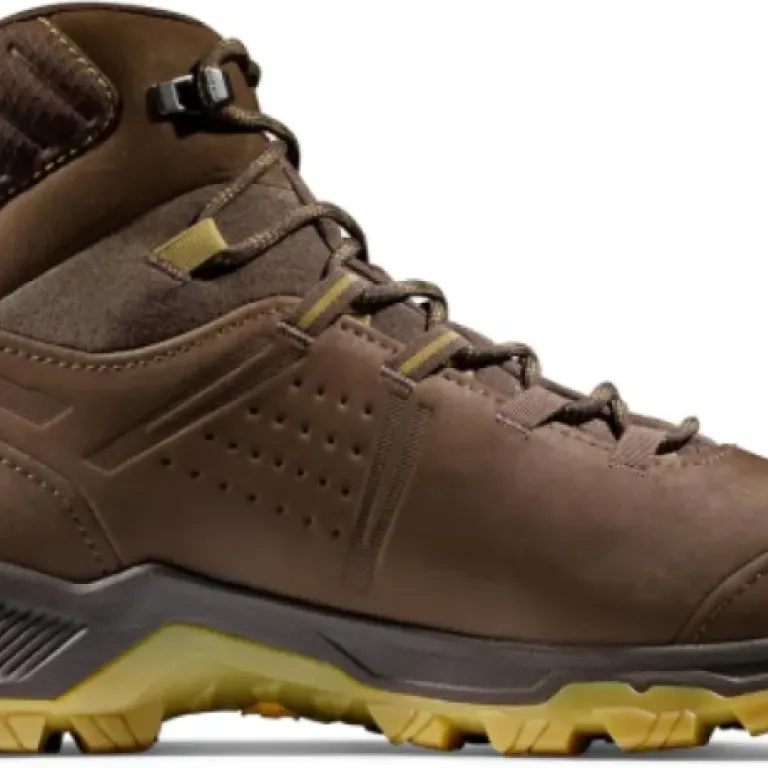
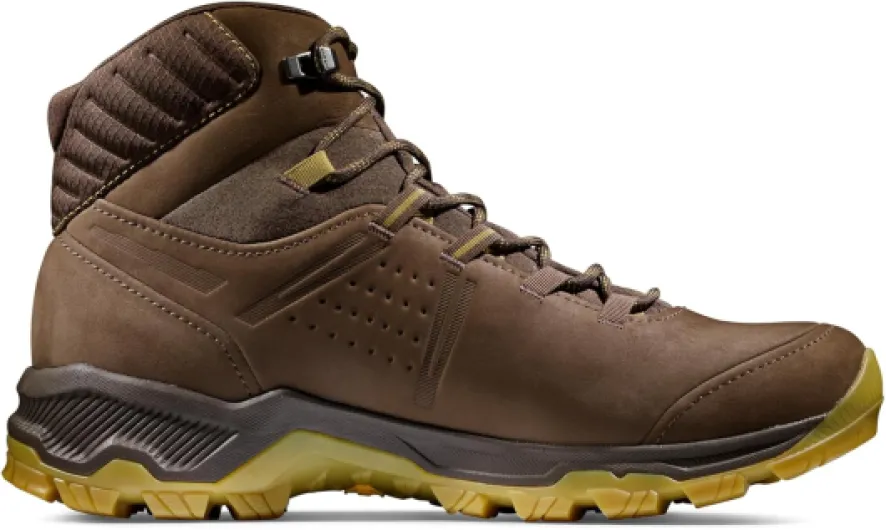
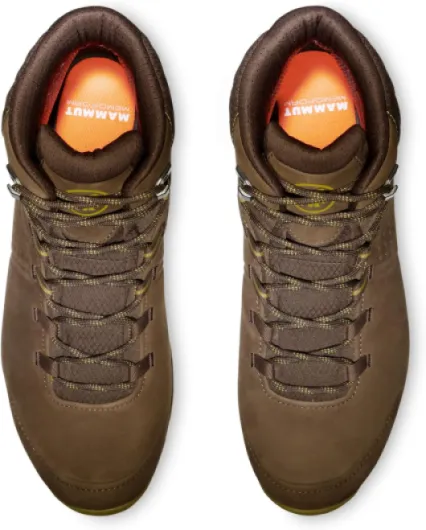
Design-wise, these boots are pretty straightforward, which I like. The Moor Amber Green colour is basically a dark nubuck leather with slight green tones and some darker synthetic bits around the collar and tongue. It’s a simple, solid-looking boot, not one of those super-tech, neon-coloured trail shoes. If you prefer understated gear that doesn’t scream “gear nerd”, this fits that bill.
The shape of the boot is quite streamlined. The toe box is not huge but not ultra narrow either – I’d call it medium, maybe slightly on the snug side compared to something like Merrell, and a bit less pointy than some Salomon boots. The ankle area is well padded, and the boot height is classic mid: enough to cover and support the ankle, but not so high that it rubs your shin. The lacing system is simple: fabric loops and metal hooks at the top, which hold the laces fine and let you adjust tension between forefoot and ankle easily.
One thing I noticed is the rubber toe cap. It’s not huge, but it’s big enough to protect your toes from rocks and roots. That’s saved me a few times when I’ve clipped stones under mud or hidden in grass. The heel has a bit of reinforcement too, which helps with stability and keeps the back of the boot from collapsing over time. The overall silhouette is more hiking-boot than sneaker, but still light enough that you don’t feel over-booted walking through town.
The downside for me is that there’s nothing clever to help with quick on/off – no speed hooks all the way down or heel pull loop that actually works well. You can still get them on and off easily enough, but if you’re used to more technical boots with fancy lacing, these feel a bit basic. On the other hand, fewer plastic bits means there’s less to break. So from a design angle: plain, functional, not stylish in any special way, but also not ugly. It’s clearly built for hiking, not Instagram.
Comfort: the main reason to buy these
Comfort is where these boots really stand out. The 3D Memo Foam around the ankle and in the insole is not just marketing noise – it actually feels good. Out of the box, they felt pretty much broken-in. I did a first walk of around 10 km on mixed paths and pavement with a light pack, and I didn’t get any blisters or rubbing. That’s rare for me, because I usually need at least a couple of shorter walks to settle into new boots.
The fit, on my fairly average-width feet, is snug but not crushing. The forefoot has enough room for my toes to spread slightly on descents without smashing into the front, but if you have very wide feet, you might find them a bit narrow. One Amazon reviewer mentioned using two socks and needing some break-in because of the narrow footbed, so keep that in mind if you’re on the wider side. For me, standard hiking socks were enough, and I didn’t have to size up – my usual UK 11 worked fine.
The ankle support is solid without feeling like a ski boot. There’s enough padding to keep the collar from cutting into your ankle bone, and the boot flexes naturally when you walk. On longer days (15+ km), my feet felt less beaten up than in some stiffer leather boots I’ve used. The cushioning is on the softer side, which is nice for comfort but again might be part of why the sole wears a bit quicker. On rocky trails, you still get enough underfoot protection, but you do feel sharp edges a bit more than with really stiff mountain boots.
Ventilation is decent for a waterproof leather boot. I’ve used them in mild spring/summer weather, and while my feet got warm on climbs, they never felt like they were boiling. With decent socks, I didn’t get much sweat build-up. If you mostly hike in hot, dry conditions, I’d still say a non-Gore‑Tex shoe is better, but for mixed UK-style weather they’re a good compromise. Overall, comfort is probably the strongest reason to pick these over some of the more rigid or heavier competitors.
Materials: good leather and Gore‑Tex, with a few trade-offs
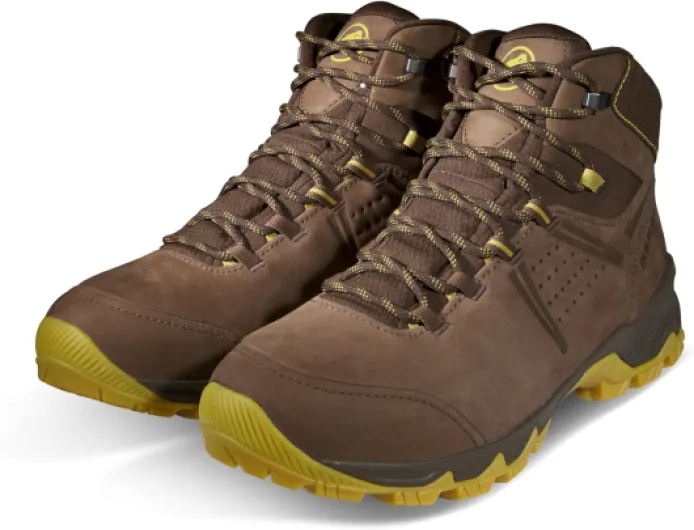
The upper is made from Terracare nubuck leather, which is one of the selling points. In practice, the leather feels thick enough to be reassuring but not so thick that it turns the boot into a tank. It softens up pretty quickly and doesn’t crease in weird ways. After a few wet walks and drying sessions, it still looks decent, especially if you use a bit of dubbing or wax after muddy hikes. It doesn’t feel like cheap split leather you get on some budget boots.
Inside, you’ve got a synthetic lining and a Gore‑Tex membrane. That combination has done its job: stream crossings, boggy paths, and long wet grass haven’t leaked. The breathability is okay for a waterproof boot. On steep climbs my feet get warm, but not in a “sweaty swamp” way. If you’re used to non-waterproof trail shoes, these will obviously feel warmer, but that’s normal. The insole is also synthetic – it’s fine, but nothing special. If you like more arch support or a custom fit, plan to swap it out.
The sole is Vibram rubber, and the rubber compound feels quite grippy on wet rock, mud, and loose gravel. The lugs are medium depth, so they clear mud decently but aren’t super aggressive like a winter mountaineering boot. The flip side, which matches some other user reviews, is that the heel and forefoot rubber seem to wear a bit faster if you walk long distances on tarmac or hard paths every day. For someone doing 10k+ steps daily in them, a year of life with a worn heel sounds realistic.
Overall, the material mix is good for a mid boot at this price: quality leather, a proper branded membrane (Gore‑Tex, not some no-name), and a Vibram sole. The main compromise is sole durability versus grip and comfort. You get nice grip and a softer ride, but you don’t get a rock-hard sole that lasts forever. If you treat the leather with waterproofing products and don’t abuse them on concrete day in, day out, they should hold up fine for normal hiking use.
Durability: good upper, average outsole life
Durability is a mixed bag. The upper leather feels solid. After several wet hikes and some casual use, the Terracare nubuck has held its shape, no cracking or weird stretching. As long as you clean mud off and give it a bit of treatment (wax or dubbing) now and then, I can see the leather lasting a good while. The stitching around the upper and the lace eyelets also looks tidy and hasn’t shown any fraying or loose threads so far.
The weak link seems to be where the leather meets the sole and the outsole itself. One Amazon reviewer mentioned that after continuous daily wear of 10k+ steps for over a year, the leather started to separate around the welt near the toecap, and the heel sole was well worn. That level of use is heavy, to be fair, but it gives an idea: these boots are more designed for hiking days and regular outdoor use, not as work boots or everyday commuters for years on end.
From my own use, I can already see slight wear on the heel edges after a lot of pavement walking to and from trails. Nothing dramatic yet, but the rubber compound clearly prioritises grip and comfort over extreme longevity. If you mostly walk on softer ground (trails, fields, forests), I think they’ll last longer. If your hikes involve lots of road or hard-packed paths, expect the heel lugs to round off over time.
Overall, I’d rate durability as decent but not bombproof. The upper is good quality, the waterproofing has held up, and the general construction feels well put together. Just don’t expect the outsole to last forever if you’re doing hard miles every day. For typical weekend and holiday hiking, you’ll probably get a few solid seasons out of them, but if you’re the type who wears one pair of boots for everything, all year, every day, you might burn through them quicker than you’d like.
Performance on the trail: grip and waterproofing are strong, sole life less so
On actual trails, these boots perform well for what they are. The Vibram sole grips nicely on wet rock, damp roots, and muddy paths. I’ve taken them through wet woodland, grassy hills, and some rocky sections, and I never felt like I was skating around. The tread pattern isn’t super aggressive, but it clears mud reasonably well. On steep, loose gravel descents they felt controlled, not slippy. For day hikes and light trekking, the traction is more than enough.
The Gore‑Tex waterproofing has been solid so far. I’ve stood in shallow streams, walked through ankle-deep puddles, and spent hours in wet grass, and my feet stayed dry. That lines up with the Scottish user review who praised the waterproofing in heavy rain and boggy terrain. Breathability is as expected: fine for cooler or mixed weather, a bit warm on hot days, but nothing unusual for a Gore‑Tex leather boot. If you hike mostly in wet, cool climates, this combo works well.
Where performance drops a bit is durability of the sole if you use them as everyday shoes. One reviewer mentioned wearing them daily for 10k+ steps for over a year and having the sole worn at the heel and the leather splitting around the welt near the toecap. That kind of use is pretty heavy for a boot like this, so I’m not shocked, but it shows these aren’t built like heavy-duty work boots. For weekend hiking and occasional trips, I think they’ll last a few seasons; for daily long walks on roads, expect to see wear faster.
In terms of support, they sit in the middle. They’re not floppy trail runners, but they’re not stiff mountain boots either. With a regular daypack (up to maybe 10–12 kg), they feel stable and supportive. I wouldn’t pick them for a week-long trek with a huge backpack in rough alpine terrain, but for typical weekend hikes, wet hill walks, and general outdoor use, they handle it fine. So performance is strong in comfort, grip and waterproofing, but just moderate in long-term sole durability.
What you actually get with these Mammut boots
The Mammut Mercury IV Mid GTX is basically a mid-height hiking boot aimed at day hikes and light trekking. It’s not a full-on mountaineering boot, and it doesn’t pretend to be. You get a leather upper (Terracare nubuck), a Gore‑Tex waterproof membrane, a Vibram outsole, and what Mammut calls 3D Memo Foam around the ankle and in the insole. On paper, it ticks all the usual mid-boot boxes.
The pair in question is the Moor Amber Green colour in size 11 UK. The colour is mostly a muted brownish/olive leather with some greenish accents – it looks outdoorsy but not loud. If you wear them into town, you don’t look like you’re about to climb Everest, which I like. They’re mid-top, so the shaft comes up to the ankle, with a fairly standard lace-up system and metal eyelets at the top. Nothing fancy, just normal hiking boot hardware.
Weight-wise, they’re on the lighter side for a leather mid boot. Mine came in roughly around 1.1 kg for the pair, which lines up with the spec. That makes a difference on longer days: you notice you’re not dragging old-school heavy leather boots around. Inside, it’s mostly synthetic lining with the Gore‑Tex layer, and the insole is also synthetic. You can swap the insole out if you use custom insoles or want more arch support.
In terms of positioning, I’d put them against things like the Salomon X Ultra mid boots, some Merrell Moab models, and lighter Meindl/Scarpa mid boots. They’re a decent option if you want something between a trainer-style hiking shoe and a stiff leather boot. Just be clear: these are more for day hikes, wet climates, and general walking than for winter mountaineering or heavy backpacking with 25+ kg loads.
Pros
- Very comfortable from day one thanks to 3D Memo Foam and soft but supportive fit
- Reliable Gore‑Tex waterproofing and decent breathability for a leather boot
- Good grip from the Vibram sole on wet rock, mud, and mixed terrain
Cons
- Outsole and heel can wear relatively fast with heavy daily use
- Fit can feel a bit narrow for wide feet, may need careful sizing or thinner socks
Conclusion
Editor's rating
The Mammut Mercury IV Mid GTX is a very comfortable, mid-weight hiking boot that does the basics well: good grip, solid waterproofing, and a leather upper that feels decent quality. The 3D Memo Foam and overall fit make them easy to wear straight away without a painful break-in period, which is honestly the main reason I’d recommend them. They’re light enough for long day hikes, supportive enough for a normal daypack, and they handle wet, muddy, and rocky trails without fuss.
They’re not perfect though. The main downside is the outsole durability if you use them hard every day, especially on pavement or hard-packed paths. The rubber seems tuned more for grip and comfort than for extreme longevity, and some users have seen wear and separation around the welt after long-term daily use. If you accept that these are hiking boots, not industrial work boots, they make more sense. For weekend hikers, dog walkers who hit the trails, and people in wet climates who want dry, comfortable feet, they’re a good fit. If you’re a heavy daily mileage walker or want one pair to do everything for years, you might want something tougher and heavier.
So overall: a strong option if your priority is comfort and reliable waterproofing in a light leather mid boot, with the caveat that you shouldn’t expect the sole to last forever under constant abuse.