
Summary
Editor's rating
Value: decent, but you’re paying for the brand and look
Design: warm and practical, with some odd choices
Comfort: warm and cozy, but can get sweaty
Materials: recycled fleece that feels solid, not luxury
Durability: feels tough enough for regular use
Performance outdoors: warmth yes, weather protection limited
What you actually get when you unbox it
Pros
- Very warm and comfortable high‑pile fleece for cool to cold evenings
- Reinforced taffeta panels on shoulders and upper back handle backpacks well
- Relaxed but tidy fit that works both for casual wear and light outdoor use
Cons
- Not truly waterproof despite what the specs suggest; only handles light drizzle
- No zipped or chest pockets, so it’s not ideal for carrying phone or wallet securely
- Breathability is average and it can feel too warm during more intense activity

Specifications
View full product page →| Brand | The North Face |
A campsite fleece you can also wear to the pub
I’ve been wearing the The North Face Men’s Royal Arch Jacket in Sulphurmoss/Newtaupegrn for a couple of weeks, mainly for evening walks, quick trips to the shop, and one pretty chilly night around a firepit. I’m not sponsored, I paid for it myself, and I’ve owned a few TNF fleeces before, so I had a rough idea of what to expect. This one is basically a chunky, high‑pile fleece with some tougher fabric on the shoulders and upper back so you don’t wreck it the first time you carry a backpack.
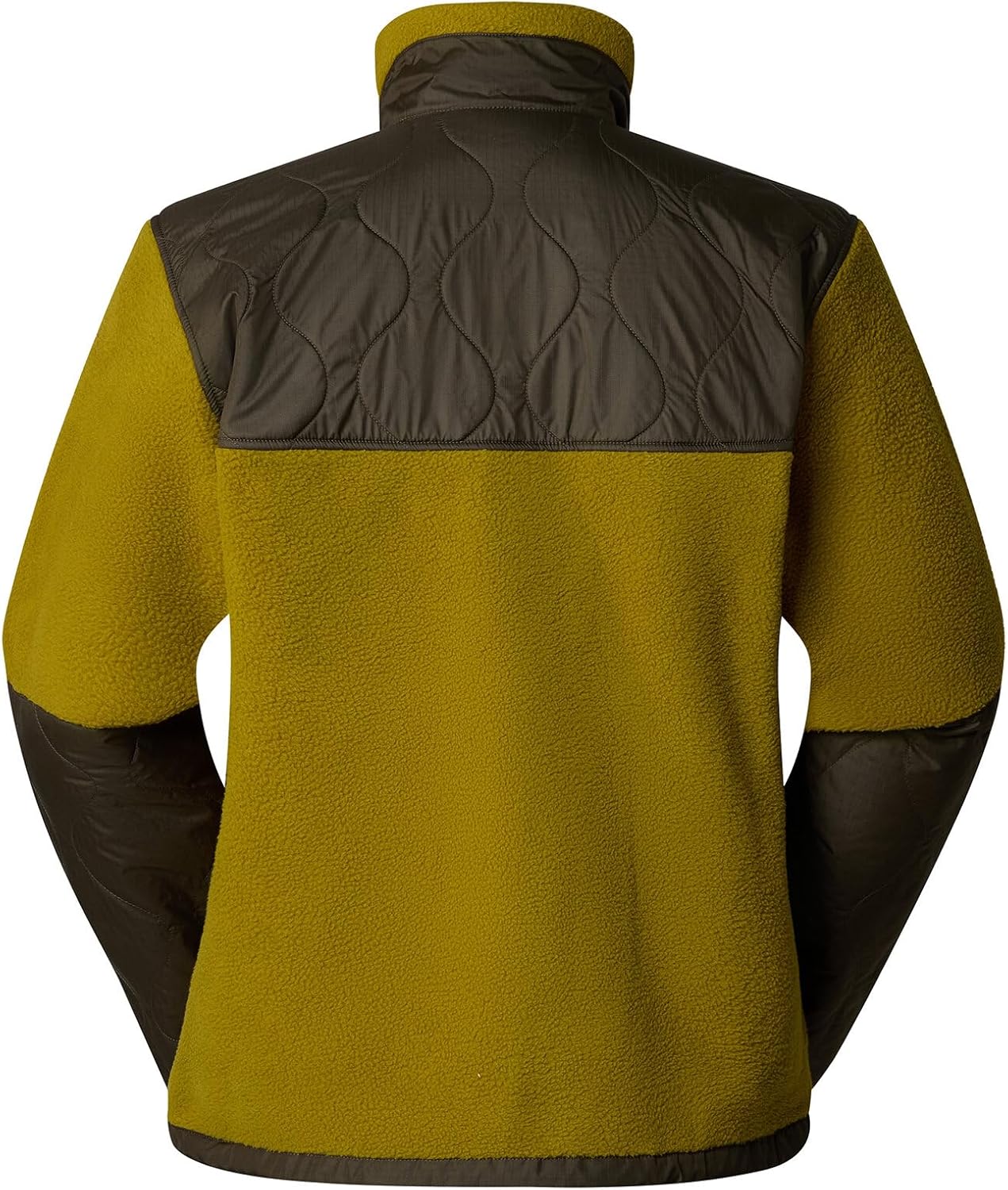
On paper it’s fairly simple: full‑zip, two front patch pockets, elasticated cuffs, and that bright yellow‑green colour (Sulphurmoss) with darker green (New Taupe) panels. It’s 100% recycled polyester, machine washable, standard length. The brand calls it an aviator/park‑type coat, but in real life it feels more like a casual fleece you throw on when it gets cold, not a hardcore alpine shell.
My goal with it was straightforward: something warm for cool evenings that isn’t a big technical shell and doesn’t feel too precious if I’m sitting near a campfire or brushing against trees. I also wanted something that doesn’t look too sporty so I can wear it to work on casual days. The Royal Arch kind of sits in the middle: not full streetwear, not full mountain gear.
Overall, it does the job as a warm layer, but it’s not perfect. The warmth is good, the look is a bit bold, and there are a couple of design decisions that are slightly annoying in day‑to‑day use. If you’re thinking about buying it, it’s worth knowing where it shines and where it’s just “fine but not great”.
Value: decent, but you’re paying for the brand and look
Price will depend on where you buy it and whether it’s on sale, but as a The North Face fleece, it usually sits in the mid‑to‑upper price range compared to generic brands. For what you get – recycled materials, reinforced panels, and a known outdoor brand – I’d say the value is decent but not outstanding. You can find cheaper fleeces that are just as warm, but they probably won’t have the same mix of design details and brand cachet.
Compared to simpler fleeces I’ve owned from Decathlon or other budget brands, the Royal Arch feels a bit more robust in the shoulders and pockets, and the cut is slightly nicer. But functionally, it doesn’t blow them away. The main advantages are the look, the shoulder overlays for backpack use, and the overall finish. If you don’t care about brand names or style, a cheaper fleece plus a light shell could give you similar warmth and better weather protection for roughly the same total cost.
On the other hand, if you already like The North Face and you want a fleece that you can wear both in town and at a campsite, this one sits in a sweet spot. It’s not overly technical, so it doesn’t look out of place in a bar or office, and it still has enough outdoor DNA to handle basic hikes. The lack of zip pockets and the limited weather protection do drag the value down a bit for me, because at this price I’d expect at least one secure pocket.
So in plain terms: good value if you catch it on discount or really like the design, average value at full price. You’re partly paying for the logo and the colour combo. If that matters to you, you’ll probably be happy. If you’re purely performance‑focused, you can do better for the same money by going for a more technical fleece or a softshell.
Design: warm and practical, with some odd choices
The overall design is pretty straightforward: high‑pile fleece body with reinforced taffeta panels on the collar, shoulders, and upper back. Those panels are actually useful if you carry a backpack or shoulder bag a lot, because they keep the straps from digging into the fluff and wearing it down too fast. After a couple of weekends with a daypack, I can already see why they added those; the fleece on the rest of the jacket shows light flattening, while the taffeta parts still look new.
The front patch pockets are big and easy to access, but they’re open at the top with no zips or flaps. That’s fine for hands, gloves, or a beanie, but I wouldn’t trust them with keys or a phone if you’re sitting down or cycling. The taffeta “onion peel” details on the pockets look slightly overdesigned to me. They don’t bother me, but they don’t add much function either beyond a bit of extra durability on the pocket fronts. If you like visible stitching and texture, you’ll probably think it looks cool; if you’re more minimalist, it might feel a bit busy.
Fit‑wise, it’s a standard, slightly boxy cut. It’s not slim, and it’s not huge. I could easily wear a t‑shirt and a light sweatshirt underneath without feeling squeezed. At the same time, if you’re very broad in the shoulders, you might find it a bit snug there, mainly because the reinforced area doesn’t stretch like the fleece. The elasticated cuffs do a good job of keeping air out, but they’re not adjustable, so if you like to roll sleeves up, they’ll stay a bit tight on the forearms.
On the downside, there are a couple of design gaps: no chest pocket, no internal pocket, and no drawcord at the hem. For a jacket that’s supposed to work outdoors, a zip chest pocket for a phone or small wallet would have been handy. The open hem also means wind can creep in a bit when it’s gusty. In daily use it’s not a disaster, but if you’re thinking of this as your main outer layer for windy hills, keep that in mind.
Comfort: warm and cozy, but can get sweaty
On comfort, the warmth is the main strong point. On cool evenings (around 5–10°C), with just a t‑shirt underneath, I felt comfortable standing around outside. Sitting by a firepit for a few hours, I never felt chilled, even when the wind picked up a bit. For walking the dog at around 8°C, I actually got a little warm after 20 minutes, which tells me this is more of a mid‑to‑cold weather layer, not something you want for mild days unless you run cold.
The inside is the same high‑pile fleece as the outside, so it’s soft on the skin but also quite insulating. The downside is breathability is average. It’s not awful, but if you start moving fast (climbing stairs, brisk hiking), you feel the heat building up. On a short uphill walk with a backpack, I ended up unzipping it halfway to vent. Once unzipped, it dumps heat pretty quickly, so the full‑zip design helps, but don’t expect it to handle intense activity like a lightweight technical fleece.
The cut gives decent freedom of movement. I could lift my arms, reach forward, and sit down without the hem riding up too badly. The only area that felt a bit tight at times was across the shoulders when reaching high, and that’s likely due to the stiffer reinforced panel. It’s not restrictive enough to be a dealbreaker, but if you have very broad shoulders, you might want to size up or at least try it on before buying.
As for comfort details: the elasticated cuffs seal nicely around the wrists without digging in, and the collar doesn’t rub when fully zipped. No scratchy tags or weird seams that I noticed. The weight feels balanced; you’re aware you’re wearing a warm jacket, but it doesn’t drag you down. In short, great for standing or walking slowly in the cold, a bit too warm and sweaty if you’re doing anything very active or if the temperature goes above 12–13°C.
Materials: recycled fleece that feels solid, not luxury
The jacket is 100% polyester, and according to the brand it’s fully recycled, which is nice if you care about that sort of thing. In the hand, the high‑pile fleece feels soft but not ultra plush. It’s more like a classic thick fleece than those super silky sherpa fleeces you sometimes see. After about two weeks of wear, including a few hours sitting on rough wooden benches and wearing a backpack, the fleece has flattened slightly on the sides and under the straps, but nothing dramatic. No pilling yet, which is a good sign, but it’s still early days.
The taffeta overlays on the collar, shoulders, upper back, and pockets are made of a smoother, slightly shiny polyester. They feel tougher and less prone to snagging than the fleece. I like them on the shoulders because they help the jacket slide under a shell or a heavier coat without bunching. They also stop the fleece from catching every bit of dust from car seats or chairs. The flip side is those areas feel a bit cooler to the touch when you first put the jacket on, so there’s a small temperature difference between panels and fleece.
The lining is basically the back of the fleece; there’s no separate inner lining layer. That keeps the weight down and makes it breathe reasonably well, but it also means you’re directly against polyester fluff. If you’re sensitive to synthetic fabrics, you might prefer wearing long sleeves underneath. I didn’t get any itching, but I noticed it feels warmer, faster, than a lined jacket when you’re walking briskly.
As for the “waterproof” claim in the specs: this is where I’d be careful. It’s a fleece jacket with some polyester panels, not a rain shell. In a light drizzle for 15–20 minutes, the taffeta panels shed water a bit, but the fleece started to soak up drops fairly quickly. It’s fine for walking between the car and a shop or getting caught in a short shower, but if you expect proper waterproof performance, you’ll be disappointed. I’d treat it as water‑resistant at best and always carry a shell if rain is likely.
Durability: feels tough enough for regular use
Durability is always tricky to judge after only a couple of weeks, but there are some signs. The stitching looks clean around the pockets, shoulders, and zipper. I pulled on a few seams just to see if anything moved, and nothing felt loose. The zipper is a chunky VISLON type, which usually holds up well over time. It runs smoothly, no snagging so far, even when I’m in a hurry and yank it up with one hand.
The areas most at risk on a fleece are usually the shoulders (from backpack straps) and the sides where your arms rub. That’s exactly where The North Face put the taffeta overlays, and it’s a smart move. After wearing a moderately loaded daypack for a couple of walks, I don’t see any visible wear on those panels. The fleece on the sides has flattened a little bit, but there’s no pilling or tearing. If you baby your clothes, this will probably stay decent for a long time. If you’re rough on gear, I’d still expect a reasonable lifespan for a mid‑priced fleece.
I did throw it in the washing machine once on a gentle cycle, 30°C, then air‑dried it flat. No shrinking, no colour bleeding, and the fleece fluffed back up nicely. The only thing I noticed is a tiny bit more fluff transfer onto darker t‑shirts after the first wash, but nothing dramatic. If you follow the care instructions (machine wash, no crazy heat), I don’t see any immediate red flags.
Long term, the only potential weak points I can see are the open pockets and the elastic in the cuffs. Open pockets tend to stretch out over time if you constantly stuff heavy things in them, and elastic can lose tension after lots of washes. But at this stage, the cuffs still snap back well, and the pocket openings haven’t sagged. So from a regular user’s perspective, it feels like a pretty solid everyday jacket that should handle normal wear without falling apart.
Performance outdoors: warmth yes, weather protection limited
In terms of real‑world performance, I used this as my main outer layer on a couple of windy evenings and one slightly damp day. For cold and dry conditions, it does well. The thick fleece blocks a fair bit of wind, especially on the chest and back, and the taffeta panels on the shoulders help a bit too. It’s not windproof, though. On a more exposed walk with stronger gusts, I could feel the air pushing through the fleece, especially around the lower back where there’s no overlay. If it’s properly windy, you’ll want either a shell over it or a base layer that handles the chill.
On the rain side, like I said earlier, I wouldn’t treat this as a waterproof jacket despite what the product page might suggest. In a light drizzle for 15–20 minutes, it was okay; the water beaded slightly on the taffeta parts and the fleece darkened but didn’t soak through to the skin immediately. After about half an hour, though, the fleece was noticeably damp and started to feel heavy. It did dry overnight hanging in a warm room, but if you’re planning hikes in uncertain weather, this should be your mid‑layer under a shell, not your only outer layer.
For casual use, the two patch pockets are fine for warming your hands, but they’re not secure enough for important stuff. I tried keeping my phone in one pocket while sitting and it nearly slipped out when I leaned forward. No zips, no snaps, nothing. So in practice, I kept my phone and wallet in my jeans and just used the pockets for gloves and snacks. If you’re used to having at least one zip pocket on jackets, this will feel like a downgrade.
Overall, as a performance piece, I’d say it’s good for mild outdoor use: campfires, short walks, casual hikes in stable weather. It’s not the jacket I’d grab for proper mountain days or heavy rain. Think of it as a warm, durable fleece that you can abuse a bit, not as a technical shell replacement.
What you actually get when you unbox it
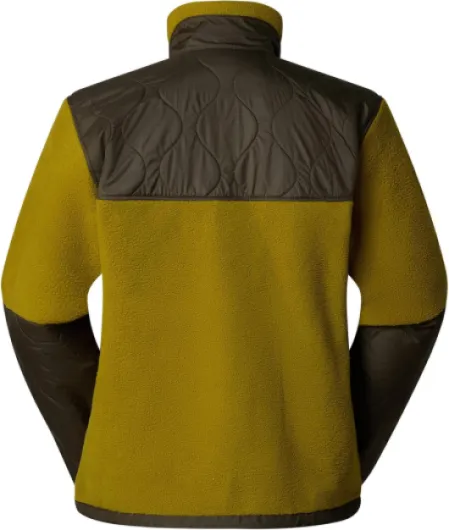
Out of the bag, the first thing that hits you is the colour and the fluff. The Sulphurmoss is a strong yellow‑green, not subtle at all, and the New Taupe Green panels on the shoulders, collar, and upper back break it up a bit. If you like neutral colours, this shade might feel a bit loud. If you’re used to The North Face’s brighter pieces, it’ll feel pretty normal. The cut is a standard length, not cropped, not long parka style. On me (average build, 1.80 m), a size M hits just below the belt line.
The jacket has a full exposed VISLON front zipper, which basically means a chunky plastic zip that you can grab easily with cold hands. There are two front patch pockets with a double‑layer look and some “onion peel” stitching details in taffeta, which is just a fancy way of saying there’s a quilted‑style fabric on top that feels smoother and more resistant than the fluffy fleece. No inside pockets, no chest pocket, nothing hidden. What you see is what you get: two big open front pockets and that’s it.
The collar is a band style, so it stands up a bit when fully zipped but doesn’t come up super high like a proper winter jacket. There’s no hood, which is worth noting if you’re used to hooded fleeces. Cuffs are elasticated, and the hem is just a regular sewn hem without a drawcord. So you don’t get that cinched, wind‑blocking bottom; it hangs pretty straight. The branding is low‑key: The North Face logo, but not screaming at you.
In terms of first impression, it feels like a casual, slightly retro fleece with some workwear vibes because of the patch pockets and the shoulder overlays. It looks more relaxed than a technical hiking jacket, but not as clean as a city coat. If you’re after something you can wear both on a trail and to grab a beer, it fits that space pretty well, as long as you’re okay with the colour combo.
Pros
- Very warm and comfortable high‑pile fleece for cool to cold evenings
- Reinforced taffeta panels on shoulders and upper back handle backpacks well
- Relaxed but tidy fit that works both for casual wear and light outdoor use
Cons
- Not truly waterproof despite what the specs suggest; only handles light drizzle
- No zipped or chest pockets, so it’s not ideal for carrying phone or wallet securely
- Breathability is average and it can feel too warm during more intense activity
Conclusion
Editor's rating
The North Face Men’s Royal Arch Jacket is a warm, comfy fleece with some thoughtful reinforcement on the shoulders and upper back. It works well for cool evenings, light outdoor use, and casual wear around town. The high‑pile fleece is cozy, the fit is relaxed without being sloppy, and the taffeta panels help it stand up to backpacks and regular use. If your main goal is to stay warm in dry, chilly conditions and you like the bold Sulphurmoss/New Taupe Green look, it does the job nicely.
It’s not perfect, though. The “waterproof” label in the specs is misleading – this is a fleece, not a rain jacket. The lack of zip or chest pockets limits how practical it is for carrying valuables, and breathability is only average if you start moving fast. For the price, I would have liked at least one secure pocket and a bit more wind protection at the hem. There are cheaper options that match it on warmth, but they won’t look or feel quite the same.
I’d recommend this jacket to someone who wants a solid everyday fleece that can handle campfires, walks, and casual hikes, and who values style and brand as much as pure performance. If you’re planning serious mountain trips or you need real rain protection, skip this and look at a technical fleece plus a proper shell instead. As a warm, easy‑to‑wear layer for autumn and mild winter days, it’s pretty solid, just not a miracle piece.