
Summary
Editor's rating
Value for money: solid, but not a bargain bin steal
Design: simple look, a bit of a colour curveball
Comfort and fit: warm, light, and easy to live with
Materials and build: light shell, tough enough for normal use
Durability after a few weeks: better than it looks
Performance in the cold, wind, and light rain
What you actually get with the Vaskye
Pros
- Very good warmth-to-weight ratio; warm in 0–8°C without feeling bulky
- Lightweight and packable, easy to stuff into a backpack or wear all day
- Comfortable regular fit in 3XL with decent build quality and durable-feeling materials
Cons
- Colour is more dark navy than true black, which can annoy if you want pure black
- Only water resistant, not fully waterproof, and no real ventilation features

Specifications
View full product page →| Brand | Berghaus |
A proper winter jacket without the bulk
I’ve been wearing the Berghaus Vaskye Synthetic Insulated Jacket (in 3XL, black) for a few cold weeks now, mostly for dog walks, commuting, and standing around at kids’ football training. So this is not a mountaineer review, more like a normal bloke who hates being cold and hates feeling like the Michelin man. I bought it because I wanted something warm, light, and easy to throw on over a hoodie without feeling stuffed into it.
Out of the bag, the first thing I noticed is how light it is for the amount of insulation. It doesn’t feel like a big heavy parka, more like a beefed‑up puffer. I was a bit sceptical about the synthetic “Hydroloft Polyball” marketing stuff, but in practice it just feels like a decent synthetic puffer that traps heat well. No magic, just warm.
I’ve used it in typical UK winter weather: around 0–6°C, damp, light rain, and cold wind. No snowstorms yet, but plenty of grim, wet mornings. In that range, with just a T‑shirt or a light sweatshirt underneath, I stayed warm enough without sweating like mad. When I did overheat a bit on a fast walk, it didn’t get clammy, which I appreciated.
Overall, my first impression is that it’s a practical, everyday winter jacket: warm, easy to wear, and not overly technical looking. It’s not perfect and there are a couple of details that bug me, but as a grab‑and‑go winter layer, it does the job well enough that I reach for it more than my heavier coats.
Value for money: solid, but not a bargain bin steal
In terms of value, I’d call the Vaskye pretty solid but not mind‑blowing. You’re paying partly for the Berghaus name and the Pertex fabric, and you can feel that it’s a step up from supermarket puffers in both warmth and build quality. The stitching, zips, and overall finish are clearly better than the really cheap stuff. Also, the warmth‑to‑weight is genuinely good, so you’re not just paying for a logo.
That said, there are plenty of cheaper synthetic insulated jackets out there that will also keep you warm. Where this one earns its price, in my view, is the combination of decent materials, good cut (especially in bigger sizes like 3XL), and the fact that it packs down quite small. If you travel, commute, or like to shove your jacket into a backpack when you’re indoors, that matters. A lot of cheaper jackets are either bulkier or don’t bounce back as nicely after being stuffed away.
On the downside, you’re not getting loads of fancy features for the money. No waterproof membrane, no ventilation zips, no removable hood, and the colour not being truly black might annoy some people. If you purely want maximum warmth per pound spent and don’t care about brand or packability, you can probably find thicker, heavier jackets for less cash that will feel warmer when you’re standing still.
Overall, I’d say the value is good if you want a reliable, lightweight, branded winter jacket that you can use for several years. It’s not a screaming deal, but it’s not overpriced either, especially if you catch it on discount. If you’re on a tight budget, look at cheaper brands; if you’re okay spending a bit more for a cleaner design and better materials, this hits a reasonable middle ground.
Design: simple look, a bit of a colour curveball
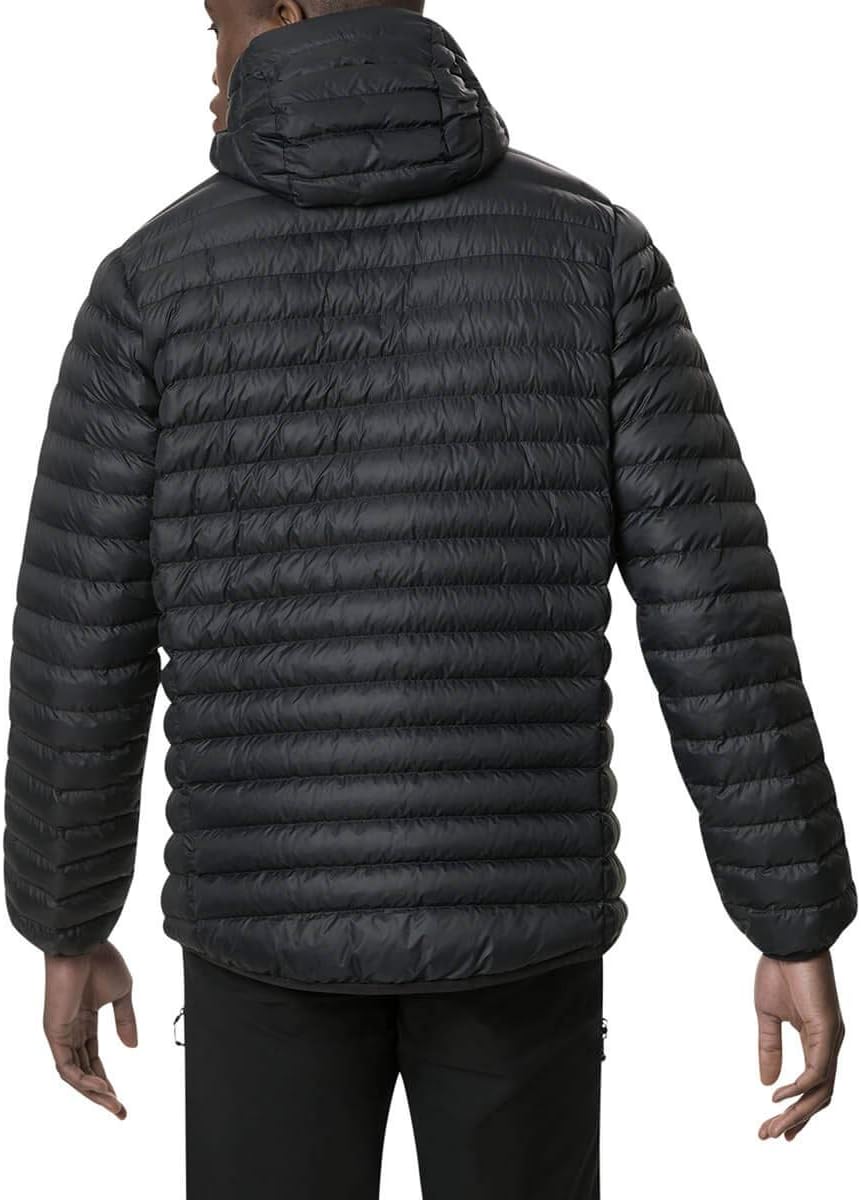
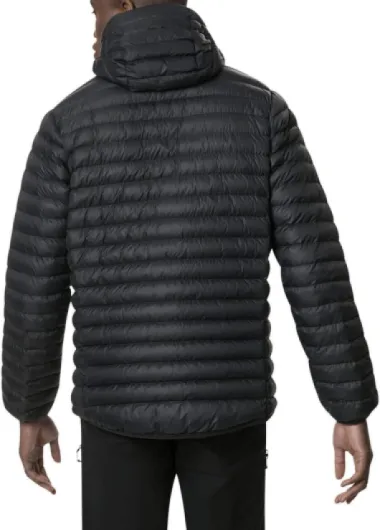
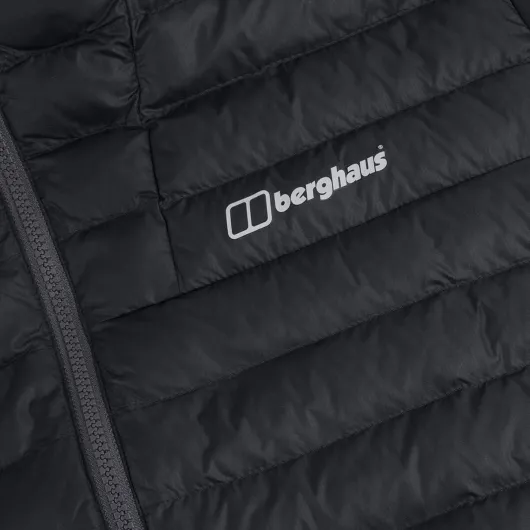
Design‑wise, the Vaskye is pretty clean. It’s a quilted puffer style with micro baffles, so you don’t get huge marshmallow sections, more lots of small stitched channels. That helps keep the insulation spread out and also gives it a slimmer look than some chunky puffers. The branding is minimal: a small Berghaus logo on the chest and that’s about it. If you don’t like walking around as a billboard, this is decent.
Now, about the colour. It’s sold as black, but like one of the Amazon reviewers said, in real life it’s more of a very dark navy/blue‑black than pure black. Under indoor light it passes as black, but outside in daylight you can definitely see the blue tone. It didn’t bother me much, but if you want dead‑on black to match other gear or work trousers, you might be a bit annoyed. This is one of those details that photos don’t always show clearly.
The hood is integrated and not removable. It’s lightly insulated and shaped well enough that it doesn’t flop over your eyes, but it’s also not a big, structured, helmet‑compatible mountain hood. For normal use – walking, commuting, throwing it up when the wind picks up – it’s fine. I would have liked a bit more adjustment, though. There’s basic elastic, but no fancy wired peak or loads of drawcord options. You pull it up, it stays on, that’s about it.
One thing I do like is the overall silhouette. It’s not super fitted, but it doesn’t hang like a sack either. On a 3XL body, that matters. It hides what it needs to hide without making you look like you’re wearing a tent. The cuffs are simple elastic, the hem has a basic drawcord, and the main zip has a chin guard so it doesn’t rub. Nothing clever, but these are the kind of small design choices that make it easy to live with. The only real design gripe for me is the fake “black” colour and the slightly plain look – if you want something stylish or sharp, this is more functional than fashionable.
Comfort and fit: warm, light, and easy to live with
In terms of comfort, this is where the Vaskye does well. The warmth‑to‑weight ratio is genuinely good. On frosty mornings around 0–2°C, wearing just a long‑sleeve T‑shirt underneath, I felt properly warm walking the dog for 30–40 minutes. No cold spots on the chest or shoulders, which I tend to get with cheaper puffers. When I added a hoodie underneath on windier days, I was fine standing still at the side of a football pitch for over an hour. So for normal UK winter use, it’s more than enough.
The jacket is also light enough that you don’t feel weighed down. Compared to a heavy parka I own, this feels almost like wearing a thick hoodie. The shoulders don’t dig in, and the collar doesn’t choke you when fully zipped. The inner lining is smooth, so it doesn’t catch on sleeves when you put it on in a rush. I’ve worn it while driving too, and it doesn’t bunch up uncomfortably under the seatbelt, which is a small thing but matters day to day.
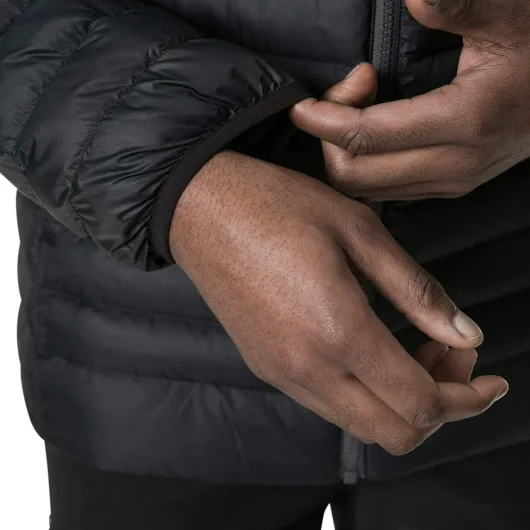
Fit wise, the 3XL is true to size for me. There’s room for layering, but it doesn’t balloon out around the waist. The sleeves are long enough that when I stretch my arms forward (car steering wheel, pushing a pram, etc.), my wrists don’t suddenly get exposed. The elastic cuffs are snug without digging into your skin. The only comfort gripe I have is that when you start moving fast or going up hills, you can feel the limit of the breathability. It doesn’t turn into a sauna, but you do get a bit warm and slightly damp if you’re really pushing it.
Overall, as a comfort package, it hits the right balance for everyday winter use: warm, light, and non‑restrictive. If you’re planning hardcore hikes with big climbs, you might want more venting options, but for commuting, casual walks, and general cold‑weather life, I had no real complaints beyond the expected warmth build‑up when you move hard.
Materials and build: light shell, tough enough for normal use
The jacket is 100% polyamide for the shell and lining, with 100% polyester insulation. No down, no wool, no fancy blends. That makes it straightforward: fully synthetic, easy to wash, quick to dry. The Pertex Quantum outer fabric feels thin and light, almost like a technical windbreaker. At first touch, I thought, “This is going to rip on the first branch,” but after a few weeks of everyday use – brushing against fences, car doors, and the odd thorny hedge – it’s held up fine. I still wouldn’t drag it through dense brambles, but for normal city and light outdoor use, it seems tough enough.
The Hydroloft Polyball insulation is basically lots of small synthetic tufts instead of solid sheets. In practice, it feels similar to lightweight synthetic down: it puffs up nicely, traps air, and doesn’t shift around too much. I haven’t noticed any cold patches from insulation moving or clumping, even after stuffing it into a backpack a few times. It also hasn’t leaked fibres or anything like that, which I’ve seen on cheaper jackets.
Inside, the lining is smooth and slightly shiny. It slides easily over a hoodie or fleece, which is handy when you’re trying to throw it on in a hurry. No scratchy seams, no rough patches. All the stitching on my unit looks tidy: straight lines, no loose threads hanging everywhere. The zips feel decent quality and haven’t snagged so far, even with the lightweight fabric around them.
Overall, the material choice is practical rather than fancy. Fully synthetic means it’s not the most breathable thing on earth, but it also means it handles sweat and light rain without sulking. For a winter jacket you might wear in drizzle or on damp benches, I prefer this over delicate fabrics. If you’re expecting heavy, rugged canvas or thick shell material, you’ll be surprised how light it feels, but in daily use it holds up better than it looks at first glance.
Durability after a few weeks: better than it looks
Durability is always tricky to judge long‑term, but after several weeks of daily use, the Vaskye is holding up well. The outer fabric feels thin, and at first I thought I’d snag it on something within days. So far, it’s survived dog claws, car seatbelt rubbing, and a couple of brushes against a rough brick wall with no tears or pulled threads. That tells me the Pertex Quantum shell is tougher than it looks, at least for normal life and light outdoor stuff.
The stitching and baffles are still intact. I haven’t seen any insulation migrating or cold streaks forming along the seams. The elastic at the cuffs hasn’t stretched out or gone baggy, and the hem drawcord still works as it should. The main zip is smooth and hasn’t caught on the fabric, which is usually where cheaper jackets start to show their price. It feels like Berghaus didn’t cheap out on the hardware, which is good.
I’ve already washed it once on a gentle machine cycle, as per the label, and then air‑dried it. It came out looking the same, with the insulation puffing back up fine. No weird creases, no loss of loft. That’s one big benefit of synthetic insulation: it’s lower stress than down when it comes to washing and drying. I just made sure not to use fabric softener and didn’t blast it with high heat.
Obviously, if you drag this through rocky scrambles or use it as your only outer layer while bashing through thorn bushes, you’ll eventually damage it. But for commuting, dog walking, school runs, and easy hikes, I’d say it’s solid. It feels like the kind of jacket that will easily last several winters if you’re not abusing it every weekend in extreme conditions.
Performance in the cold, wind, and light rain
Performance is where you see what all the tech names actually do. In the cold, the Hydroloft Polyball insulation works well. I used it between roughly 0 and 8°C. At around 5–8°C, with just a T‑shirt underneath, I was perfectly comfortable walking at a normal pace. At 0–3°C, I added a thin sweatshirt or hoodie and stayed warm, even when standing around. If you’re someone who runs hot, you could probably go colder with just a base layer. It’s not an Arctic expedition jacket, but for typical European winters it’s more than capable.
Wind protection is solid. The Pertex Quantum fabric does a good job of blocking wind. On a blustery day by the coast, I didn’t feel the wind cutting through like it does with some softer shell jackets. The baffles and insulation help too. The hood also helps keep heat in and stops wind from blasting your ears. No, it’s not a hard shell, but for day‑to‑day wind, it’s fine.
For water, it’s water resistant, not waterproof. I wore it in light drizzle and short showers, and the water beaded up and rolled off at first. After about 20–30 minutes of steady drizzle, the fabric started to darken a bit and feel damp to the touch, but it didn’t soak through immediately. In proper heavy rain, you’ll want a waterproof shell over the top. The good thing is, because it’s synthetic insulation, it still keeps some warmth even if it gets damp, unlike down that collapses.
Breathability is okay but not outstanding. On flat walks and normal use, I stayed dry inside. When I did a fast uphill walk, I started to feel a bit sweaty, especially around the back and under the arms. There are no pit zips or venting features, so you manage temperature by unzipping the front or opening the pockets. So in everyday performance terms, it’s a strong winter all‑rounder: warm, windproof enough, fine in light rain, but not a full technical shell.
What you actually get with the Vaskye
On paper, the Vaskye is a synthetic insulated, windproof jacket with a lightweight shell and a hood. Berghaus uses Pertex Quantum fabric on the outside, Hydroloft Polyball synthetic insulation inside, and a smooth polyamide lining. Translation: thin but tough-ish outer fabric, tiny synthetic “balls” of insulation that mimic down, and a slippery inner so it goes on easily over other layers. Mine is the 3XL in “black”, which I’ll come back to because the colour is a bit debatable.
The cut is described as regular fit and I’d say that’s accurate. I’m on the bigger side with a belly and broad shoulders, and the 3XL gives me enough room for a hoodie underneath without feeling strangled. It’s not a long coat – standard hip length – so don’t expect your backside fully covered. For walking and day‑to‑day stuff it’s fine, but if you stand still in serious cold you may want longer coverage.
In terms of features, Berghaus clearly didn’t go mad. You get a front zip, two main hand pockets with zips, and internal storage options. The spec sheet says 11 pockets, but in reality, you mostly notice the two main ones plus a couple of inside stash options. No fancy chest pocket on the outside, no ski pass pocket on the sleeve. Personally, I’m fine with that: fewer zips to break, less faff. But if you like storing your entire life in your jacket, you might find it a bit basic.
Out of the box, it comes in a simple plastic bag, no carry pouch or stuff sack. It does compress down small enough to shove into a backpack, but you have to use your own bag. So overall, the presentation is very no‑nonsense: it’s clearly built to be worn, not displayed. If you’re expecting premium unboxing or a clever packing solution, you won’t find it here. What you get is a straightforward insulated jacket that focuses on function over extras.
Pros
- Very good warmth-to-weight ratio; warm in 0–8°C without feeling bulky
- Lightweight and packable, easy to stuff into a backpack or wear all day
- Comfortable regular fit in 3XL with decent build quality and durable-feeling materials
Cons
- Colour is more dark navy than true black, which can annoy if you want pure black
- Only water resistant, not fully waterproof, and no real ventilation features
Conclusion
Editor's rating
After using the Berghaus Vaskye Synthetic Insulated Jacket for a while in proper cold, damp weather, my overall take is that it’s a very capable everyday winter jacket that focuses on doing the basics well: it’s warm, light, and comfortable, with materials that feel a notch above the bargain options. The synthetic insulation and Pertex outer work nicely together to keep wind out and heat in, and the jacket stays pleasant to wear whether you’re walking, commuting, or just standing around outside.
It’s not perfect. The “black” colour leaning towards very dark navy is a bit misleading, and it’s only water resistant, not a full rain solution. Ventilation is limited, so if you run hot or do steep hikes, you’ll get a bit sweaty. And for the price, you’re not drowning in features: it’s fairly simple, which can be good or bad depending on what you want.
I’d recommend this jacket to someone who wants a no‑nonsense, lightweight winter layer for everyday use: dog walks, school runs, city errands, and casual hikes in cold conditions. Bigger guys (like me) will probably appreciate the honest sizing and the fact it doesn’t feel like a heavy armour plate. If you need a fully waterproof shell, loads of technical features, or a perfectly true black colour, you should look elsewhere. But if you just want a warm, well‑built jacket that you can throw on all winter without thinking too much, this one gets the job done well.