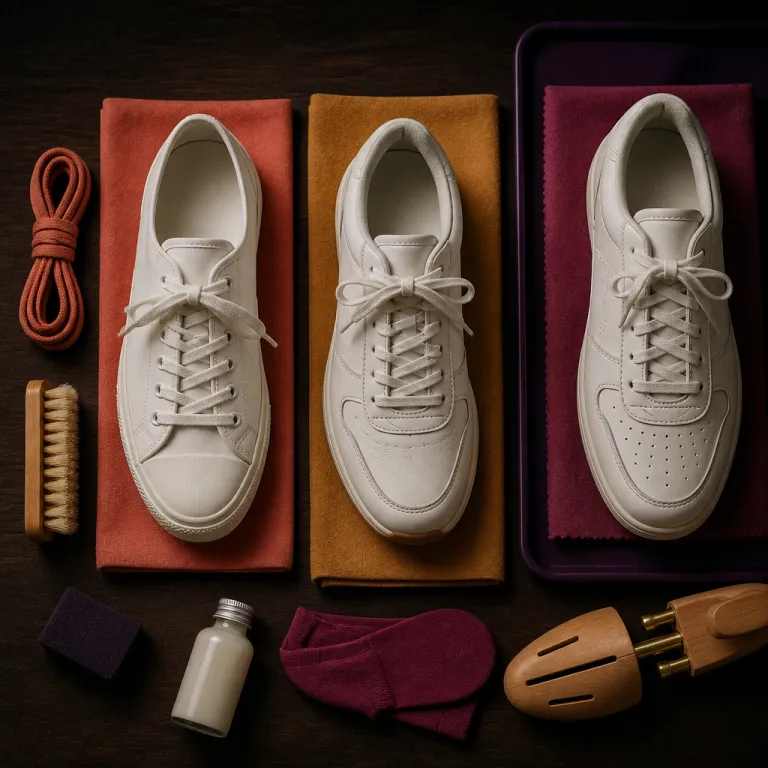
Why a two pair white sneaker rotation beats the single hero
Most style advice tells men to buy one clean white sneaker and wear it with everything. In real life, when you track how sneakers age on city pavements and office carpets, a single pair of white trainers quietly burns out in half the time and starts dragging every outfit down. A deliberate two pair white sneaker rotation gives you sharper style, a lower cost per wear over time, and far less stress about every puddle, curb scrape, or spilled coffee.
Think about what happens when one pair of leather sneakers carries your whole week. The leather upper never fully dries between wears, the rubber midsole stays compressed, and the back of the shoe folds where your heel grinds it on the commute. Rotate two pairs of white sneakers and each shoe rests every other day, which lets the leather rebound, the rubber recover its shape, and the ankle collar keep its structure much longer instead of collapsing into a tired gym shoe silhouette.
Cost per wear is where the math becomes brutally clear for men who care about value. A single best white sneaker worn 250 days a year might look tired after 12 months, while two pairs worn in rotation can each reach 250 wears over a much longer duration before the midsole yellows or the toe box creases into vintage shoes territory. You pay more upfront for two pairs of shoes but you stretch the life of each pair, which usually means a lower annual cost and a consistently sharper style signal in photos, at the office, and on dates.
The other hidden benefit of a two pair white sneaker system is psychological. When you only own one pair of white sneakers, every scuff feels like a crisis and you start babying the shoes instead of living in them. With two pairs of sneakers, men can assign one pair as the workhorse shoe and one as the dressier sneaker, which keeps you relaxed about rain, cobblestones, and the occasional night out that ends with rubber soles sticky from a bar floor or a crowded club.
Fit still matters more than any brand logo on your sneakers. Whether you choose shoes from Nike, adidas, or a smaller leather sneaker maker, you want a true size that hugs the midfoot without crushing your toes and leaves roughly a thumb’s width at the front. Get the size wrong and even the best white sneakers will crease badly, flare at the sides, and make your jeans or trousers break strangely over the shoe in a way that looks sloppy instead of intentional.
For men starting from scratch, it helps to use a simple buying checklist. First, confirm length and width: stand in the shoes at the end of the day and make sure your longest toe has that thumb’s width of space. Second, check support and comfort: walk on a hard floor and see whether the heel slips or the arch feels flat or pinched. Third, look at construction details like stitched soles, leather lining, and whether a cobbler could realistically resole the sneaker, because those details often decide how long a white low top will stay in your rotation before it becomes a beater pair.
The two slots that make a smart white sneaker rotation
A sharp white sneaker rotation has two clear roles, not a random pile of shoes. Slot one is your dressy minimal leather sneaker, the pair that can sit under tailored trousers without looking like gym shoes. Slot two is your workhorse casual sneaker, often with a rubber toe or more padding, built for long walks, weekend errands, and the occasional running shoe sprint for a late train or bus.
For the dressy slot, think about models like the Common Projects Achilles, CQP Tarmac, or the Velasca Bianco, which all use clean leather uppers, low top silhouettes, and restrained design details. These leather sneakers read closer to pared back dress shoes than to basketball high top sneakers, which is exactly what you want with a navy blazer, a merino crewneck, and pressed chinos. The best white sneaker in this lane has a slim last, minimal branding, and a midsole that does not flare too wide, so the shoe lines stay elegant and do not fight your tailoring.
If you prefer knit over leather, a model like the Greats Royale Knit still fits the dressy slot when the knit pattern is tight and the shape remains sleek. Just remember that canvas or knit sneakers stain faster than smooth leather shoes, so your maintenance routine needs to be more disciplined. A weekly brush, a quick wipe with a damp cloth, and a monthly treatment with a gentle cleaner will keep a white canvas sneaker from turning grey and ruining the clean lines of your outfit or making your trousers look dingy.
The second slot in your white sneaker rotation is the workhorse, and this is where streetwear energy and rubber protection come in. Think of pairs like the Veja V 10, the adidas Stan Smith, the New Balance 530, or the Reebok Club C, all of which have enough cushioning and rubber underfoot to handle daily abuse. These sneakers can take a beating with jeans, cargo trousers, or technical pants, and they still look intentional rather than sloppy when the rest of your style is dialed in and your outerwear is considered.
Rubber toe caps and slightly chunkier soles are your friends in this casual shoe lane. A model with a rubber bumper or a thicker foxing tape will hide scuffs better and make the sneaker feel more at home with relaxed denim and military inspired outerwear, like a field jacket or a technical shell. If you are building a full wardrobe, pairing this workhorse sneaker with something like a tested mountain parka or a reliable everyday jacket gives you a complete uniform that works in most cities and most seasons.
Boots still have a place in a modern rotation, especially when the weather turns. A pair of tactical or military inspired boots, such as those reviewed in detailed tests of 14 eyelet boots for men, can handle conditions where even the toughest rubber soled sneakers would suffer. The point is not to replace boots with sneakers but to let your two white shoes cover everything from office to bar, while boots take over when rain, mud, or snow would destroy a clean white sneaker in one afternoon.
Within these two slots you can still play with brands and references that speak to you. Maybe your dressy pair is a cortez leather version of the Nike Cortez, which keeps the retro running shoe DNA but cleans it up in full white leather, while your casual pair is an adidas Samba or a set of samba shoes that lean into terrace culture and vintage football style. What matters is that each shoe has a clear job and that you resist the urge to let both pairs drift into the same vague, neither dressy nor rugged, middle ground where they stop anchoring outfits.
Why three pairs of white sneakers usually backfire
Owning three or more white sneakers sounds like peak preparedness. In practice, most men with three similar white shoes end up wearing one favorite pair constantly, one backup sneaker occasionally, and one neglected shoe that slowly yellows in the closet. The result is wasted money, muddled style decisions, and a rotation that never really feels intentional or easy to use.
When you add a third white sneaker, you usually blur the roles that kept your two pair system sharp. Instead of one clearly dressy leather sneaker and one clearly casual rubber heavy shoe, you now have overlapping designs that compete for the same outfits and the same days in your calendar. That overlap means none of the sneakers reach their full potential, and you start grabbing whichever shoe is closest to the door rather than the best white option for the outfit you actually put on.
There is also a psychological trap with three or more pairs of white sneakers. You start chasing micro trends, like a limited edition Converse Chuck collaboration or a special adidas Samba drop, instead of refining the core white sneaker rotation that actually supports your daily life. Before long, you own a club vintage inspired pair, a chunky running shoe, and a minimalist low top, but you still feel like you have nothing that works perfectly with your go to jeans and overshirt or your usual office uniform.
Vintage style can make this even more confusing. A pair of vintage shoes with a cracked leather upper and a yellowed rubber sole might look great in editorial photos, but on a normal man in a normal office they often just read as tired shoes that should have been retired. If you love vintage, keep it to one dedicated sneaker in a non white color and let your two white shoes stay crisp, modern, and clearly intentional instead of half worn out.
Rotations also need to respect the rest of your footwear. If you already own boat shoes, loafers, and a pair of rugged boots, like the waxed leather boat shoes reviewed in tests of classic docksides for men, then three white sneakers become pure redundancy. Two white sneakers plus one or two non sneaker options give you more range across dress codes than three nearly identical white shoes ever will, especially when you factor in travel, weddings, and bad weather.
Think about how you actually live week to week. Most men rotate between office, dates, errands, and maybe a night out, which a dressy leather low top and a tougher rubber soled sneaker can cover with ease, while boots or smarter shoes handle the rest. A third white sneaker rarely unlocks a new scenario; it usually just spreads your budget thinner and delays the moment when you finally admit that one of the pairs has aged out of your style and should be retired.
Care, aging, and when to retire your white sneakers
A white sneaker rotation only works if both pairs stay presentable. The good news is that a simple five minute weekly routine can keep leather sneakers and canvas shoes looking sharp for years, especially when you alternate wears and let each shoe rest. Skip that care and even the best white sneaker will start to look like a tired gym shoe long before the sole actually wears out or the upper fails.
Quick care checklist for white sneakers
- Dry brush: use a soft brush to remove surface dust and grit from the leather, laces, and rubber midsole.
- Spot clean: wipe the upper and sole with a slightly damp cloth and a drop of gentle soap, then blot dry with a towel.
- Condition and protect: every month or two, apply a light leather conditioner or fabric protector, then let the sneakers dry fully with shoe trees inside so the shape stays crisp.
Conditioning matters just as much as cleaning for leather sneakers. Every month or two, depending on how often you wear each pair, apply a small amount of leather conditioner to keep the upper supple and to prevent deep creases that can turn into cracks. This is especially important for smooth cortez leather styles, minimalist dress sneakers, and any white sneaker with thinner leather that can dry out faster than a heavy boot or hiking shoe.
Pay attention to the signs that your sneakers are quietly aging your outfits. A yellowed midsole, a splayed toe box that has lost its shape, or an ankle collar that has collapsed inward will all make even a well styled outfit feel sloppy. When the rubber outsole has worn flat at the heel or the cushioning feels dead underfoot, it is time to either resole the shoes, if the construction allows it, or retire the pair and promote your second sneaker into the primary slot.
Price should guide how you treat each pair, not how often you wear it. A four hundred euro leather low top from a premium brand deserves resoling and professional cleaning when possible, while a one hundred twenty euro pair of adidas Samba shoes or a Reebok Club C might be better replaced once the rubber and canvas are beyond saving. The key is to track cost per wear honestly, not emotionally, so you avoid keeping a sentimental but exhausted shoe in your main rotation where it drags everything down.
Brand choice still comes down to fit, style, and how they work with your wardrobe. Nike Cortez models, especially in cortez leather, bring a retro running shoe line that pairs well with slim jeans and cropped trousers, while adidas Samba sneakers lean into terrace and streetwear culture with gum rubber and suede details. Converse Chuck Taylor and Converse Chuck 70 high top sneakers offer canvas simplicity and vintage charm, but for a white sneaker rotation that has to handle office and bar, a low top leather shoe from Nike, adidas, Reebok Club, or a minimalist maker will usually serve you better than a stack of canvas high tops that never quite feel right with your smarter clothes.
Key figures on white sneakers and wear patterns
- Industry reporting around 2019 suggested that white sneakers accounted for a substantial share of casual sneaker sales in major European markets, which shows how central a white sneaker has become in the average man’s wardrobe even outside fashion capitals.
- Feedback from cobblers and repair shops in large cities, including London and Berlin, indicates that leather sneakers worn in a two pair rotation often last noticeably longer in calendar years than a single pair worn daily, because the leather and rubber have time to dry and recover between wears.
- Surveys from menswear retailers conducted between 2020 and 2022 have found that many men underestimate how often they wear their primary white sneaker, which helps explain why midsoles yellow and ankle collars collapse sooner than expected based on rough guesses.
- Footwear fit studies published by brands and podiatry associations suggest that a significant share of men buy at least one shoe size too large in casual sneakers, which leads to excessive creasing at the toe box and a shorter visual lifespan for white shoes.
- Analyses of cost per wear from footwear trade publications show that a mid priced leather low top around one hundred twenty to one hundred fifty euros often delivers better long term value than ultra premium four hundred euro sneakers, unless the premium pair is regularly maintained and resoled.