
Summary
Editor's rating
Value: decent for a branded ski jacket, but check the price
Design: built for slopes first, style second
Comfort: good mobility, average softness, watch your layering
Materials: 100% polyester shell that feels tough enough
Durability: feels tough enough, but not a tank
Performance on the slopes and in bad weather
What you actually get out of the box
Pros
- Good waterproof and wind protection with Omni-Tech and PU coated front zipper
- Omni-Heat reflective lining adds noticeable warmth without huge bulk
- Practical features for skiing: underarm vents, adjustable hood, chin guard, decent freedom of movement
Cons
- Only medium warmth on its own – needs good layering in very cold weather
- Interior lining doesn’t feel very soft directly on skin and design is quite generic

Specifications
View full product page →| Brand | Columbia |
A straight-up winter workhorse, not a fashion piece
I picked up the Columbia Men's Iceberg Point 2 Jacket in Everblue/Shark, size XL, as a basic ski and winter jacket. I wasn't looking for anything fancy, just something that keeps me dry on the slopes and doesn’t feel like wearing a trash bag. After a couple of days on the mountain and some cold, wet commutes, I have a pretty clear idea of what this jacket does well and where it’s just average.
First thing: this is very clearly a functional ski jacket. The description talks about Omni-Tech waterproof/breathable and Omni-Heat thermal reflective, which is Columbia’s usual combo: waterproof shell + shiny reflective lining inside. In practice, that means it’s more of a shell with light insulation, not a big puffy parka. If you expect a super thick, ultra-warm coat you can wear over just a t-shirt at -10°C, you’ll be disappointed. It needs layers underneath when it’s really cold.
What surprised me is how balanced it feels: not too bulky, not super slim, medium weight. It doesn’t feel cheap, but it also doesn’t feel like some high-end technical gear. If you’re used to premium ski brands, you’ll probably find it a bit basic. If you’re coming from generic supermarket jackets, this will feel like a step up in build and features.
Overall, my first impression after a few outings was: it gets the job done for skiing and winter days, with a couple of nice touches like the underarm vents and the reflective lining. It’s not perfect, and there are a few things I’d change, but for a straightforward ski jacket, it does what it says on the tin.
Value: decent for a branded ski jacket, but check the price
On value, this jacket sits in that mid-range Columbia zone: not bargain-bin cheap, not premium technical gear. The exact price will jump around depending on size and colour, but considering it’s a branded ski jacket with a waterproof membrane, reflective lining, and proper features like underarm vents and an adjustable hood, I’d say it offers good value if you catch it at a reasonable price. If it’s heavily discounted, it becomes a pretty strong deal.
What you’re paying for here is mainly: a trusted outdoor brand, a functional waterproof shell with some insulation, and a design that actually works on the slopes. Compared to random no-name ski jackets, this feels more thought-through and more reliable in bad weather. Compared to higher-end ski brands, you lose some refinement, extra insulation options, and maybe nicer materials, but you also pay a lot less.
Where the value is just "okay" rather than great is on insulation. If you need one jacket that does everything from -15°C blizzards to mild rainy days, this one needs layering help in the deep cold. So you might also be buying a decent fleece or down mid-layer, which adds to the total cost. But on the flip side, that makes it more versatile: you can use it as a shell in spring conditions and bulk it up in winter.
Overall, if you want a reliable, branded ski jacket that keeps you dry and reasonably warm, and you’re fine managing layers, the value is solid. If you want a super warm, heavily insulated jacket out of the box, you might feel like you’re paying for tech you don’t fully use and still needing to buy extra layers. For most casual skiers and winter users, though, it hits a pretty fair price-performance balance.
Design: built for slopes first, style second
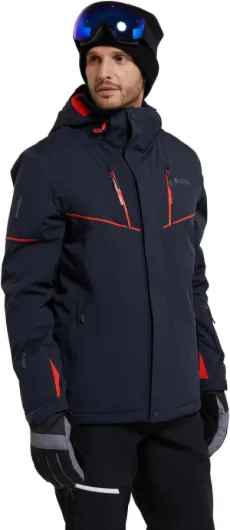
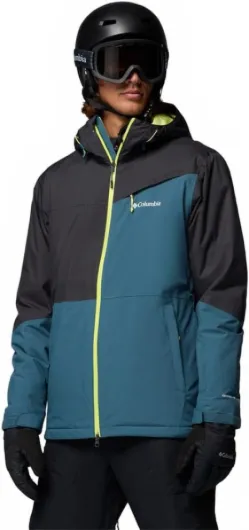
Design-wise, the Iceberg Point 2 is very much a functional anorak-style ski jacket rather than a streetwear piece. The coat silhouette is listed as an anorak, but this version still opens fully at the front with a zipper, so you’re not pulling it over your head. The overall cut is a standard ski jacket: slightly longer in the back, enough room around the shoulders for movement, and a hood that’s designed to go over a helmet, not just a beanie.
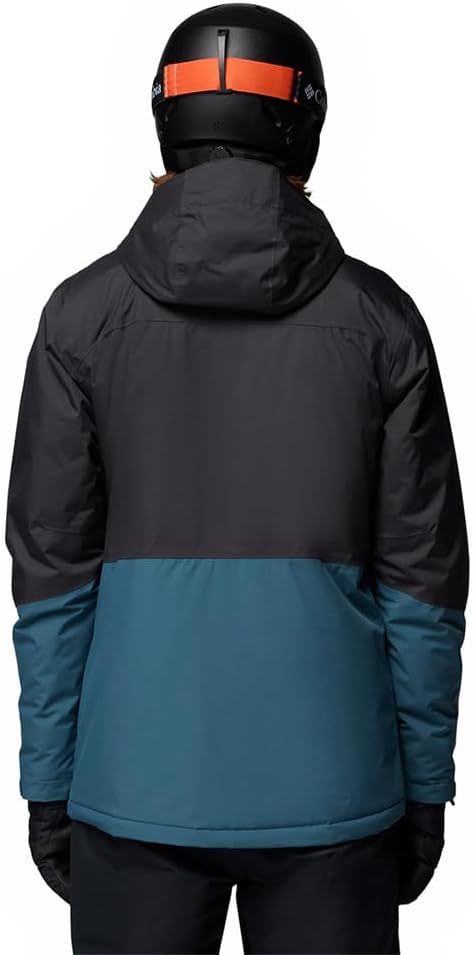
The colour I tested, Everblue/Shark, is pretty low-key. The blue is dark enough not to look flashy, and the grey (Shark) breaks it up around some panels and details. If you like loud neon ski gear, this won’t scratch that itch. If you want something that looks fine on the slopes and doesn’t look weird when you wear it around town, this sits in that middle ground. It’s not stylish in a fashion sense, but it’s not ugly either – just practical and neutral.
In terms of features, the PU coated centerfront zipper is a nice touch: it gives a bit of extra weather protection without needing a big bulky storm flap. The hood has a drawcord so you can tighten it down, and the collar goes up high enough to cover your neck and part of your chin, helped by a chin guard so you’re not rubbing your face on cold plastic. The underarm venting zips are fairly long, which is handy when you’re hiking up or sitting on a warm lift and starting to sweat.
If I had to nitpick the design, I’d say it’s a bit generic. Pockets are where you expect them, the branding is modest, and there’s nothing that really stands out visually. For me, that’s fine – I care more about staying dry and being able to move. But if you’re hunting for something that looks sharp in photos, this is more of a "blend into the crowd" jacket than a highlight piece.
Comfort: good mobility, average softness, watch your layering
In terms of comfort, I’d call this jacket good but not cozy. The cut in XL gives me plenty of room to move my arms, bend, and twist without feeling restricted. That’s especially important when skiing or snowboarding, and on that front it does well. The shoulders and sleeves don’t pull when I reach forward, which is a common problem with cheaper jackets. Length-wise, it covers my lower back and backside enough that I don’t get cold air shooting up my back when I sit on a lift.
On the inside, the Omni-Heat reflective lining isn’t exactly soft and fluffy. It’s more of a smooth, slightly plasticky feel. It doesn’t bother me when I wear a long sleeve or a mid-layer underneath, but I wouldn’t wear this jacket over bare arms – it just doesn’t feel that nice directly on skin. If you’re thinking of wearing just a t-shirt under it, you’ll probably notice that slightly synthetic feel. Nothing painful, just not super pleasant.
Temperature-wise, I tried it in around 0–5°C with wind and light snow. With a base layer and a mid-weight fleece underneath, I was comfortable skiing and walking around. When I wore only a thin shirt under it at a similar temperature, I was okay as long as I kept moving, but got chilled standing still. So you do need to think about layering if you plan to use it in real cold. This is more of a shell-plus-light-insulation jacket, not a one-layer solution for deep winter.
The underarm vents help a lot with comfort when you start to overheat. On a sunny afternoon, I opened them halfway and that was enough to stop me from sweating too much while carrying gear. The hood is large enough for a helmet, and with the drawcord tightened, it stays in place reasonably well. The chin guard is a small detail but helps when you zip it all the way up – no cold zipper scraping your face. Overall, comfort is pretty solid for active use, just don’t expect that soft, parka-like feel.
Materials: 100% polyester shell that feels tough enough
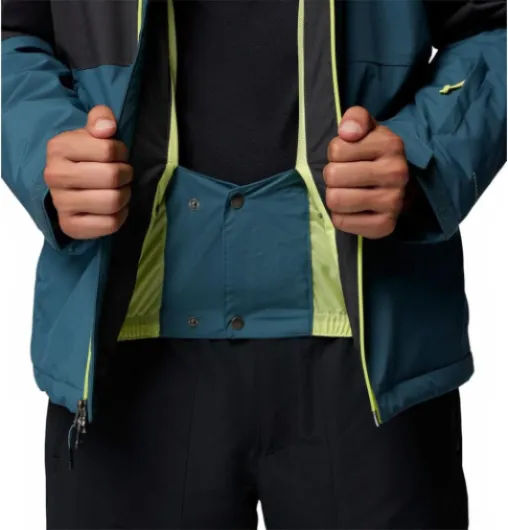
The jacket is 100% polyester, which is pretty standard for this kind of ski outerwear. The outer fabric feels slightly textured and medium-thick – not flimsy, but not like a super rugged mountaineering shell either. It has that typical slightly noisy feel when you move (the swish-swish sound), which I kind of expect from waterproof jackets. If you’re used to softer, cotton-like parkas, this will feel a bit more technical and plasticky.
Inside, you’ve got Columbia’s Omni-Heat thermal reflective lining. That’s the shiny, dot-pattern material that looks like someone glued tiny mirrors inside your jacket. The idea is that it reflects your body heat back to you. In practice, it does feel warmer than a plain unlined shell of the same thickness. When I wore it with just a long-sleeve base layer at around 0–2°C, I stayed reasonably warm while moving. Standing still for long, I started to feel the cold, so don’t expect miracles – it’s still a shell with light insulation, not a heavy insulated coat.
The Omni-Tech waterproof/breathable membrane is built into the fabric. I had it out in wet snow and light rain for a couple of hours, and the water just beaded and rolled off. No soaking through on the shoulders or arms. I didn’t test it in a full-on downpour, but for skiing and general winter use, it feels solidly waterproof. Breathability is okay: I did sweat a bit on a long, uphill walk with the vents closed, but once I opened the underarm zips, it was manageable.
Overall, the materials feel pretty solid for the price range: you get a proper waterproof shell, a reflective lining that adds some warmth, and everything is machine washable. It’s not super soft or premium to the touch, but it’s clearly built for function and durability over luxury feel. If you want a jacket that you don’t have to baby, this fits that role.
Durability: feels tough enough, but not a tank
Durability is always a bit hard to judge in a short test, but based on the materials and construction, I’d say this jacket feels reliable for regular ski use, not like a fragile fashion piece. The outer polyester fabric has a medium-thick feel and didn’t show any immediate wear after a few days of use – brushing against lift bars, carrying skis on the shoulder, tossing it in the car, etc. No loose threads or fraying at the cuffs so far.
The stitching looks clean and consistent around zippers, pockets, and seams. Since it’s only critically seam sealed, not fully, that means the most exposed seams (like shoulders and hood) are taped, but not every single seam across the jacket. For most recreational users, that’s fine. If you’re planning on spending hours in heavy, wet snow or pouring rain, a fully seam-sealed jacket would be better, but that’s usually a different price bracket.
The zippers feel reasonably sturdy. The main zipper is smooth and doesn’t catch on the fabric, and the PU coating doesn’t seem fragile. Pocket zips are smaller but still okay. I wouldn’t yank them around like crazy, but for normal use they feel solid. The drawcords on the hood and hem also feel like they’ll hold up, not like those thin strings that snap after a season.
Given that it’s machine washable and fully polyester, it should handle a few seasons of skiing and winter commuting if you don’t abuse it. I wouldn’t call it bombproof mountaineering gear, but for the price and target use (men’s ski jacket, mid-range), the durability looks decent. If you ski a couple of weeks a year and use it in winter around town, I’d expect it to last several seasons without major issues.
Performance on the slopes and in bad weather
Performance-wise, the jacket does what a ski jacket is supposed to do: keep you dry, block wind, and handle changing effort levels. I had it out in wet snow, some light rain, and decent wind. The Omni-Tech waterproof/breathable fabric held up fine – no water soaking through the shoulders or zippers in a couple of hours. The PU coated centerfront zipper seems to help here: I didn’t feel cold spots or see water sneaking in along the zipper line.
Wind protection is also solid. On a windy chairlift, fully zipped with the hood up, I stayed comfortable. There was no obvious draught getting in through the main zipper or around the neck, which is where cheaper jackets often fail. The adjustable hood helps a lot here – cinching it down makes it feel much more sealed. It’s not as tight and structured as some high-end hardshell hoods, but for recreational skiing it’s fine.
In terms of heat management, the underarm venting is one of the better features. On a hard run followed by a walk back up a short section, I started to overheat. Opening the vents quickly dumped a lot of heat and moisture, and I didn’t end up soaked in sweat inside. If you’re someone who runs hot, you’ll use these vents a lot. Without them open, the jacket can feel a bit warm and clammy during intense activity, especially around 0–5°C.
The only performance downside is insulation. The Omni-Heat lining helps, but this is not a heavily insulated jacket. For mild to moderate cold, with proper layering, it’s perfectly fine. For very cold days (below -10°C), you’ll either need a serious mid-layer or a thicker jacket altogether. So I’d say performance is strong on waterproofing and wind protection, decent on breathability with vents, and only medium on warmth unless you manage your layers well.
What you actually get out of the box
When the jacket arrived, it came in a pretty standard plastic bag inside a cardboard box. Nothing fancy, just folded with the usual Columbia tags hanging off the zipper. At around 2 kg for the package (according to the specs), it feels like a medium-weight ski shell, not ultra-light, not super heavy either. Pulling it out, the Everblue/Shark colour combo is basically a dark blue with grey accents – pretty neutral, doesn’t scream for attention on the slopes.
The size I tried is XL, and I’d say the cut is a classic ski jacket fit: a bit roomy to allow layering, but not overly baggy. I’m around 1.83 m and 92 kg, and XL gives me enough space for a fleece underneath without feeling squeezed. If you like a slim, urban fit, this won’t be it. It’s clearly designed to move in, bend, adjust boots, handle poles, etc. More practical than stylish.
On the features side, you can see right away the PU coated centerfront zipper (there’s a rubbery coating over the zipper area to help with water resistance), a drawcord adjustable hood, and long sleeves with the usual ski-style cuffs. The tags heavily push the tech names: Omni-Heat thermal reflective, Omni-Tech waterproof/breathable, critically seam sealed. In normal words: reflective lining inside to keep warmth, waterproof shell that still lets some moisture out, and only the important seams taped.
As a whole, the first contact is: decent, no-nonsense ski jacket from a known outdoor brand. Nothing about the presentation screams premium, but nothing looks dodgy either. If you want a simple, reliable jacket without a ton of hidden surprises, that’s what you’re getting here.
Pros
- Good waterproof and wind protection with Omni-Tech and PU coated front zipper
- Omni-Heat reflective lining adds noticeable warmth without huge bulk
- Practical features for skiing: underarm vents, adjustable hood, chin guard, decent freedom of movement
Cons
- Only medium warmth on its own – needs good layering in very cold weather
- Interior lining doesn’t feel very soft directly on skin and design is quite generic
Conclusion
Editor's rating
The Columbia Men's Iceberg Point 2 Jacket is a practical, no-nonsense ski jacket that does the basics well: it keeps you dry, blocks wind, and gives you enough features to be comfortable on the slopes. The Omni-Tech waterproof shell and Omni-Heat reflective lining work together to give decent warmth without turning it into a bulky oven. Add in underarm vents, a chin guard, and an adjustable hood, and you get a jacket that’s clearly designed for actual use, not just looks.
It’s not perfect. The insulation level is medium at best, so you’ll need to think about layering on colder days. The inside lining doesn’t feel particularly soft against bare skin, and the overall design is pretty generic – it’s not going to win any style contests. But if your priority is function over flair, and you want something from a known brand that you can wear for a few seasons of skiing and winter weather, it’s a solid choice.
I’d recommend this jacket to casual and intermediate skiers, people who spend winter days outside in cold and wet conditions, and anyone who prefers a shell-plus-layers setup rather than a huge insulated parka. If you’re after ultra-warm, ultra-plush comfort, or you’re a hardcore skier who lives in blizzards and needs full seam sealing and top-tier tech, you should probably look higher up the range. For most regular users, though, this jacket gets the job done without any drama.